
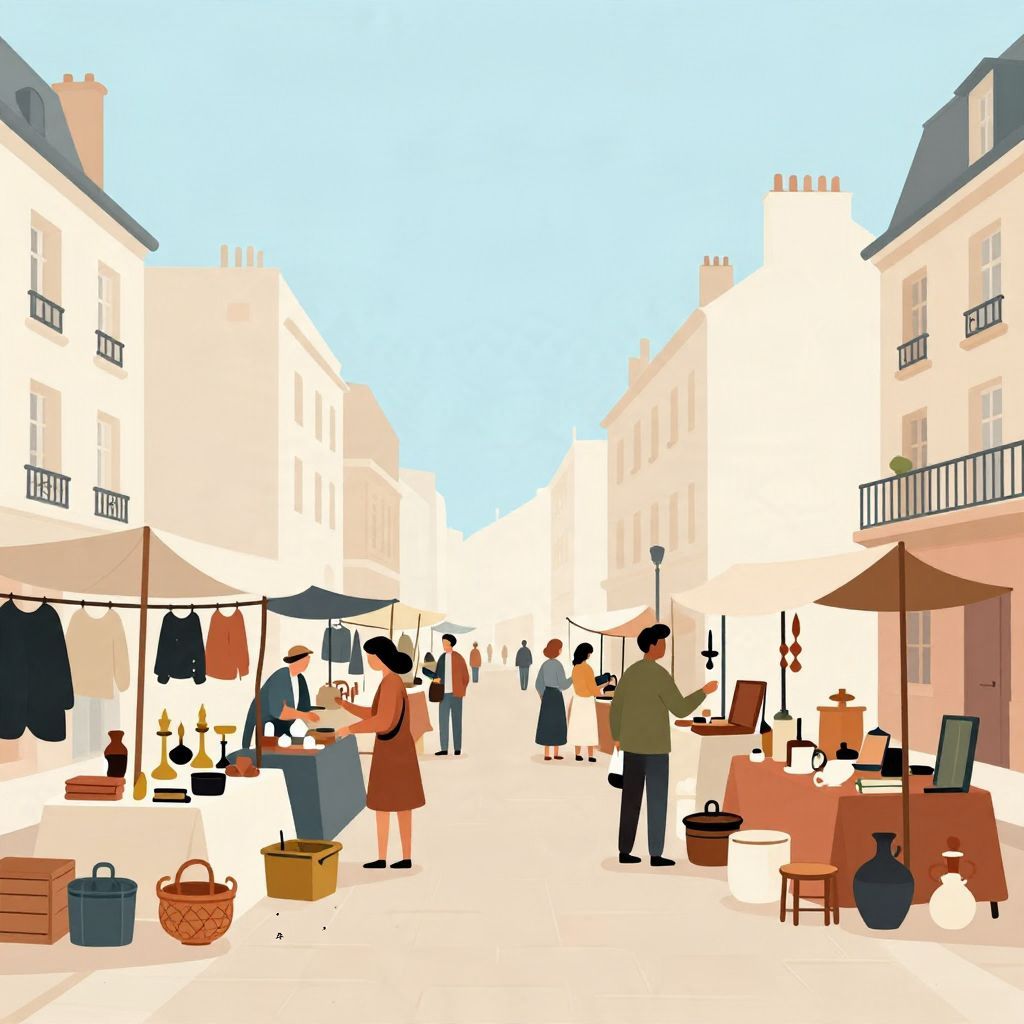
Why is it called a flea market? The short answer is that the name comes from the idea that secondhand goods sold in such markets might be infested with fleas. The phrase is most strongly associated with French marché aux puces, literally “market of fleas,” which became a common label for open-air stalls selling used, inexpensive, and often worn items.
That explanation is simple, but the history behind the term is more interesting. The name reflects older attitudes toward used goods, urban street trading, and the way language often turns a practical place into a vivid image.
Why is it called a flea market?
A flea market is called a flea market because the term originally referred to a place where old clothes, bedding, furniture, and other secondhand goods were sold—items that might literally carry fleas. The phrase is widely traced to French marché aux puces, a name that captured both the low status of the merchandise and the informal, crowded character of the market.
The simple idea behind the name
The most common explanation is straightforward: fleas were associated with used textiles and worn household goods. In earlier centuries, before modern laundering, pest control, and packaging, buying secondhand fabric or furniture could genuinely mean bringing home insects. The name was colorful, but it was also practical shorthand for “used goods market.”
Why the image mattered
The word “flea” did more than describe a possible nuisance. It also suggested that these markets were not elegant retail spaces. They were places for bargains, castoffs, repairs, and reuse. In other words, the name reflected social judgment as much as physical reality. A flea market was a market of the poor, the thrifty, and the resourceful.
The French origin of the term
The phrase is usually linked to Paris and the French expression marché aux puces. The term became especially associated with the Parisian secondhand market at Saint-Ouen, near the city’s northern edge, which developed in the late 19th century and grew into one of the best-known flea markets in Europe. The French phrase helped popularize the English expression.
Paris, secondhand trade, and urban growth
As cities expanded in the 19th century, informal trade in used goods became more visible. People sold old clothes, tools, books, dishes, and furniture in open-air spaces, often on the margins of the city where regulation was looser. Parisian markets of this kind were part of a larger urban economy in which reuse mattered because many households could not afford new goods.
Not a single invented moment
There is no one neat founding date for the phrase “flea market.” Like many common expressions, it emerged through usage rather than a formal announcement. What historians can say with confidence is that the French term was in circulation by the late 19th century and that the idea spread through international travel, commerce, and journalism.
Did flea markets really have fleas?
Sometimes, yes. But the name should not be taken too literally as a universal fact about every market. Fleas were a realistic concern wherever used textiles, bedding, and upholstered goods were sold, especially before modern hygiene standards. Still, the term also worked as a metaphor for cheapness, oldness, and social marginality.
Historical conditions that made fleas plausible
Before industrial cleaning and sealed transport, secondhand goods could easily carry lice, fleas, or dust. Markets were busy, crowded, and often outdoors. Goods changed hands quickly, and sellers had little incentive or ability to sanitize everything. The name therefore grew out of a world in which the risk was real enough to be memorable.
Metaphor and reputation
Over time, “flea market” became less about actual insects and more about the kind of commerce taking place. The phrase implied a place where one person’s unwanted possessions became another person’s bargain. That reputation—cheap, mixed, informal, and lively—helped the term survive even as sanitation improved and flea infestations became less central to the experience.
How flea markets developed historically
Flea markets did not appear out of nowhere. They grew from older forms of street trade, rag-and-bone selling, antique dealing, and the resale of household goods. In many societies, secondhand commerce was essential, especially before mass production made new goods affordable to large parts of the population.
Older traditions of reuse
For centuries, people bought and sold used clothing, tools, and household items in markets and along city streets. This was not merely a matter of thrift; it was a basic part of urban life. Goods were repaired, resold, inherited, pawned, and recycled because resources were limited and manufacturing was expensive.
From necessity to leisure
By the 20th century, flea markets began to take on a new role in some places. They remained practical spaces for bargain hunters, but they also became destinations for collectors, tourists, and people searching for antiques or unusual objects. The market of necessity gradually overlapped with the market of taste.
Why the name survived
The term “flea market” survived because it is vivid, memorable, and slightly humorous. It instantly suggests a place full of old, assorted, and inexpensive things. Even when the literal meaning became less important, the phrase remained useful because it conveyed the character of the market better than a dry label like “used-goods market.”
A name that crosses languages
Many languages have their own version of the idea, but the English phrase was reinforced by French usage and by the international appeal of Parisian markets. As tourism and collecting culture expanded, “flea market” became a familiar term in English-speaking countries for weekend markets, swap meets, and open-air stalls selling secondhand items.
Why it sounds appealing today
What once sounded a little shabby can now sound charming. Modern flea markets are often associated with vintage style, sustainability, and treasure hunting. The same word that once hinted at poverty or dirt now suggests character, history, and discovery. That shift says as much about changing consumer culture as it does about language.
Flea markets and social history
Flea markets reveal a great deal about everyday life in the past. They show how people reused goods, how urban economies functioned, and how class shaped the meaning of shopping. What one group saw as leftovers, another saw as practical value or even hidden treasure.
Class, thrift, and respectability
In many periods, buying secondhand goods carried social stigma. New items signaled status, while used items could suggest hardship. Yet secondhand markets were indispensable for working-class households and for anyone needing affordable necessities. The flea market therefore sits at the intersection of stigma and survival.
Antiques, memory, and material culture
As older objects gained historical or aesthetic value, flea markets also became places where material culture could be preserved. Old books, signs, toys, and furniture that might once have been discarded could later be valued as artifacts of everyday history. In that sense, flea markets help preserve traces of ordinary life that formal archives often overlook.
What historians can say with confidence
There are a few well-supported conclusions about the origin of the term. First, the name comes from the association between used goods and fleas. Second, the French phrase marché aux puces played a major role in shaping the modern term. Third, the expression reflects both the practical realities of premodern trade and the social image of secondhand markets.
- Literal basis: used textiles and furnishings could carry fleas.
- Social meaning: the name implied cheap, worn, or low-status goods.
- French influence: marché aux puces helped establish the modern wording.
- Historical context: flea markets grew from older traditions of resale and reuse.
The lasting meaning of the term
Today, a flea market is often a place of pleasure rather than necessity. People go to browse, collect, decorate, and hunt for bargains. But the name still carries its older history. It reminds us that these markets began in a world where used goods were common, sanitation was uneven, and thrift was a way of life.
So, why is it called a flea market? Because the term grew out of the old association between secondhand goods and fleas, especially in French-speaking urban markets. The phrase survived because it captured the atmosphere of these places so well: crowded, informal, inexpensive, and full of objects with previous lives. For more on the history of everyday trade and naming, you may also enjoy this history of the flea market term.