
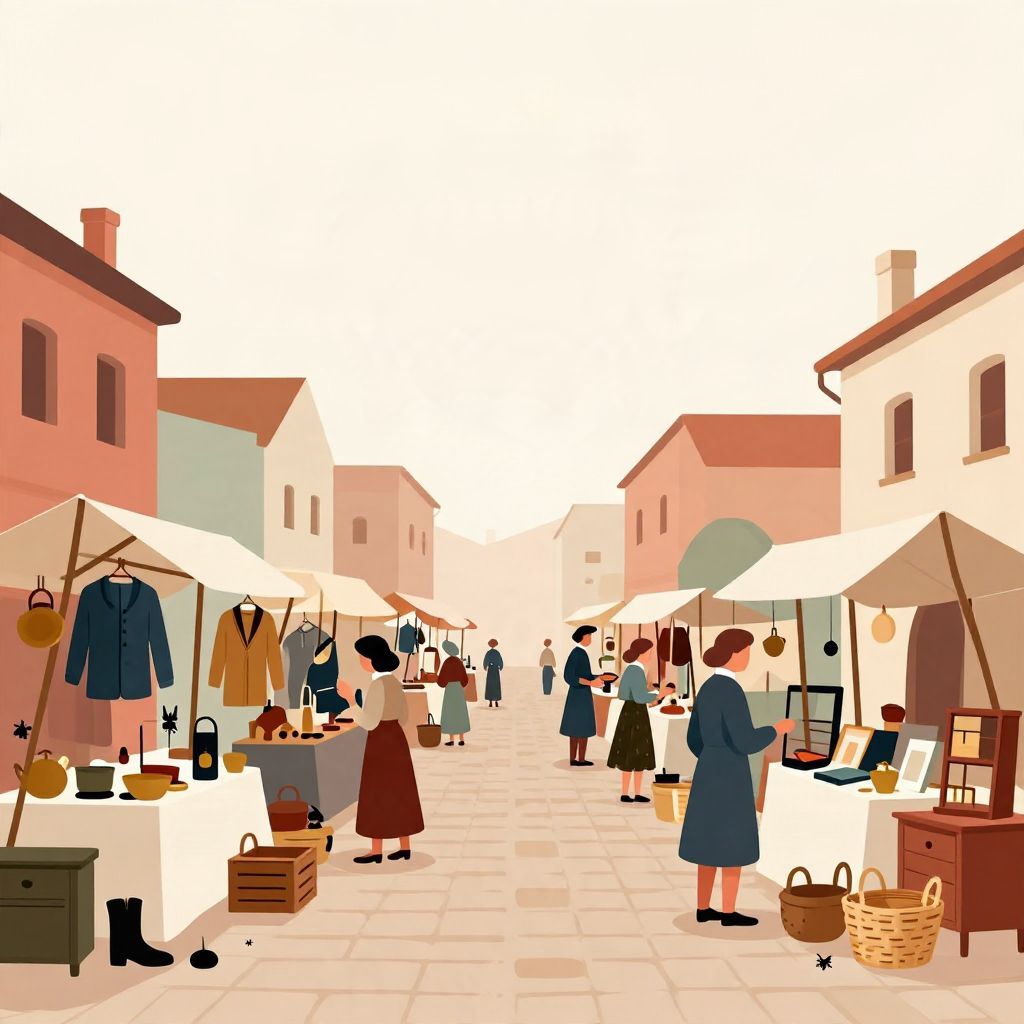
Why is it called a flea market? The short answer is that the name comes from the idea of a crowded, secondhand marketplace where old goods might be dusty enough to attract fleas. The phrase does not mean the market was literally full of insects in every case; rather, it reflects how people once described such busy, low-cost trading spaces.
The term has a long history in European languages, especially French, and it became attached to markets selling used, inexpensive, or miscellaneous goods. Over time, “flea market” came to mean a place for bargains, antiques, curiosities, and castoffs rather than a market for fresh produce or new merchandise.
Why is it called flea market?
The name “flea market” most likely comes from the French phrase marché aux puces, literally “market of fleas.” It was used for open-air markets where secondhand goods were sold, and the “fleas” image suggested old clothing, bedding, and household items that might carry pests. The phrase became standard for bargain and antique markets in English later on.
The historical origin of the term
From Parisian markets to a wider name
The strongest historical connection is to Paris. In the 19th century, Paris had several informal markets where dealers and scavengers sold used goods, leftovers, and discarded household items. One of the best-known was the market at Saint-Ouen, which eventually became famous as a large antiques and secondhand market. French speakers referred to such places as marchés aux puces, and English speakers later adopted “flea market” as a translation.
The exact moment the phrase first appeared is not perfectly pinned down, but the association is well established by the late 19th and early 20th centuries. As urban life expanded, cities produced more used goods, and markets for reselling them became more visible. The name captured both the practical reality of the trade and the social attitude toward it: these were not elegant retail spaces, but places for reused items, low prices, and mixed quality.
Why “fleas”?
The flea in the name is best understood as a metaphor. Fleas were a familiar nuisance in earlier centuries, especially in crowded homes, on bedding, and in clothing made from natural fibers and washed less frequently than modern textiles. A market full of old clothes or blankets could easily be imagined as a place where fleas might lurk. The image was vivid, memorable, and slightly mocking.
That does not mean every flea market was actually infested. In historical language, names often reflect perception more than literal fact. Just as “junk shop” or “rag market” describes the kind of goods sold, “flea market” suggested used, worn, and inexpensive wares. The phrase stuck because it was colorful and easy to understand.
How flea markets developed over time
Secondhand trade is much older than the phrase
Although the expression “flea market” is relatively modern, the practice it describes is ancient. People have always resold used goods, repaired household items, and traded castoffs. In preindustrial societies, clothing, tools, furniture, and metal goods were too valuable to throw away casually. Markets for recycled items existed wherever cities, ports, and dense populations created a steady supply of unwanted objects.
In medieval and early modern Europe, peddlers, rag dealers, and itinerant traders bought and sold used textiles, metal scraps, and household goods. These activities were often informal and sometimes looked down on by authorities or wealthier citizens. Still, they served an important economic purpose: they allowed goods to circulate beyond their first owner and made affordable items available to people with limited means.
The rise of urban consumer culture
By the 18th and 19th centuries, growing cities produced more consumer goods and more waste. As fashions changed more quickly, old clothing and furniture lost value sooner, creating a larger secondhand economy. At the same time, urban poverty and migration increased demand for cheap goods. Flea markets emerged from this environment as practical spaces where buyers and sellers could meet outside formal retail systems.
These markets were often temporary, crowded, and unregulated. Some were attached to specific days of the week or to seasonal fairs. Others grew into permanent districts. Their character varied widely: one market might be full of worn shoes and household scraps, while another specialized in antiques, books, tools, or collectibles. The common thread was reuse.
How the meaning changed in English
From literal translation to everyday expression
English speakers borrowed the phrase from French because French culture strongly influenced fashion, cuisine, and urban life in the 19th century. As the term spread, it gradually lost its strictly French setting and became a general English expression for any market selling secondhand or mixed merchandise. Today, a flea market may be indoors or outdoors, permanent or temporary, rural or urban.
In English, the phrase also broadened in meaning. It can refer not only to a traditional market of used goods but also to craft fairs, swap meets, antique shows, and community sales. In some places, people use “flea market” even when many items are new rather than used. The name now points more to the style of shopping than to fleas themselves.
Regional variations and related terms
Different countries and regions have their own terms for similar markets. In the United States, “swap meet” is common in some areas, especially in the West and Southwest. In Britain, people may say “car boot sale” for a market where sellers bring goods from their vehicles. These names emphasize the setting or method of sale, while “flea market” emphasizes the secondhand, bargain-hunting atmosphere.
Despite the different labels, the underlying idea is similar: a place where ordinary people can sell what they no longer need and where buyers can search for inexpensive or unusual items. The flea market is part of a long tradition of informal commerce that exists alongside formal shops and department stores.
What flea markets reveal about social history
Reuse, thrift, and survival
Flea markets are not just commercial spaces; they are historical evidence of how people managed scarcity. In many periods, especially before mass production and cheap consumer goods, reuse was normal. A coat might be altered, a table repaired, and a pot resold several times. Flea markets preserved that older economy of thrift and adaptation.
They also reveal class differences. Wealthier buyers might visit secondhand markets for curiosities or antiques, while poorer buyers depended on them for basic necessities. The same market could serve both groups, though they came with different expectations. This mix of necessity and treasure-hunting is one reason flea markets remain culturally appealing.
The antique trade and the romance of discovery
Over time, flea markets became associated not only with cheapness but also with discovery. Collectors learned that old markets could contain rare books, vintage tools, handmade objects, and forgotten artworks. As antiques gained prestige in the 20th century, some flea markets shifted from purely practical resale to curated spaces where history itself could be bought and sold.
This change helped soften the original slightly shabby connotation of the word “flea.” Today, many flea markets are marketed as charming, eclectic, and nostalgic. Yet the original name still reminds us that these places grew out of ordinary reuse, not luxury retail.
Common myths and misunderstandings
Was the market literally full of fleas?
Sometimes people repeat the story that flea markets were named because the goods were so dirty they had actual fleas. That is partly plausible as an image, but it should not be treated as the whole explanation. The historical evidence points more strongly to the phrase as a descriptive label for old, secondhand merchandise than to any single incident of infestation.
In other words, the name is rooted in both language and social perception. Fleas were a recognizable symbol of old fabrics, crowded living conditions, and low-status goods. The term worked because it evoked the kind of market people imagined, whether or not insects were present.
Did the phrase begin in English?
No. The phrase is generally traced to French usage, especially marché aux puces. English adopted the idea later. This matters because flea markets are often thought of as a modern English-language phenomenon, but their naming history is tied to European urban life and the older tradition of secondhand trade.
The lasting significance of the flea market
The flea market survives because it meets timeless needs: affordability, reuse, variety, and surprise. It also reflects a historical pattern older than modern consumer culture. Long before shopping malls and online marketplaces, people bought and sold used goods in public spaces. The flea market is one of the clearest modern descendants of that tradition.
Its name tells a social history in miniature. “Flea market” captures the mixture of practicality and stigma that once surrounded secondhand trade, while also preserving the memory of crowded urban markets where old objects found new owners. The phrase may sound quaint today, but it points to a durable part of economic life: the constant circulation of things.
So, why is it called flea market? Because the term grew out of French-language descriptions of secondhand markets, where old goods were associated with fleas as a vivid image of wear, age, and crowded conditions. The name stuck, and over time it came to mean a lively place for bargains, reuse, and unexpected finds. For more on related historical terms and social systems, see what FBA means and what a feudal system was.