
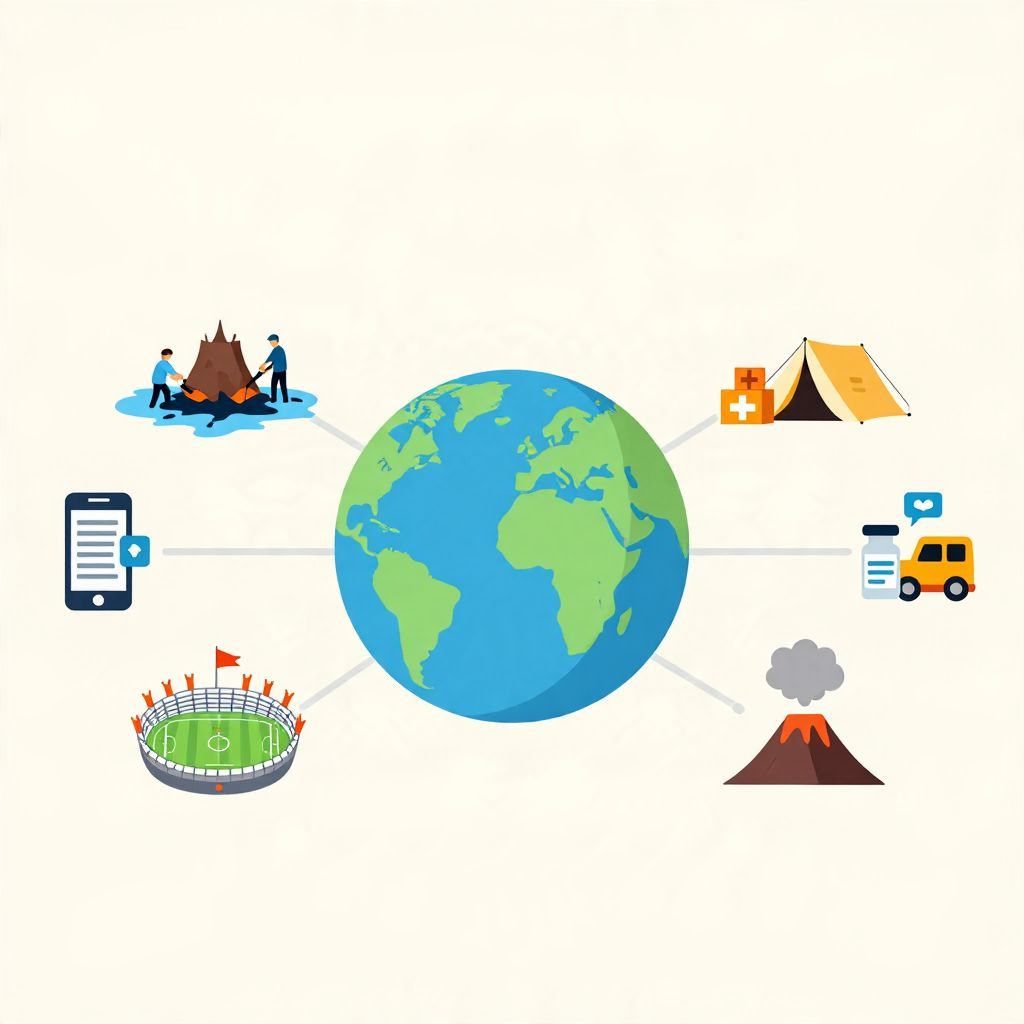
What happened in 2010 was a year of upheaval, recovery, and transition across politics, economics, technology, and culture. The world was still dealing with the fallout from the 2008 financial crisis, while new crises and breakthroughs reshaped public life from Haiti to the Gulf of Mexico and from Washington to the internet.
It was also a year when social media, smartphones, and digital news became even more central to everyday life. In that sense, 2010 was not just a calendar year but a turning point: old institutions were under pressure, new movements were emerging, and several events would shape the decade that followed.
What happened in 2010?
In 2010, the world saw major natural disasters, political change, economic strain, and rapid technological growth. The year included the devastating Haiti earthquake, the Deepwater Horizon oil spill, the start of the Arab Spring, and major shifts in global politics, all against the backdrop of a fragile post-crisis recovery.
The major events of 2010
January: Haiti’s earthquake and a global emergency response
One of the defining events of 2010 was the Haiti earthquake, which struck on 12 January near Port-au-Prince. The magnitude 7.0 quake caused catastrophic destruction in the capital and surrounding areas. Hundreds of thousands of people were killed or injured, and millions were left homeless, though exact figures remain uncertain because of the scale of the disaster and the limits of record-keeping in its aftermath.
The earthquake exposed Haiti’s long-standing vulnerability: weak infrastructure, poverty, and limited emergency capacity made recovery extraordinarily difficult. International aid poured in, but the response also drew criticism for coordination problems and the slow pace of rebuilding. The disaster became one of the most visible humanitarian crises of the early 21st century.
April to summer: the Deepwater Horizon oil spill
On 20 April 2010, the Deepwater Horizon drilling rig exploded in the Gulf of Mexico, killing 11 workers and triggering the largest marine oil spill in U.S. history. For months, oil leaked into the Gulf before the well was finally capped in July. The spill damaged ecosystems, disrupted fishing and tourism, and became a major political and corporate scandal.
The disaster intensified debate over offshore drilling, environmental regulation, and corporate accountability. It also exposed how difficult it was to manage industrial accidents in deep water, where containment and cleanup were far more complex than on land.
Spring and summer: the global economy remained fragile
Although the worst phase of the 2008 financial crisis had passed, 2010 was still shaped by economic instability. In Europe, the eurozone debt crisis began to dominate headlines, especially in Greece, where fears over public debt and budget deficits shook confidence in the euro. Governments and international institutions responded with austerity measures, loans, and rescue packages, but these policies were controversial and politically divisive.
The crisis spread concerns about the stability of the European banking system and raised broader questions about the balance between government spending, market confidence, and social welfare. For many people, 2010 felt less like recovery than a difficult pause between crises.
Late 2010: the Arab Spring begins in Tunisia
In December 2010, protests erupted in Tunisia after the self-immolation of Mohamed Bouazizi, a street vendor whose act became a symbol of frustration over unemployment, corruption, and police abuse. The demonstrations helped trigger the Arab Spring, a wave of protests and uprisings that would spread across North Africa and the Middle East in 2011.
Although the full regional impact came later, the events of late 2010 marked the beginning of a major political turning point. They showed how quickly local grievances could become national and then international movements in an era of satellite television, mobile phones, and social media.
Technology and media moved even faster
2010 was also a landmark year for digital culture. The iPad was introduced by Apple in April, helping popularize tablet computing. Social media platforms such as Facebook and Twitter continued to expand their influence, changing how people shared news, organized protests, and consumed entertainment.
Instagram launched in October 2010, and within a few years it would become one of the most influential social platforms in the world. The rise of smartphones and app-based communication was changing not only technology markets but also politics, journalism, and personal relationships.
A timeline of 2010
Here is a simplified chronology of some of the year’s most important events:
- 12 January: A devastating earthquake strikes Haiti.
- April: Apple releases the iPad.
- 20 April: The Deepwater Horizon rig explodes in the Gulf of Mexico.
- May to July: The oil spill continues, becoming a major environmental disaster.
- Spring to autumn: The eurozone debt crisis deepens, especially in Greece.
- October: Instagram launches.
- December: Protests in Tunisia begin the Arab Spring.
Politics in 2010
The United States and the midterm shift
In the United States, 2010 was a politically important year because of the midterm elections. Voters reacted to the sluggish economy, high unemployment, and partisan conflict over health care reform. Republicans made major gains in the House of Representatives, reflecting public frustration and setting up a more polarized political environment for the rest of Barack Obama’s first term.
The year also saw continuing debate over the Affordable Care Act, which had been passed in March 2010. Supporters viewed it as a major expansion of health coverage, while opponents saw it as an overreach of federal power. The law became one of the central political issues of the decade.
Britain and coalition government
In the United Kingdom, the 2010 general election produced a hung parliament, leading to a coalition government between the Conservatives and Liberal Democrats. David Cameron became prime minister, and Nick Clegg became deputy prime minister. This was the first coalition government in Britain since the Second World War, and it reflected the fragmented political mood of the time.
The coalition would go on to shape British policy on austerity, public spending, and constitutional reform, leaving a lasting mark on the country’s politics.
Culture, sport, and public life in 2010
Entertainment and popular culture
In popular culture, 2010 reflected the growing dominance of digital distribution and online sharing. Streaming was not yet fully dominant, but the habits that would support it were forming quickly. Music, film, and television increasingly circulated through online platforms, and celebrity culture became more immediate and interactive.
At the same time, global audiences were becoming more connected. A viral video, a breaking news image, or a social media post could reach millions within hours. That shift changed how people experienced current events and entertainment alike.
Sport and global attention
2010 was also a major year for international sport, especially the FIFA World Cup in South Africa. It was the first World Cup held on the African continent, and it drew global attention to South Africa’s role in international sport and post-apartheid identity. Spain won the tournament, defeating the Netherlands in the final.
The event was widely seen as a symbolic milestone, though debates continued about the long-term economic benefits of hosting such a large tournament. Still, it remains one of the most memorable sporting events of the decade.
Why 2010 mattered historically
2010 matters because it was a bridge year between the aftermath of the 2008 crisis and the more turbulent politics of the 2010s. It showed how interconnected the modern world had become: a disaster in Haiti, an oil spill in the Gulf of Mexico, a debt crisis in Europe, and protests in North Africa all became global stories almost immediately.
The year also marked the acceleration of digital life. The spread of smartphones, tablets, and social media did not just create new products; it changed how people organized, protested, reported, and remembered events. In that sense, 2010 was a year when the future became more visible.
The aftermath of 2010
The consequences of 2010 unfolded over the next several years. Haiti’s recovery remained slow and uneven. The Deepwater Horizon spill led to legal battles, compensation claims, and tighter scrutiny of offshore drilling. The eurozone debt crisis continued to reshape European politics and economics. The Arab Spring spread rapidly in 2011, leading to major revolutions, civil wars, and long-term instability in several countries.
Technologically, the devices and platforms that gained momentum in 2010 helped define the decade. By the mid-2010s, smartphones and social media had become central to daily life, politics, and business. Looking back, 2010 was not simply a year of isolated events; it was a moment when several long trends became impossible to ignore.
In short, what happened in 2010 was a convergence of disaster, change, and acceleration. It was a year that revealed global fragility while also opening the door to new forms of communication, protest, and power. For readers interested in comparing turning points across the 20th and 21st centuries, see also what happened in 2013 and what happened in 1926.