
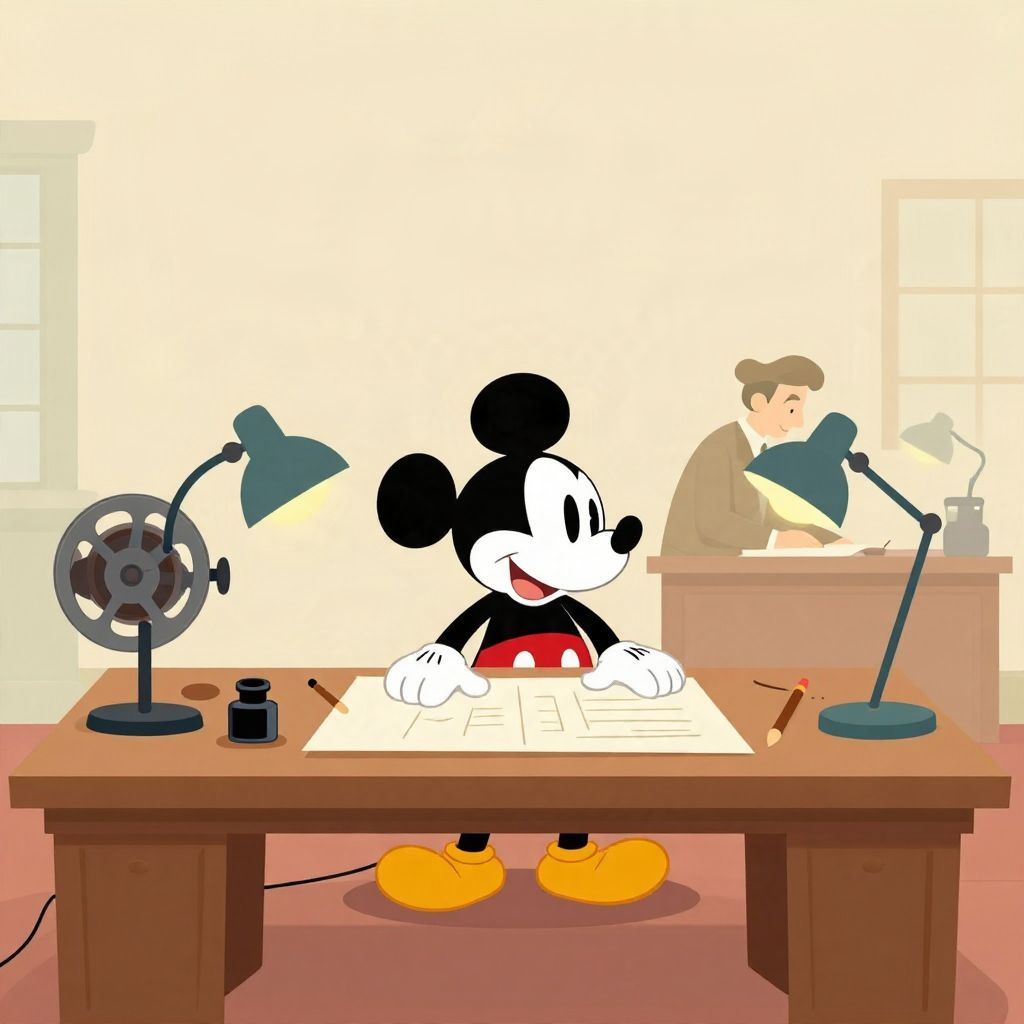
When was Mickey Mouse created? The short answer is that Mickey Mouse was created in 1928, with his first official screen appearance in the animated short Steamboat Willie on November 18, 1928. That date is the one most often used for his debut because it marked the first widely released Mickey cartoon.
But the story begins a little earlier, with an earlier version of the character and a period of rapid change in American animation. Mickey was not invented fully formed in a single moment; he emerged from a creative crisis, a studio partnership, and the new possibilities of synchronized sound.
When Was Mickey Mouse Created?
Mickey Mouse was created in 1928. His first public, official appearance was in Steamboat Willie, which premiered on November 18, 1928. However, the character was developed earlier that year, and an even earlier Mickey-like version appeared in the silent cartoon Plane Crazy, first shown in 1928 before Steamboat Willie reached theaters.
The Story Behind Mickey Mouse’s Creation
Mickey Mouse was born out of necessity as much as imagination. In 1928, Walt Disney had just lost the rights to his earlier successful character, Oswald the Lucky Rabbit, after a dispute with distributor Charles Mintz. Disney needed a new star quickly, and he turned to animator Ub Iwerks, who helped shape the character that would become Mickey Mouse.
From Oswald to a New Character
The loss of Oswald was a turning point. Disney had built an early animation business around the rabbit, but the character belonged to the distributor, not to Disney. After the break, Disney and Iwerks began developing a replacement. The new character was designed to be simple to animate, expressive, and appealing enough to carry cartoons on his own.
Early on, the character was called Mortimer Mouse. According to the well-known studio story, Walt Disney’s wife, Lillian, thought the name sounded too formal or pretentious and suggested “Mickey” instead. Whether every detail of that anecdote is perfectly documented or not, the name Mickey Mouse soon became the one attached to the character.
Why 1928 Matters
1928 was a landmark year because animation was entering a new era. Silent cartoons were common, but sound was transforming film. Disney recognized that synchronized sound could make cartoons feel more alive and more commercially competitive. Mickey’s rise was tied directly to this technological shift.
What Was Mickey Mouse’s First Cartoon?
Mickey’s first completed cartoon was generally Plane Crazy, but it was not the one that made him famous. The cartoon was produced in 1928 and shown in a test screening, yet it did not receive the same immediate release and impact as Steamboat Willie. That distinction matters because many people know Mickey through the sound cartoon that launched his stardom, not the earlier silent version.
Plane Crazy and The Gallopin’ Gaucho
Before Steamboat Willie, Disney and Iwerks made Plane Crazy and The Gallopin’ Gaucho. These shorts helped define the character’s early personality, but they were silent or not yet released in the same way as the sound cartoon. They show that Mickey was already taking shape before his official breakthrough.
Steamboat Willie and the Sound Revolution
Steamboat Willie premiered on November 18, 1928, and became Mickey Mouse’s breakthrough film. It is famous not simply because Mickey appeared in it, but because it used synchronized sound effectively and memorably. The cartoon helped make Mickey a national sensation and established Disney as a major force in animation.
Was Mickey Mouse Created on November 18, 1928?
November 18, 1928 is the date most associated with Mickey Mouse’s creation because it was the premiere of Steamboat Willie, his first widely recognized cartoon. Strictly speaking, though, Mickey had been developed earlier in 1928. So if you are asking when he was invented, the answer is the year 1928; if you are asking when he debuted publicly, the answer is November 18, 1928.
Creation vs. Debut
This distinction is important in history. A character can be created in the studio months before audiences meet him. In Mickey’s case, the design, naming, and early cartoons all came before the famous debut. Historians and fans often use the release date of Steamboat Willie because it marks the moment Mickey entered popular culture in a lasting way.
Who Created Mickey Mouse?
Mickey Mouse is most closely associated with Walt Disney, but he was also shaped significantly by Ub Iwerks, the gifted animator who drew and refined the early character design. Disney provided the vision, business drive, and performance voice for Mickey in the early years, while Iwerks played a crucial role in the visual creation.
Walt Disney’s Role
Disney was the creative entrepreneur behind the character. He needed a new star after losing Oswald, and he understood that a memorable animated figure could anchor a studio. Disney also voiced Mickey in the earliest cartoons, helping establish the character’s personality and charm.
Ub Iwerks’s Role
Iwerks was central to the actual animation process. He was known for his speed and technical skill, and he helped turn the concept into a workable, distinctive design. Mickey’s rounded features, large eyes, and flexible body were ideal for early animation and easy recognition.
Why Mickey Mouse Looked the Way He Did
Mickey’s design was practical as well as appealing. Early animators needed characters that could be drawn repeatedly and moved fluidly on screen. Simple shapes made that possible. Mickey’s circular head, gloves, and expressive face were not accidental details; they helped animation work more clearly and made the character easy to read in motion.
The Importance of Simplicity
In the late 1920s, animation was labor-intensive. A character with a complicated design would have been harder to animate consistently. Mickey’s streamlined look allowed for lively movement, quick expressions, and broad audience appeal. That design helped him become one of the most recognizable figures in modern popular culture.
What Made Mickey Mouse So Successful?
Mickey’s success came from timing, technology, and personality. He arrived just as sound film was becoming exciting to audiences. He also represented a cheerful, energetic, and adaptable figure who could survive mishaps without losing his appeal. This made him ideal for the new medium of animated shorts.
A Character for a New Media Age
Mickey was not just another cartoon animal. He became a symbol of modern entertainment, especially as Disney expanded from short films into a broader media empire. His image soon appeared in merchandise, publicity, and later television, theme parks, and global branding. The character’s creation in 1928 therefore had consequences far beyond one cartoon.
From Cartoon Star to Cultural Icon
By the early 1930s, Mickey Mouse had become one of the most famous characters in the world. His popularity helped define the Disney brand and influenced the development of animation as a major commercial art form. He also became a lasting symbol of American popular culture in the twentieth century.
Common Misunderstandings About Mickey’s Origin
One common misunderstanding is that Mickey Mouse “appeared” fully formed in a single cartoon. In reality, he developed through a series of sketches, test films, and early shorts. Another is that Steamboat Willie was his absolute first creation; it was his first major released success, but not the first step in his development.
Why the Date Can Seem Confusing
The confusion comes from mixing up three different moments: the character’s design process, his first completed cartoons, and his first major public release. For historians, all three matter, but they answer slightly different questions. That is why 1928 is the best overall answer, while November 18, 1928 is the most precise debut date.
The Lasting Historical Significance of Mickey Mouse
Mickey Mouse’s creation was important not only because a famous character was born, but because his debut helped reshape animation. Steamboat Willie demonstrated the commercial power of synchronized sound in cartoons and helped establish Disney as a dominant studio. Mickey became the face of that transformation.
His creation also reflects a broader historical pattern: new technologies often change popular culture quickly, and successful characters can become symbols of their era. Mickey Mouse emerged at the intersection of artistic invention, business risk, and technical innovation.
So, When Was Mickey Mouse Created?
Mickey Mouse was created in 1928, with his official public debut in Steamboat Willie on November 18, 1928. If you want the simplest historical answer, that is the date most people mean. If you want the fuller story, Mickey was developed earlier that year after Walt Disney lost Oswald the Lucky Rabbit, and his creation marked a turning point in animation history.
In other words, Mickey Mouse was not just “made” on one day; he was the product of a crucial year in film history. His 1928 debut launched a character who would become one of the most enduring icons of the modern age.