
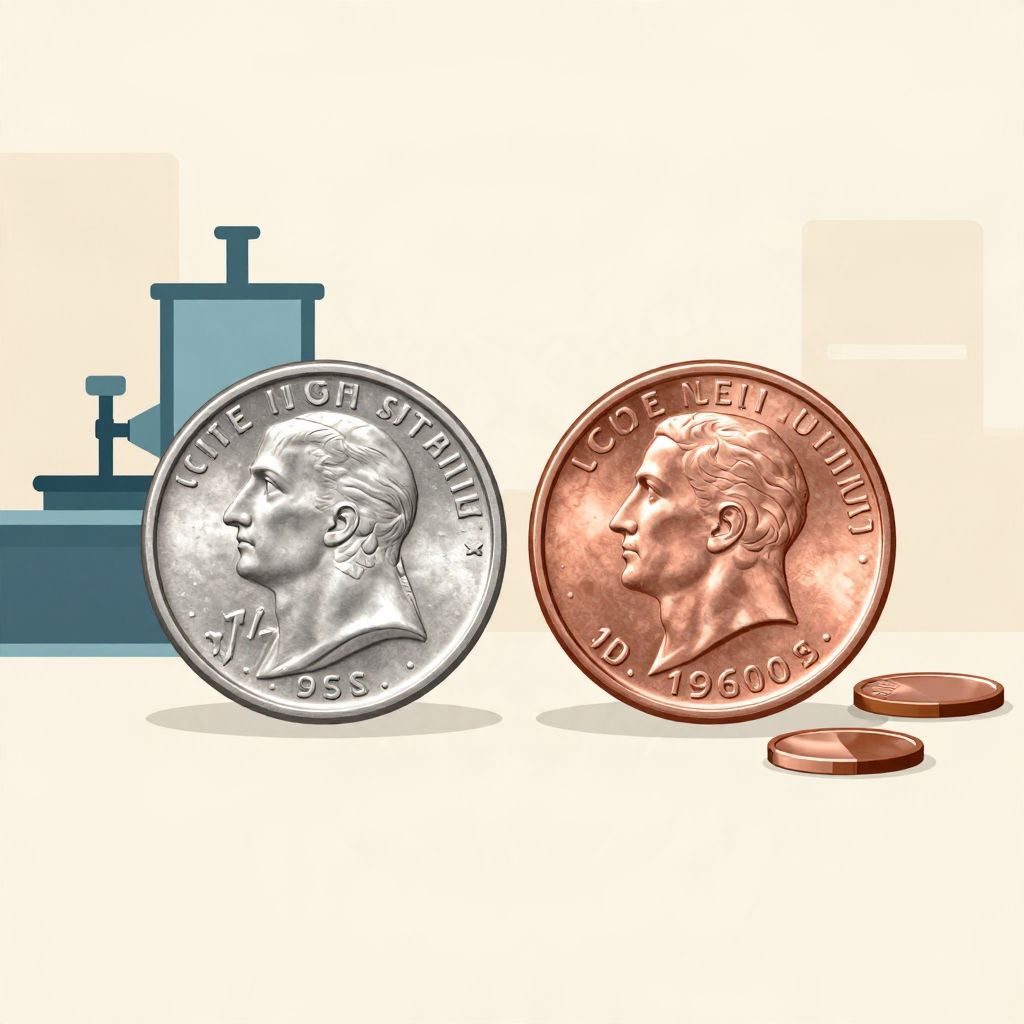
If you have ever wondered what year quarters stopped being silver, the short answer is 1965. That was the year the United States removed silver from regular circulating quarters and switched to a copper-nickel “clad” coinage that looked similar but contained no silver.
The change did not happen overnight in the public mind, though. Collectors, older Americans, and people who had saved pre-1965 coins often continued to think of quarters as “silver” for years afterward, because the coin’s design stayed the same while its metal changed.
What year did quarters stop being silver?
Quarters stopped being silver in 1965. Specifically, U.S. quarters dated 1965 and later were made of copper-nickel clad metal instead of 90% silver. The last regular-issue silver quarters for circulation were the 1964 quarters, though special silver collector versions were produced later in limited form.
Why the United States stopped making silver quarters
The end of silver quarters was driven by economics. By the early 1960s, the market value of silver was rising, and the metal in coins was becoming too valuable compared with the face value of the coins themselves. People also began hoarding silver coins, which reduced the amount of change in everyday circulation.
The U.S. government faced a practical problem: if silver prices kept climbing, coins could eventually be worth more melted down than spent at face value. That would have encouraged melting and made coin shortages worse. The solution was to remove silver from dimes, quarters, and half dollars used in daily commerce.
The Coinage Act of 1965
The major legal turning point was the Coinage Act of 1965. This law authorized the Treasury to produce quarters and dimes without silver for general circulation. It also reduced the silver content of half dollars for a transitional period before those coins too were changed permanently.
The new quarter kept the same Washington design, but its composition changed to a layered clad structure: outer layers of copper-nickel bonded to a pure copper core. This made the coin cheaper to produce and less vulnerable to silver-market pressures.
How to tell silver quarters from clad quarters
For most people, the easiest way to identify a silver quarter is by its date. Any regular U.S. quarter dated 1964 or earlier is silver, while quarters dated 1965 or later are generally clad and contain no silver. There are a few special collector issues, but that rule works for ordinary circulation coins.
Quick identification guide
- 1932–1964: 90% silver quarters
- 1965 and later: copper-nickel clad quarters for circulation
- Special collector issues: some modern quarters have silver versions, but they were not made for everyday change
Another clue is the edge. Silver quarters usually show a more uniform silver-gray edge, while clad quarters often reveal a visible copper stripe on the rim because of the sandwich-like metal layers inside the coin.
What silver quarters were made of before 1965?
From 1932 through 1964, most U.S. quarters were struck in an alloy that was 90% silver and 10% copper. This composition had been standard for many American silver coins for decades. The copper was added to make the coin harder and more durable, since pure silver is too soft for heavy circulation.
These quarters were not just money; they were also part of a larger monetary system in which precious metals still mattered. Even after the United States moved away from the gold standard in daily life, silver remained important in coinage until the 1960s.
Why 1964 is the last silver year people remember
When people ask what year quarters stopped being silver, they often hear 1964 and 1965 used almost interchangeably. That is because 1964 was the last year silver quarters were struck for circulation, while 1965 was the first year clad quarters appeared. In practical terms, 1964 marks the end of the silver era; 1965 marks the start of the new one.
This distinction matters. A quarter dated 1964 is silver, even though silver production for regular circulation was ending. A quarter dated 1965 is not silver, even though the public was still adjusting to the change and old silver coins were still in pockets, cash drawers, and coin jars.
Did all silver quarters disappear immediately?
No. Silver quarters did not vanish the moment the new coins were introduced. Millions of older silver quarters remained in circulation for a time, and many were saved by the public. Because the new clad quarters looked similar, the transition was gradual in everyday life.
In fact, for years after 1965, people could still receive silver quarters in change if older coins had not yet been pulled out of circulation. The government’s change was about what was being newly minted, not about instantly removing every older coin from the economy.
What happened to the old coins?
Many were spent, lost, or worn down in ordinary use. Others were hoarded because people recognized that the older coins contained precious metal. As silver prices rose and public awareness spread, the remaining silver coins increasingly moved out of circulation and into collections, coin jars, and bullion holdings.
The broader story of silver coinage in the United States
Silver quarters were part of a long American tradition of precious-metal coinage. For much of U.S. history, silver coins were not unusual. They were trusted as durable, familiar money and were tied to the nation’s wider monetary system.
By the mid-20th century, however, the economics of coin production had changed. Inflation, industrial demand for silver, and the rising bullion value of the metal all made silver coinage harder to justify. The quarter’s transition in 1965 was part of a broader modernization of U.S. money.
Why the quarter changed but the design stayed the same
The Washington quarter remained visually familiar because the government wanted the public to accept the new coin quickly. Keeping the same size and general appearance reduced confusion. The main change was inside the coin, not on its face.
This was a common strategy in monetary reforms: preserve the recognizable design while changing the metal composition. That helped the public continue using the coin without having to relearn the entire system.
Were there any silver quarters after 1965?
Yes, but only in special contexts. The U.S. Mint later produced some collector or commemorative quarters with silver content, especially for numismatic sets rather than everyday spending. These are not the same as the standard quarters used in circulation.
So if the question is about ordinary pocket change, the answer remains simple: regular circulating quarters stopped being silver in 1965. If the question includes special collector products, then the story becomes more complicated, because silver versions continued in limited minting programs.
Why this change still matters to collectors and history fans
The switch away from silver is important for more than coin collecting. It reflects a moment when the United States adapted its money to changing economic realities. It also shows how everyday objects can reveal larger historical shifts in prices, policy, and public behavior.
For collectors, the date matters because 1964 and earlier quarters have intrinsic metal value in addition to numismatic interest. For historians, the change marks the end of a long era in which circulating American coinage still carried significant precious-metal content.
Bottom line
Quarters stopped being silver in 1965, when the United States began issuing copper-nickel clad quarters for circulation under the Coinage Act of 1965. The last regular silver quarters were dated 1964. If you want to explore the transition further, you can also read about when quarters were made of silver and the related history of when silver nickels ended.