
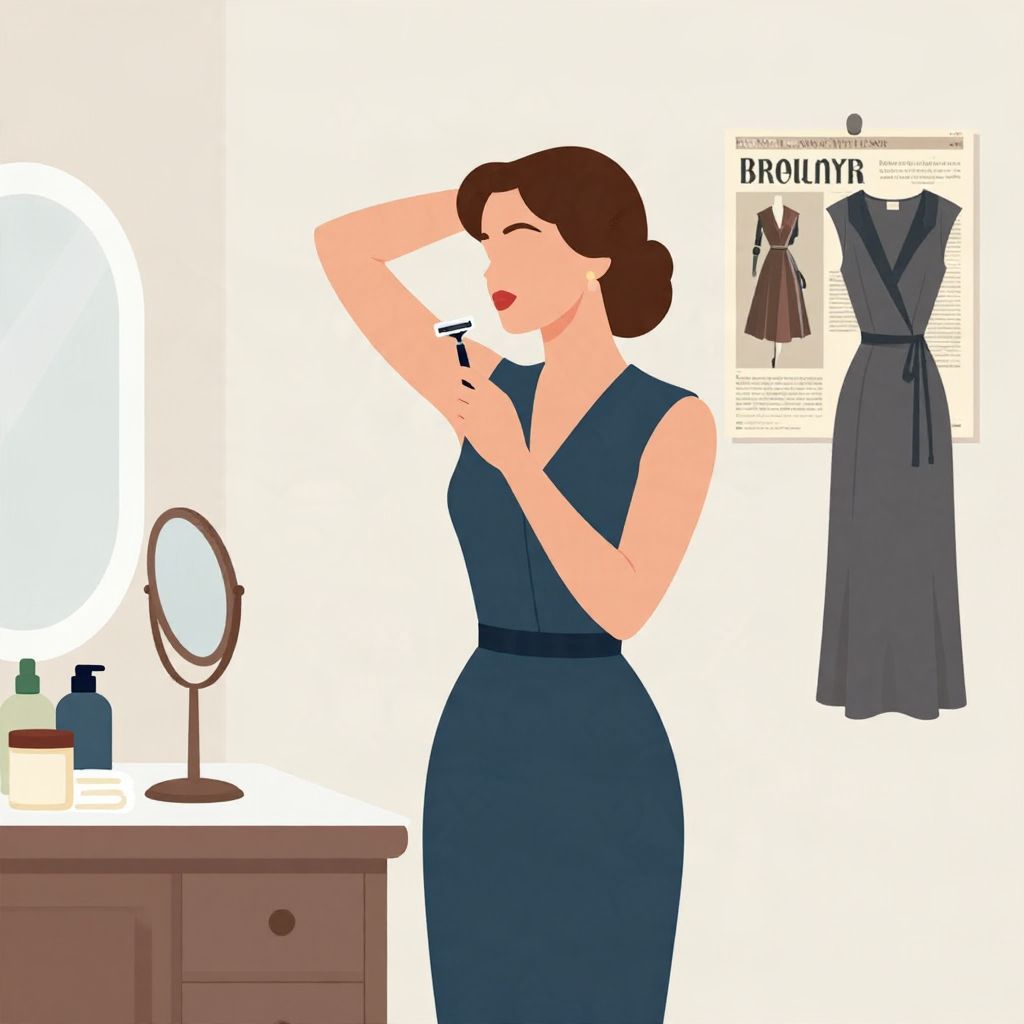
When did women start shaving their armpits? The short answer is: in the modern sense, it became a common beauty practice in the United States in the early 1900s, especially after 1915. It did not begin as an ancient universal custom. Instead, it emerged from a mix of fashion changes, advertising, and new ideas about feminine appearance.
The story is less about one invention than about a cultural shift. Once sleeveless dresses became popular and razor companies saw a new market, underarm shaving moved from rare to fashionable for some women, then gradually to a mainstream norm in many Western countries.
When did women start shaving their armpits?
Women began shaving their armpits as a widespread beauty practice in the 1910s, with the clearest turning point around 1915 in the United States. A 1915 advertising campaign for a women’s razor helped popularize the idea, but the habit spread gradually and unevenly rather than all at once.
The early history: not ancient, but modern
There is little evidence that shaving women’s armpits was a common or expected practice in most ancient societies. Hair removal existed in many cultures, but it usually focused on the face, legs, pubic area, or overall body grooming, and the reasons varied from hygiene and ritual to class and aesthetics. Underarm shaving as a specifically gendered beauty norm is largely a 20th-century development.
Hair removal before the 1900s
In earlier periods, women sometimes removed body hair with tools, powders, waxes, or depilatory pastes, but these practices were not standardized and were often limited to elite circles. In Europe and North America before the modern razor era, visible underarm hair was not a major public concern because clothing styles usually covered the area.
That matters: beauty norms depend on what is visible. As long as dresses had sleeves and underarms were mostly hidden, there was less social pressure to remove that hair. The practice became more relevant only when fashion changed.
Why 1915 is the key date
The best-known turning point came in 1915, when the American company Gillette introduced a women’s razor marketed for underarm use. The product was called the Milady Décolleté, and the advertising tied it to sleeveless evening wear and the idea of a smooth, modern feminine body. This was not the first time women removed underarm hair, but it was a major moment in making it commercially visible and socially desirable.
Advertising did not create the practice from nothing. Rather, it gave a new consumer product and a new language to an existing possibility. The timing was important because women’s fashion was changing quickly in the 1910s, and the underarm became a newly visible part of the body in public dress.
Fashion made the underarm visible
In the late 19th and early 20th centuries, women’s clothing in Europe and the United States increasingly featured shorter sleeves, lower necklines, and lighter fabrics. Evening wear and summer clothing especially exposed the underarm area. Once that happened, magazines and advertisers could frame underarm hair as something to be managed.
This was a classic case of fashion and consumer culture reinforcing one another. The more a body part was exposed, the more it could be turned into a “problem” that products promised to solve.
How advertising helped normalize the practice
Early 20th-century advertising was powerful because it linked grooming to modernity, cleanliness, romance, and social success. Underarm shaving was often presented not as a medical necessity but as a refinement. The message was subtle at first: a woman who shaved was polished, up-to-date, and socially aware.
Over time, repeated ads and magazine images made the practice seem ordinary. By the 1920s and 1930s, underarm shaving had become increasingly familiar in American consumer culture, though not universally adopted by all women or in all regions.
From novelty to expectation
What began as a marketing opportunity gradually became a social expectation. That shift is important historically. Many grooming habits start as optional trends and later become norms, especially when they are tied to ideas about femininity, class, and respectability.
By mid-century, in much of the United States and parts of Western Europe, shaving underarms was commonly treated as part of ordinary women’s grooming. But this was never a timeless rule; it was a modern custom that spread through commerce and culture.
Was it ever universal?
No. Even after the 1910s, not all women shaved their armpits, and not all societies adopted the practice in the same way. Adoption depended on age, class, region, religion, personal preference, and access to razors or other hair-removal methods. Rural women, older women, and women outside the main advertising markets may have encountered the norm later or not at all.
It is also important to avoid assuming that “women” everywhere followed the same beauty standards. The history of underarm shaving is mostly a history of Western consumer culture, especially in the United States, and its spread from there into other places through media, fashion, and global marketing.
Different meanings in different places
In some cultures, body hair removal had long-standing traditions unrelated to modern Western beauty advertising. In others, underarm shaving became common only in the later 20th century. The practice’s meaning could range from hygiene and modesty to fashion and sexual attractiveness, depending on the setting.
What came before the razor campaign?
Before the 1910s, women’s body hair was not absent from public discussion, but it was not yet framed in the same way. Hair removal products existed, and some women did remove underarm hair, especially in elite or performance contexts. Still, there was no broad social consensus that women should shave their armpits.
The modern razor made routine shaving easier, safer, and more marketable. That technological change mattered as much as the cultural one. A practice becomes common when it is both socially encouraged and practically convenient.
Technology and convenience
Safety razors, improved blades, and mass production lowered the barrier to shaving. Before that, shaving was more difficult and more likely to be associated with barbers or professional grooming. Once personal razors became cheaper and easier to use, regular underarm shaving became far more feasible for ordinary consumers.
How the norm spread in the 20th century
After the 1910s, the practice expanded through several overlapping forces:
- Fashion: sleeveless and shorter-sleeved clothing exposed the underarm more often.
- Advertising: magazines and product campaigns linked smooth skin to femininity.
- Consumer goods: razors and depilatory products became widely available.
- Social pressure: women saw the practice in ads, films, and among peers.
By the mid-20th century, underarm shaving had become deeply normalized in many Western settings. It was no longer just a beauty choice for a small group; it was often treated as part of ordinary female grooming.
Why the history matters
The history of armpit shaving shows that beauty standards are not fixed or natural. They are made over time through fashion, commerce, media, and social expectations. What seems “normal” in one era can be quite new in historical terms.
It also shows how gender norms are built. Underarm shaving became associated with women not because of an ancient tradition, but because modern advertisers and fashion industries helped define smooth underarms as feminine and desirable. That association then persisted long after the original marketing moment.
The best historical answer in one sentence
Women started shaving their armpits as a recognizable and increasingly common beauty practice in the 1910s, with a major boost in 1915 from American razor advertising and changing fashion, and it became broadly normalized over the following decades rather than overnight.
In other words, the practice is modern, not ancient: a product of the early 20th century’s changing clothes, consumer culture, and ideas about femininity. For more on related cultural and gender history, see “Frailty, Thy Name Is Woman” and “What Is Victorian Disease?”.