
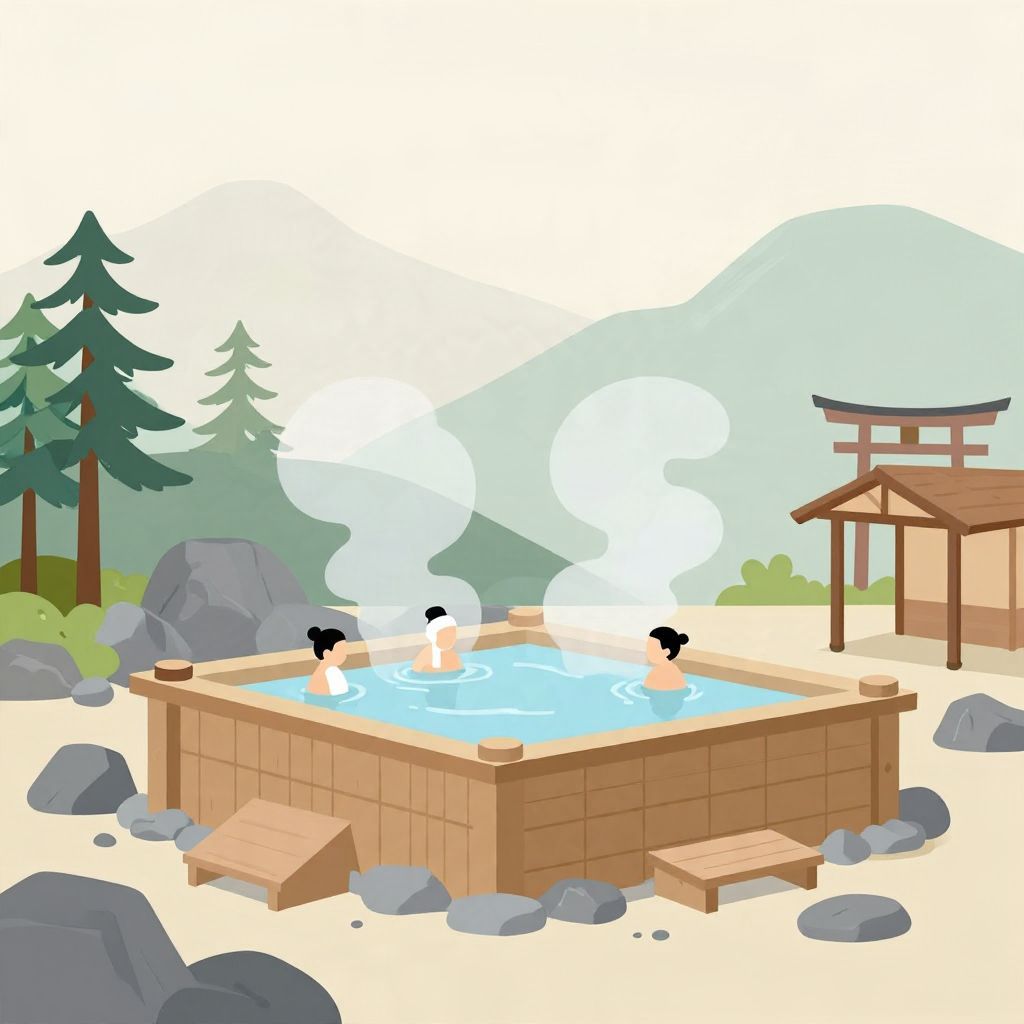
What is onsen in Japan? In the simplest sense, an onsen is a natural hot spring, and the word also refers to the bathing culture built around those mineral-rich waters. For centuries, Japanese people have used onsen for washing, relaxation, healing, and social life. Today, they remain one of Japan’s most recognizable cultural traditions.
Onsen are not just tourist attractions. They are part of Japan’s environmental history, religious traditions, and everyday leisure culture, shaped by volcanic geology and centuries of changing ideas about health and cleanliness.
What Is Onsen in Japan?
An onsen is a hot spring in Japan whose water is naturally heated underground and usually contains minerals. In historical and cultural terms, the word also means the bathing facility or resort built around that spring. Onsen became important because Japan’s volcanic landscape created abundant hot water sources, while religious, medical, and social customs gave bathing special meaning.
Why Does Japan Have So Many Onsen?
Japan sits on an active tectonic zone, where volcanic activity is common. That geology produces hot groundwater in many regions, especially in mountainous areas. As a result, hot springs are widespread across the archipelago, and many settlements developed near them because the water was useful, comforting, and sometimes believed to have therapeutic value.
Geology and natural heat
The existence of onsen is tied to Japan’s position along the Pacific “Ring of Fire.” Earthquakes and volcanoes have long shaped the islands, and underground heat warms groundwater that rises to the surface. This natural process is the foundation of onsen culture: without volcanic activity, Japan would not have developed such a dense network of hot spring bathing places.
Mineral water and local identity
Different springs contain different minerals, temperatures, and water qualities. Over time, individual onsen towns became known for distinctive waters and local reputations. Some were said to help with fatigue or skin conditions, though modern medical claims should be treated cautiously. Historically, these beliefs mattered because they encouraged travel, settlement, and ritual bathing.
How Did Onsen Begin in Japanese History?
Bathing in hot springs in Japan is ancient, but the earliest history is not documented in a single clear origin story. Archaeological and textual evidence suggests that people knew and used hot springs long before the medieval period. By the early historical era, onsen were already associated with purification, healing, and religious practice.
Ancient and early historical roots
Japanese sources from the early centuries of state formation mention hot springs and bathing. One famous early site is Dogo Onsen in Ehime, often presented in tradition as extremely old. Such claims are difficult to verify precisely, but they show that hot springs had deep cultural prestige. By the time court culture developed, bathing was already linked to both comfort and status.
Buddhism, purification, and healing
In early Japan, bathing was not merely about cleanliness. It was also connected to ideas of purification, merit, and bodily care found in Buddhist practice and broader religious customs. Monasteries sometimes used baths for monks and travelers, and hot springs could be seen as places of spiritual and physical renewal. This helped onsen become more than a practical water source.
How Did Onsen Culture Develop in the Middle Ages?
During the medieval period, onsen became more visible as travel, pilgrimage, and warrior society expanded. Hot spring sites attracted monks, nobles, and later ordinary travelers. Inns and small settlements grew around them, creating the beginnings of the onsen town as a recognizable social space.
Pilgrimage and travel
Japan’s medieval roads were difficult and often dangerous. Travelers welcomed places where they could rest, wash, and recover. Onsen towns offered shelter and a sense of relief, especially for pilgrims moving between sacred sites. The combination of travel and bathing helped establish onsen as places of hospitality as well as healing.
Warriors and elite patronage
Elite patrons, including warriors and local rulers, supported certain hot springs, which increased their prestige. When influential people visited a spring, its reputation spread. This pattern was common in premodern societies: elite use often helped turn a local resource into a celebrated cultural institution. Onsen benefited from that process in many regions of Japan.
What Changed in the Edo Period?
The Edo period (1603–1868) was crucial for the spread of onsen culture. Peace under Tokugawa rule made travel safer, and a growing urban population created more demand for leisure, health, and recreation. Onsen became part of a broader culture of domestic travel and seasonal outings.
Travel culture and popular tourism
As roads improved and travel became more regulated, more people could visit famous springs. Guidebooks, woodblock prints, and travel routes helped popularize certain onsen towns. This was an important shift: onsen were no longer only for the sick or elite. They became destinations for merchants, townspeople, and families seeking pleasure as well as treatment.
Bathing customs and social order
Public bathing in the Edo period was common, but onsen had a special status because the water came from a natural source and was thought to have special qualities. Bathing etiquette developed around modesty, cleanliness, and communal use. These customs helped shape the modern Japanese bathing culture that still surrounds onsen today.
How Did Modern Japan Transform Onsen?
In the Meiji era and after, Japan modernized rapidly, but onsen remained important. Railways and later roads made travel easier, turning many hot spring areas into major resorts. At the same time, modern medicine, tourism, and local development changed how people understood and used onsen.
From local springs to resort towns
Transportation networks made it possible for city dwellers to visit onsen for short holidays or longer stays. Inns expanded, and some towns became well-known national destinations. This commercialization did not erase older meanings; instead, it blended traditional bathing with modern leisure travel.
Health, recreation, and national identity
In modern Japan, onsen came to symbolize both relaxation and a distinct national culture. They were often presented as peaceful, restorative spaces that contrasted with industrial city life. While some medical claims about mineral water persisted, the strongest historical importance of onsen lies in their role as a shared cultural practice rather than a proven cure-all.
What Happens at an Onsen?
An onsen visit follows customs that reflect long historical habits. Bathers usually wash thoroughly before entering the hot spring bath, and the bath itself is for soaking rather than scrubbing. The practice emphasizes cleanliness, respect for others, and quiet enjoyment of the water.
Basic etiquette
- Wash and rinse before entering the bath.
- Do not bring soap or shampoo into the soaking pool.
- Keep towels out of the water.
- Respect silence and shared space.
- Follow local rules, especially at mixed or outdoor baths.
Indoor and outdoor baths
Many onsen have indoor baths, outdoor baths called rotenburo, and rest areas. Outdoor baths are especially associated with scenic landscapes and seasonal change. This connection between nature and bathing is one reason onsen have remained so attractive in Japanese culture over many centuries.
Are Onsen the Same as Sentō?
No. A sentō is a public bath that usually uses heated tap water, while an onsen uses natural hot spring water. Historically, both were important in Japanese urban life, but they are not identical. The distinction matters because onsen are tied to specific geological sources and to a long tradition of place-based bathing.
Why the difference matters historically
The difference between onsen and sentō shows that Japanese bathing culture developed in multiple forms. Sentō served dense cities where private baths were limited, while onsen connected people to landscapes, travel, and regional identity. Together, they reveal how cleanliness and communal bathing became central to everyday life in Japan.
Why Do Onsen Matter in Japanese History?
Onsen matter because they connect natural environment, religion, medicine, travel, and social life. They are not a minor custom but a long-lasting institution shaped by geography and history. From ancient hot spring use to modern tourism, onsen show how a natural resource can become a cultural tradition with national significance.
Lasting historical significance
Onsen helped create travel networks, supported local economies, and shaped ideas about health and relaxation. They also preserved older values of purification and communal bathing even as Japan modernized. In that sense, onsen are both ancient and contemporary: a living tradition rooted in the country’s deep past.
Key Facts About Onsen in Japan
- Onsen means a natural hot spring and, by extension, the bathing facility built around it.
- Japan has many onsen because of its volcanic geology and underground heat.
- Hot spring bathing has ancient roots, though exact first origins are not known.
- Onsen grew in importance through religion, travel, and elite patronage.
- The Edo period helped spread onsen as a popular leisure activity.
- Modern transport turned many onsen towns into major tourist destinations.
- Onsen are distinct from sentō, which use heated water rather than natural spring water.
So, what is onsen in Japan? It is a natural hot spring, but also a centuries-old bathing culture shaped by geology, religion, travel, and social custom. To understand Japanese history more broadly, you may also want to read about why Japan is called the Land of the Rising Sun and whether Japan still has an emperor.