
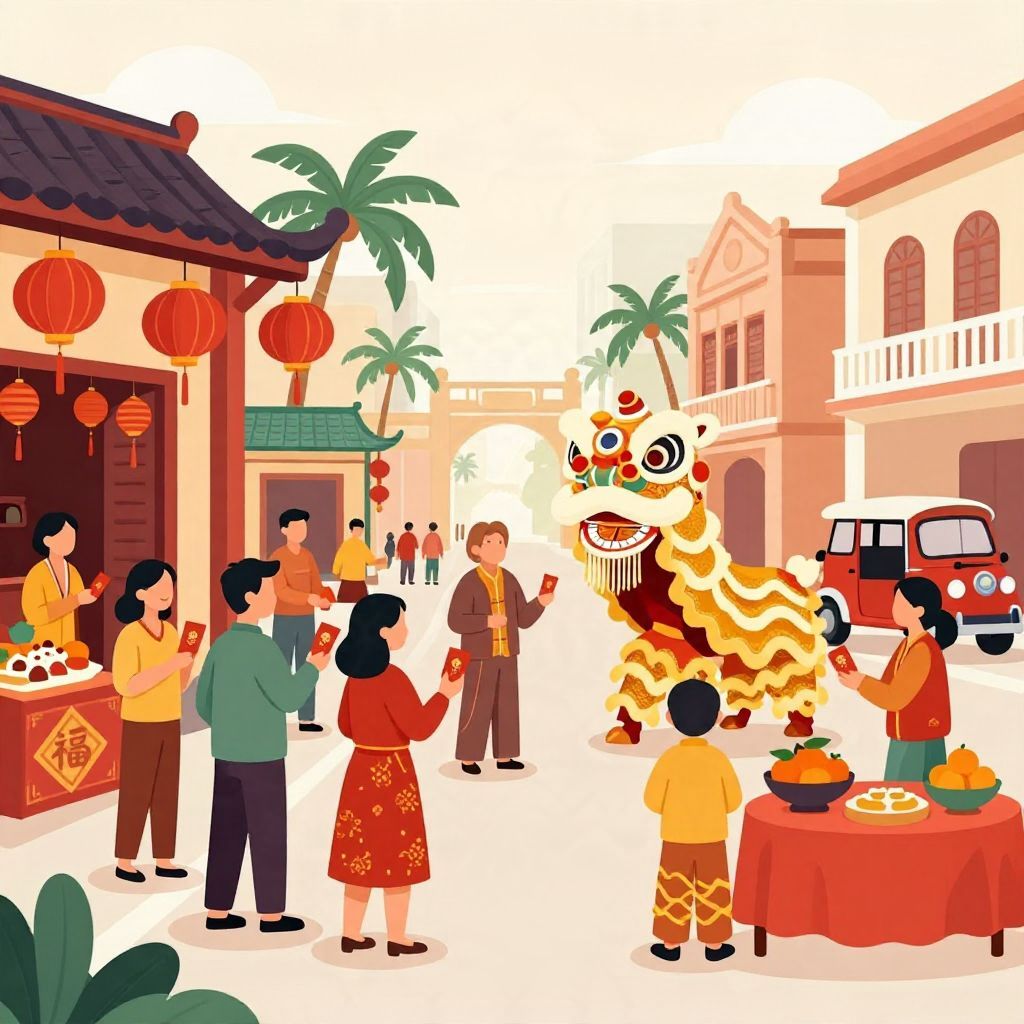
Do Filipinos celebrate Lunar New Year? Yes—many do, but not all, and the holiday has a layered history in the Philippines. It is most strongly observed by Filipino Chinese communities, while some wider public celebrations have grown in recent decades through commerce, tourism, and cultural recognition.
The answer depends on what is meant by “celebrate.” In the Philippines, Lunar New Year is not a traditional nationwide holiday in the same way as Christmas or Holy Week, but it is widely visible in cities, schools, malls, and local governments, especially in places with long Chinese-Filipino communities such as Manila, Cebu, Iloilo, and Davao.
Do Filipinos Celebrate Lunar New Year?
Yes, many Filipinos celebrate Lunar New Year, especially Filipino Chinese families and communities. The holiday has deep roots in Chinese migration to the archipelago, but its public observance in the Philippines is also a modern expression of multicultural identity, commerce, and state recognition rather than a single ancient national tradition.
Why Lunar New Year Matters in the Philippines
Lunar New Year in the Philippines is best understood as a cultural and ethnic celebration that became more publicly visible over time. For Filipino Chinese households, it often includes family gatherings, offerings, red decorations, food, and visits to relatives. For many other Filipinos, it is a festive public event rather than a private ancestral observance.
A holiday shaped by migration and trade
Chinese merchants and settlers have lived in the Philippine islands for centuries, well before Spanish colonization. Trade across the South China Sea linked the islands to Fujian, Guangdong, and other coastal regions of China. Those connections brought not only goods but also customs, beliefs, and family traditions that survived through generations.
By the Spanish colonial period, Chinese communities were already established in Manila and other ports. Over time, many Chinese migrants intermarried with local populations, creating a large Chinese-Filipino community. Lunar New Year remained important within these families even as they became part of a broader Philippine society shaped by indigenous, Spanish, American, and Asian influences.
Not a single uniform Filipino practice
It is important not to treat “Filipinos” as one cultural group with one holiday calendar. The Philippines is a diverse archipelago with many ethnolinguistic communities, Christian majorities, Muslim communities in Mindanao and the Sulu archipelago, and Chinese-Filipino minorities in urban centers. Lunar New Year is celebrated differently depending on family background, religion, and region.
- Filipino Chinese families often observe the holiday as a major family event.
- Some non-Chinese Filipinos join public festivities, especially in cities.
- Businesses and schools may mark the occasion with events, decorations, or themed activities.
- Local governments in some areas support celebrations to recognize cultural diversity and tourism.
How Lunar New Year Became Visible in Philippine Public Life
The public celebration of Lunar New Year expanded as Chinese-Filipino communities became more economically and politically influential, especially in urban life. In the 20th century, Chinese schools, associations, temples, and family networks helped preserve customs. Later, media coverage and public events made the holiday more familiar to the wider population.
From private family observance to public festival
For much of Philippine history, Lunar New Year was primarily a household and community observance. Families prepared food, cleaned homes, offered prayers, and visited elders. Public visibility increased in the late 20th and early 21st centuries as malls, city governments, and cultural organizations promoted celebrations with lion dances, fireworks, and street performances.
This shift does not mean the holiday became “fully Filipino” in a single historical moment. Rather, it became part of the country’s shared urban culture, especially in Metro Manila and other commercial centers where Chinese-Filipino life has long been influential.
Chinese Filipino identity and continuity
Many Chinese Filipinos trace their ancestry to migrants who arrived in different waves over centuries. Some retained Chinese surnames, languages, and customs; others became deeply integrated into local society while preserving selective traditions. Lunar New Year remained one of the clearest markers of that continuity, passed down even when other parts of heritage changed.
In this sense, the holiday is both old and adaptable. It has survived colonial rule, war, migration, and modernization because it is tied to family memory and communal belonging. The forms of celebration may change, but the meaning of reunion, luck, respect for elders, and renewal remains central.
What Filipinos Do During Lunar New Year
Celebrations vary, but several customs are common in Filipino Chinese homes and community events. These practices are often associated with broader Chinese New Year traditions, though local Filipino versions may differ in language, food, and style. The holiday typically emphasizes family, prosperity, and good fortune for the coming year.
Common customs
- Family reunion meals with symbolic dishes and shared food.
- Giving and receiving red envelopes, especially to children and younger relatives.
- Cleaning the home before the new year to symbolically remove bad luck.
- Wearing red or festive clothing as a sign of luck and celebration.
- Visiting relatives and elders to show respect and strengthen family ties.
- Watching lion or dragon dances in public spaces, malls, or community centers.
Some families also consult lucky dates or follow food taboos and symbolic customs, though these vary widely. The important historical point is that these practices are maintained not because every Filipino follows them, but because specific communities have preserved them across generations.
Food and symbolism
Food is central to Lunar New Year in the Philippines, as it is elsewhere in the Chinese diaspora. Dishes may symbolize longevity, wealth, unity, or abundance. In Filipino Chinese households, the meal often reflects both Chinese tradition and local taste. This blending is a hallmark of Philippine cultural history: traditions are rarely copied unchanged; they are adapted to local life.
Is Lunar New Year a National Holiday in the Philippines?
Lunar New Year is recognized in the Philippines as a special non-working holiday, but it is not the country’s primary national New Year celebration. The Philippines follows the Gregorian calendar for the civil New Year on January 1, while Lunar New Year is observed separately according to the lunar calendar and often falls in late January or February.
Two New Years, different meanings
This dual calendar reality is common in many Asian societies. In the Philippines, January 1 is the formal national New Year, while Lunar New Year is a cultural and religious observance tied mainly to Chinese heritage. The existence of both reflects the country’s layered history: indigenous traditions, Spanish Catholic influence, American-era institutions, and Asian regional connections all coexist.
Government recognition of Lunar New Year also signals how Philippine public culture has broadened. Official acknowledgment does not erase the holiday’s ethnic roots; instead, it shows how a once community-specific observance can become part of a wider national calendar.
Historical Background: Chinese Presence in the Philippines
The history of Lunar New Year in the Philippines cannot be separated from the long history of Chinese settlement in the islands. Chinese traders were active in Philippine waters before Spanish colonization, exchanging ceramics, silk, metal goods, and other products for local resources. Over centuries, these contacts became permanent communities.
Spanish colonial era and the Chinese community
Under Spanish rule, Chinese residents in Manila were often essential to commerce, but they also faced restrictions, suspicion, and periodic violence. Despite these pressures, Chinese communities persisted and expanded. Some converted to Christianity, some intermarried with local populations, and many maintained cultural practices within family and neighborhood life.
During this period, Lunar New Year likely remained more private than public. Colonial authorities often regulated minority communities, and public displays of distinct identity could be constrained. Even so, the holiday endured in homes, guilds, and community networks.
American period and modern urban growth
In the American colonial period and after independence, Philippine cities grew rapidly. Chinese-Filipino entrepreneurs, educators, and civic groups became increasingly visible in business and public life. As urban neighborhoods expanded, so did opportunities to display cultural traditions more openly. Lunar New Year became easier to celebrate in public spaces, especially where Chinese-Filipino institutions were strong.
The holiday’s broader recognition in modern times also reflects changing ideas about Filipino identity. Rather than defining the nation narrowly, many Filipinos now understand the country as plural, with multiple cultural inheritances. Lunar New Year fits that more inclusive view.
Popular Misconceptions About Filipino Lunar New Year
Because the Philippines is often associated internationally with Catholic traditions, some people assume Lunar New Year is not really part of Filipino life. That is misleading. The better question is not whether all Filipinos celebrate it, but how different Filipino communities participate in it and what historical forces shaped that participation.
Common misunderstandings
- Misconception: All Filipinos celebrate Lunar New Year in the same way.
Reality: Celebration is strongest among Filipino Chinese communities and varies widely elsewhere. - Misconception: Lunar New Year is a recent import with no Philippine history.
Reality: Chinese presence in the Philippines is centuries old. - Misconception: The holiday replaced Filipino New Year traditions.
Reality: The Philippines has both the Gregorian New Year and Lunar New Year, each with different cultural meanings.
The Lasting Significance of Lunar New Year in the Philippines
Lunar New Year in the Philippines shows how holidays can reveal deeper historical patterns: migration, intermarriage, commerce, identity, and adaptation. What began as a community tradition among Chinese settlers and their descendants has become a visible part of Philippine urban culture. That does not make it universal, but it does make it historically important.
Today, the celebration is both a family ritual and a public cultural event. It reflects the long presence of Chinese Filipinos in the archipelago and the broader Philippine pattern of absorbing outside influences while reshaping them locally. In that sense, Lunar New Year is not just celebrated in the Philippines; it is also a reminder of how Philippine history has always been connected to Asia.
If you want to compare how other countries in the region observe the holiday, you may also find it useful to read about whether Japanese celebrate Lunar New Year and explore the broader idea of what a cultural script is.