
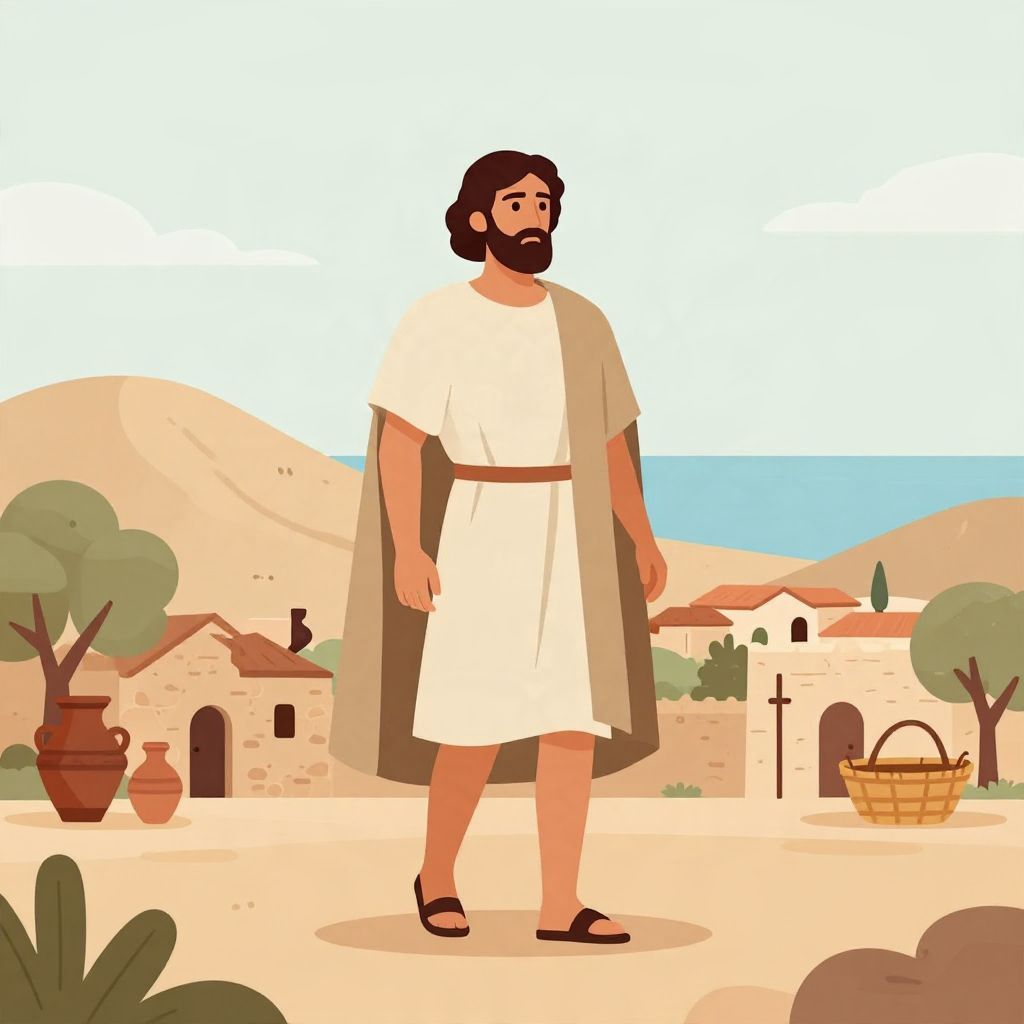
When people ask what Jesus really looked like, they are usually asking a historical question, not a devotional one. The short answer is that no one can recover an exact portrait of Jesus of Nazareth, but historians can say a great deal about how a Jewish man from Roman-occupied Galilee in the early first century would likely have appeared.
That means the familiar pale, long-haired European Jesus of later art is almost certainly not historically accurate. The best reconstruction comes from archaeology, ancient texts, and knowledge of everyday life in first-century Judea and Galilee.
What did Jesus really look like?
Historically, Jesus was most likely a short-to-average-height Jewish man with olive-brown skin, dark eyes, dark curly or wavy hair, and a beard. He probably wore simple homespun clothing and looked like an ordinary Galilean laborer, not the tall, fair-skinned figure common in Western art. Exact features remain unknown.
Why historians cannot give a precise portrait
No surviving contemporary image of Jesus has been identified, and the New Testament does not provide a detailed physical description. The earliest Christian writings focus on his message, death, and resurrection, not his appearance. That silence matters: it means later artistic traditions filled in the gaps.
Historians therefore work indirectly. They compare the world Jesus lived in with evidence from archaeology, ancient Jewish customs, Roman-era art, and skeletal studies from the region. These sources do not produce a photograph-like answer, but they do narrow the possibilities considerably.
The limits of the sources
- Textual sources: The Gospels say little about Jesus’ face, height, or build.
- Archaeology: Burial remains, tools, clothing fragments, and household evidence help reconstruct daily life.
- Art history: Early Christian images show how believers imagined Jesus, not necessarily how he looked.
- Anthropology: Studies of first-century Levantine populations help estimate typical physical traits.
What a first-century Jewish man from Galilee likely looked like
Jesus was born into a Jewish family in Roman Palestine, probably around 4 BCE to 6 CE, and grew up in Nazareth in Galilee. As a man from that environment, he would likely have shared the physical characteristics common among local populations: darker skin than later European depictions suggest, black or very dark brown hair, and facial features shaped by the eastern Mediterranean world.
He also would not have looked “clean” by modern standards. Men in his social class typically worked outdoors, walked long distances, and had little access to bathing or grooming products. His appearance would have reflected poverty, labor, and travel more than refinement.
Likely physical traits
- Skin tone: Medium to dark olive-brown, shaped by ancestry and sun exposure.
- Hair: Dark, likely short to medium length by practical necessity, though exact length is uncertain.
- Facial hair: A beard is likely, since beards were common among Jewish men of the period.
- Build: Lean and physically active, not heavy-set.
- Height: Probably around average or slightly below average for the region and era, though no exact measurement is possible.
What clothing would Jesus have worn?
Clothing is one of the strongest clues historians have. Jesus would almost certainly have worn the simple garments of a lower-status Jewish man: a tunic, a cloak, and sandals. These were practical, inexpensive, and suited to a life of movement and outdoor travel. His clothes were likely plain rather than decorative.
The Gospels also suggest that his clothing was ordinary enough that it did not make him stand out. In a society where status could be read from fabric quality, color, and trimming, Jesus would have looked like someone from the working class, not an elite or priestly figure.
Typical clothing elements
- Tunic: A basic inner garment, probably made of wool or linen.
- Cloak: A heavier outer layer for warmth and travel.
- Belt or sash: Used to secure the tunic and carry small items.
- Sandals: Simple leather footwear, if he had them at all times.
Why the famous image of Jesus looks European
The long-haired, light-skinned Jesus with delicate features became dominant in European Christian art over many centuries. Artists usually painted Jesus to resemble the people around them, because sacred art was meant to feel immediate and relatable. As Christianity spread through Europe, Jesus increasingly took on European facial features, skin tones, and hair textures.
This was not a historical claim so much as a cultural translation. Medieval and Renaissance artists were not trying to reconstruct a first-century Galilean man with modern archaeological precision. They were creating devotional images shaped by theology, local aesthetics, and the conventions of their own time.
How art changed the image of Jesus
- Early Christian art: Often symbolic and stylized, not naturalistic.
- Byzantine art: Developed a more standardized sacred face with long hair and beard.
- Medieval and Renaissance art: Added European ideals of beauty and suffering.
- Modern popular culture: Often repeats Renaissance-style images as if they were historical fact.
Did Jesus have long hair?
This is one of the most debated details, but the historical answer is probably “not necessarily.” Long hair became common in Christian art, yet first-century Jewish men did not all wear their hair the same way. The Apostle Paul’s later comments about hair length suggest that hair length could be a cultural issue, but they do not prove Jesus had long hair.
Because Jesus was a Jewish man living in a practical, working environment, many historians think shoulder-length hair is possible but not certain. Very long, flowing hair in the style of later European paintings is less likely than a more functional, modest style.
What about the Shroud of Turin and other relics?
Relics such as the Shroud of Turin have inspired centuries of devotion and debate, but they do not provide a secure historical portrait of Jesus. The shroud’s authenticity remains disputed, and even if it were ancient, it would not necessarily preserve a reliable likeness. Historians treat such objects cautiously.
Likewise, later icons, miracle images, and devotional traditions are valuable for understanding Christian belief and art history, but they are not direct evidence of Jesus’ actual face. They tell us how communities imagined him, not how he objectively appeared.
What historians can say with the most confidence
The most reliable historical reconstruction is modest and grounded. Jesus was a Jewish man from early first-century Galilee, likely of ordinary physical appearance for his time and place. He would have blended into the local population more than modern art suggests. His appearance would have communicated his social status: poor, rural, and rooted in the everyday life of Roman Palestine.
That conclusion matters because it changes how we picture him. The historical Jesus was not a figure visually set apart by luxury, whiteness, or aristocratic style. He was more likely a weathered provincial teacher whose appearance reflected the hard realities of ancient life.
A historically plausible reconstruction
- Middle Eastern Jewish ancestry
- Dark hair and eyes
- Olive-brown skin
- Short-to-medium beard
- Simple tunic and cloak
- Lean, travel-worn body
- Unadorned, practical grooming
Why this question still matters
People ask what Jesus really looked like because images shape belief. A historically grounded answer helps separate the ancient man from the later artistic traditions built around him. It also reminds us that Jesus lived in a specific time, place, and culture, not in a timeless visual vacuum.
Understanding that context does not diminish his importance. Instead, it makes the history more concrete. Jesus was not an abstract icon dropped into the ancient world; he was a Jewish teacher from Galilee whose body, clothing, and daily life were shaped by the realities of his own society.
In the end, the historically accurate answer is simple: we cannot know Jesus’ exact face, but we can say that he almost certainly looked like a first-century Jewish man from Roman Palestine, not the later Europeanized images that became familiar in Western art. For related context, you may also want to read about how old Jesus was when he was crucified and what happened to Judas after betraying Jesus.