
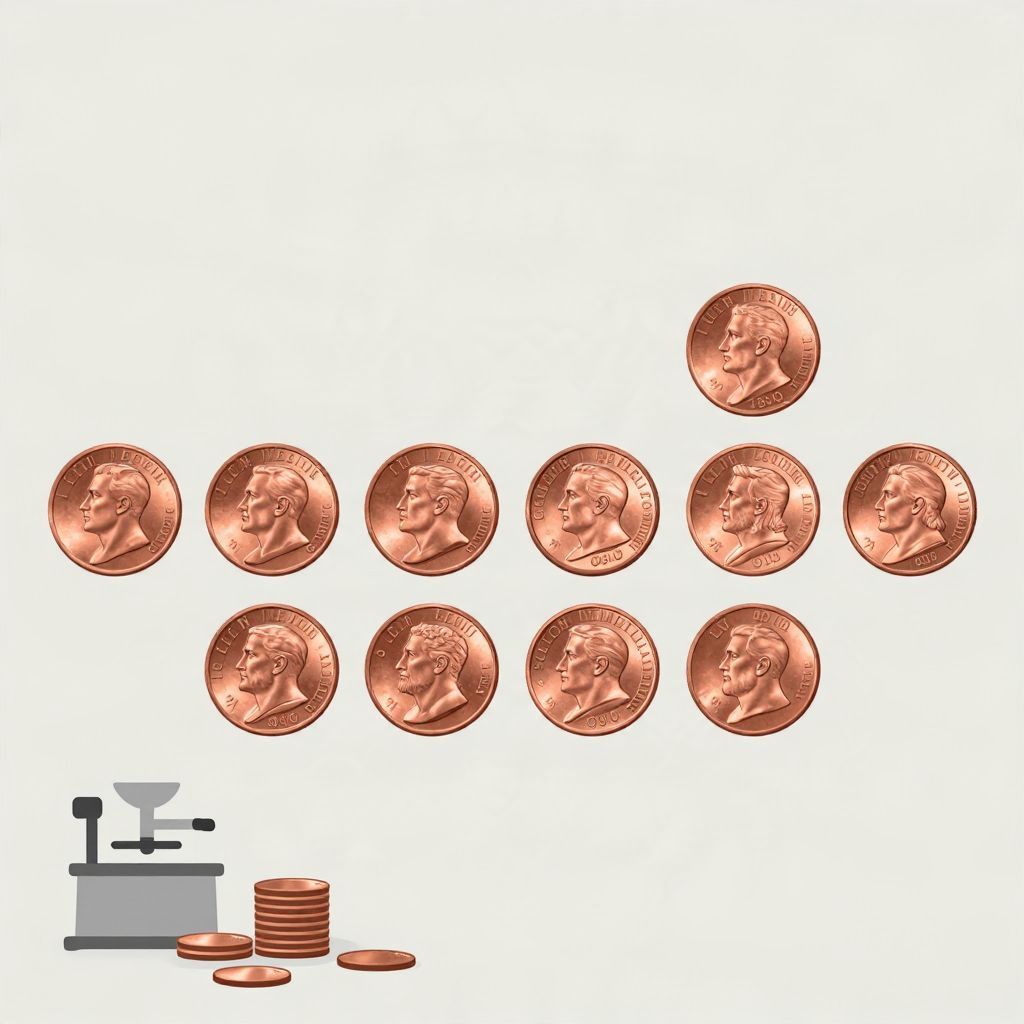
When did pennies stop being copper? The short answer is that U.S. pennies stopped being mostly copper in 1982. That year, the United States Mint changed the penny’s composition from a copper-heavy alloy to a mostly zinc coin with a thin copper plating.
The change was driven by rising copper prices, not by a sudden redesign of the penny’s appearance. To the eye, the coin still looked copper-colored, but its metal content and weight changed in a way that reflected broader economic pressures in the late 20th century.
What year did pennies stop being copper?
1982 is the key year. Before then, most U.S. pennies were made of 95% copper and 5% tin and zinc. Beginning in 1982, the Mint shifted to a core of 97.5% zinc with a thin copper coating. Because both versions circulated that year, 1982 is the transition point rather than a single clean break.
Why the penny changed in 1982
The change happened because the metal in the coin was becoming more valuable than the coin itself. By the early 1980s, copper prices had risen enough that making pennies from the old copper alloy became expensive. The government wanted to keep producing a one-cent coin without spending more than one cent to make it.
The economics behind the switch
For much of American history, coinage used metals whose value and durability made sense for everyday use. Copper was practical because it was sturdy, familiar, and relatively affordable. But as commodity markets changed, the cost of copper climbed. If a penny’s metal content approached or exceeded its face value, the coin became uneconomical to produce.
The Mint’s solution was to preserve the penny’s size and color while replacing most of the copper with zinc, a cheaper metal. A thin copper layer gave the new coin the familiar appearance people expected in change.
What the old copper penny was made of
For decades before 1982, the standard U.S. penny was an alloy of 95% copper and 5% tin and zinc. That composition dates back to the modern Lincoln cent introduced in 1909, though the exact alloy changed slightly over time. The important point is that the pre-1982 penny was genuinely copper-based, not merely copper-colored.
How to tell old pennies from new ones
Collectors and curious shoppers often notice the difference in weight and sound. The pre-1982 copper cent weighs about 3.11 grams, while the newer zinc cent weighs about 2.5 grams. If a penny from 1982 is weighed, it may be either type, because both compositions were struck that year.
- Pre-1982 penny: mostly copper, heavier, solid copper color throughout
- 1982 transition pennies: either copper or zinc, depending on the specific coin
- Post-1982 penny: zinc core with copper plating, lighter in weight
Why 1982 is a transition year, not a single cutoff
One reason the question is often answered with “1982” rather than an exact month is that the Mint did not replace every penny overnight. During that year, both old-style and new-style pennies were produced. Some 1982 cents are copper, and some are zinc. This makes 1982 a transitional year in U.S. coin history.
That means the phrase “when did pennies stop being copper” can be understood in two ways. If you mean the year the Mint changed the composition, the answer is 1982. If you mean the last year copper pennies were struck at all, the answer is also 1982, but with the important caveat that not every 1982 penny is the same.
The historical background of the penny
The penny has long been one of the most familiar coins in American life. The Lincoln cent, first issued in 1909, honored Abraham Lincoln on the centennial of his birth. For most of the 20th century, it remained a copper coin in both appearance and substance. That made the 1982 change especially noticeable to people who handled change regularly.
From copper coin to modern plated cent
The shift from copper to zinc was part of a broader pattern in modern coinage. Governments have often altered coin metals when the market value of the original material rose too high. Similar changes happened in other countries and in earlier periods of U.S. history. Coin composition is not fixed forever; it often changes when economics, war, or supply issues make older formulas impractical.
In the case of the penny, the government did not want to eliminate the coin, even though its purchasing power had declined sharply over the decades. Instead, it changed the metal to keep the cent in circulation at a lower production cost.
Did pennies ever stop being copper completely?
In one sense, yes: modern U.S. pennies after 1982 are not copper coins in the old sense, because their main body is zinc. In another sense, no: they still contain a copper coating, which is why they look coppery. So the penny did not become “silver” or another color; it became a plated coin designed to resemble the old copper cent.
This distinction matters because many people assume a copper-colored penny must be copper all the way through. That was true for older cents, but not for the post-1982 version.
What happened after the change
The new composition solved the immediate cost problem, but it also created new debates. Some people disliked the lighter feel of the zinc cent. Others argued that the penny itself had become obsolete because inflation had eroded its buying power. Those debates continue today, but they are separate from the historical question of when the penny stopped being copper.
Collector interest in 1982 pennies
Because 1982 was a transition year, collectors pay close attention to those coins. The year is notable not because of rarity alone, but because it marks the last year of the traditional copper cent and the first year of the modern zinc cent. For numismatists, 1982 is a useful dividing line in U.S. coinage history.
Some 1982 pennies are especially interesting because they can be identified by their composition, weight, and mintmark combinations. That has made the year a favorite topic among coin collectors and hobbyists.
Why the answer still matters today
The story of the copper penny shows how everyday objects reflect larger historical forces. A small coin can reveal changes in commodity prices, government policy, manufacturing technology, and public expectations. The penny’s metal changed not because of symbolism, but because economics made the old version harder to justify.
That is why the answer to “What year did pennies stop being copper?” is more than a trivia fact. It marks a practical decision in modern U.S. history, one that quietly changed the nation’s most common coin while leaving its appearance almost the same.
So, the best historical answer is 1982—the year the U.S. penny moved from a mostly copper coin to a zinc cent with a copper coating. If you want to explore the composition change in more detail, see when pennies were made of copper and what year pennies are copper.