
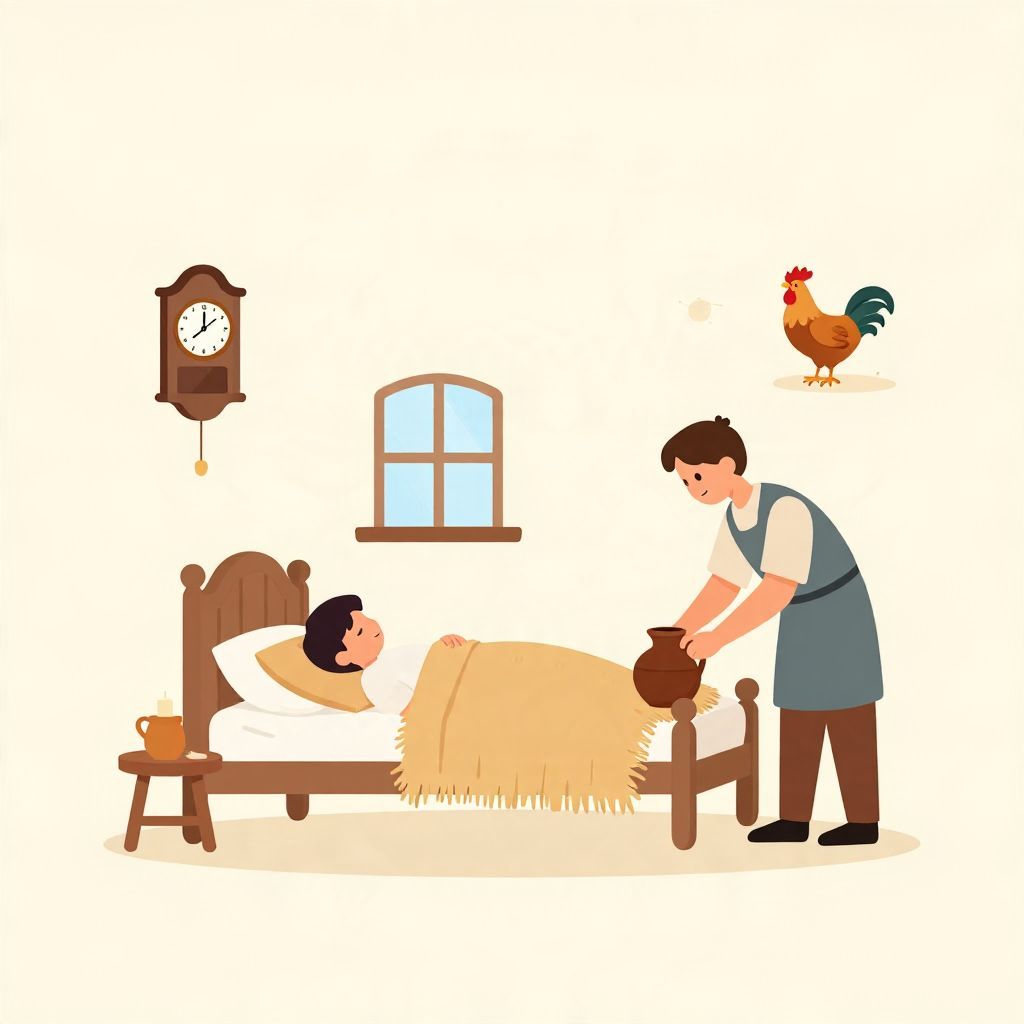
How did people wake up before alarm clocks? For most of human history, people relied on the sun, the demands of work, household routines, church bells, roosters, servants, and personal habit. In some places, people also used water clocks, candle alarms, or paid human “knocker-uppers” to make sure they rose on time.
The answer is less mysterious than it may seem: before modern alarm clocks, waking up was usually built into daily life. Timekeeping existed, but it was often local, approximate, and tied to nature, labor, and community rather than to a device on a bedside table.
How did people wake up before alarm clocks?
People woke before alarm clocks through a mix of natural light, bodily rhythm, social schedules, and practical wake-up methods such as bells, roosters, servants, and mechanical timekeepers. In agrarian societies, many rose at dawn because work began with daylight; in cities, scheduled bells and paid wake-up callers helped coordinate labor.
Life before the alarm clock: waking with the day
For much of history, the most common “alarm” was sunrise itself. Before electric lighting, most people lived in a world where darkness limited evening activity and daylight structured work. Sleep often followed the sun more closely than it does today, especially in farming communities.
Natural light and seasonal rhythms
People in preindustrial societies usually slept and woke according to seasonal daylight. In summer, they might rise very early and work longer hours; in winter, they often had shorter workdays and more time indoors after dark. This did not mean everyone woke at the same minute, but it did mean that dawn was a powerful cue.
Human bodies also respond to light. Even without modern science, people understood from experience that daylight helped them wake and darkness encouraged rest. In a world without curtains, blackout shades, or artificial lighting, sunrise was difficult to ignore.
Biological sleep patterns mattered too
Historical evidence suggests that sleep was not always organized exactly like modern eight-hour blocks. In some preindustrial settings, people may have slept in two parts, with a period of wakefulness in the middle of the night. That made early rising less abrupt than it can feel today. People were often accustomed to waking naturally, then getting up when the household or workday required it.
What actually woke people up in different eras?
Across history, wake-up methods varied by class, region, and occupation. Farmers, monks, soldiers, urban workers, and elites all had different routines. Some depended on nature; others depended on institutions, schedules, or specialized devices.
Roosters, animals, and household noise
Roosters became a familiar symbol of morning because they crow reliably at dawn and are active early. Other animals, livestock movement, and general household activity also helped people wake. In crowded homes, one person’s rising often woke others. In many societies, waking was a communal event rather than a private one.
Church bells and public time
In medieval and early modern Europe, church bells were among the most important time signals. They marked prayer times, labor routines, and the rhythm of the day. Bells did not function like personal alarm clocks, but they helped entire communities wake and organize their mornings. Similar public signals existed in other societies as well, though they took different forms.
Servants, household staff, and human wake-up calls
In wealthy households, servants often woke before their employers and roused them at the proper hour. This was especially important in aristocratic, courtly, or urban elite settings where schedules mattered. In effect, human labor replaced the machine: someone else’s job was to make sure the household rose on time.
In some cities during the industrial era, this practice became more formal. A “knocker-upper” or wake-up caller would tap on windows with a stick or use a pea shooter to rouse workers before factory shifts. This was common in parts of Britain and Ireland in the 19th and early 20th centuries, when many laborers needed to be up at very early, fixed times.
Did ancient people have alarm clocks?
Not in the modern sense, but they did invent ways to measure time and trigger alerts. Ancient and medieval societies created clever devices that could mark hours, signal events, or wake a sleeper. These were usually expensive, approximate, or limited to special settings rather than common household tools.
Water clocks and timed mechanisms
Water clocks, used in ancient Egypt, Greece, China, and elsewhere, measured time by the steady flow of water. Some versions could mark intervals or trigger sounds. They were useful for courts, temples, and scholars, but they were not mass-market alarm clocks. Their purpose was often to measure time, not to wake ordinary people every morning.
Candle alarms and timed burning
In some places, people used candles marked with intervals or fitted with nails and weights. As the candle burned down, the falling nail or weight could make a noise. This was a practical way to create a timed alert, though it depended on careful preparation and was not perfectly reliable.
Mechanical devices in the medieval and early modern world
By the later Middle Ages, mechanical clocks became more common in towns, monasteries, and elite homes. Some had bells that rang at set times. These were important steps toward the alarm clock, but they were still not the compact bedside devices people recognize today. They were larger, costlier, and usually served public or institutional needs first.
How did work schedules shape waking up?
Before industrialization, many people did not need to wake at an exact minute every day. Farming, herding, and household production were often flexible and seasonal. As long as people were up by daylight, they could begin. That changed as cities, factories, railways, and wage labor made punctuality more important.
From task-based time to clock-based time
In agrarian societies, work was often task-based: finish the milking, plow the field, bake the bread, tend the loom. In industrial societies, work became clock-based: arrive at 6:00 a.m., start at 6:30, take a break at 10:00. This shift increased the need for reliable wake-up methods.
As a result, the alarm clock became more than a convenience. It helped create a new relationship to time, one in which individuals had to synchronize their bodies to machines, factories, and timetables.
Why punctuality became more important
The rise of railways, factories, schools, and office work in the 18th and 19th centuries made exact timing essential. Missing a train or a shift could mean losing wages. Alarm clocks answered a social need created by industrial life. They were not just gadgets; they were tools for a new schedule-driven world.
Who used alarm-like methods most often?
Not everyone needed the same wake-up system. The method depended on social class, location, and occupation. Some people could wake naturally with the sun, while others required stronger signals because their work or status demanded a precise schedule.
Farmers and rural households
Many rural people woke with daylight, livestock routines, and family labor. A rooster, a parent, or the first light through a window was often enough. Because agricultural work was tied to seasons and weather, exact minute-by-minute timing mattered less than it did in modern cities.
Monks, priests, and religious communities
Religious life often required early rising for prayer and ritual. Monasteries used bells, schedules, and in some cases mechanical devices to mark the hours. In these settings, waking was part of discipline and devotion, not just personal preference.
Urban workers and industrial laborers
City workers, especially in the industrial era, were among the earliest and most frequent users of alarm systems. They had to arrive on time for shifts, and many lived in crowded housing where one person’s schedule affected many others. Human wake-up callers, bells, and later alarm clocks all served this need.
What changed when alarm clocks became common?
The spread of alarm clocks changed everyday life by making waking more private, more exact, and more dependent on personal responsibility. Instead of relying on a household member, a bell tower, or the sunrise, people could set a device for a chosen time and wake independently.
More control, but also more pressure
Alarm clocks gave individuals greater control over their mornings. They could wake for work, travel, or appointments without depending on others. But this also increased pressure to manage time precisely. The modern expectation that a person should wake at a fixed hour, every weekday, is closely tied to the spread of clock culture.
Changing sleep habits
Alarm clocks helped standardize sleep into a more rigid schedule. Instead of waking naturally, many people began to sleep with the expectation of interruption. This was especially true in industrial and postindustrial societies, where work and school times were fixed. In that sense, the alarm clock did not simply solve a problem; it reshaped the problem of waking itself.
Why this history matters
Learning how people woke before alarm clocks shows that timekeeping is cultural as well as technological. People in the past were not less disciplined or less organized than we are; they simply lived in systems where sunrise, labor, religion, and community often did the work that a bedside device does today.
It also reminds us that the alarm clock is a relatively recent answer to a very old human need. For most of history, waking up was not about pressing a button. It was about living in rhythm with nature, family, work, and the shared sounds of a community. If you want to explore more about the social world that shaped daily routines, you may also like reading about what a feudal system was and the history of capoeira.