
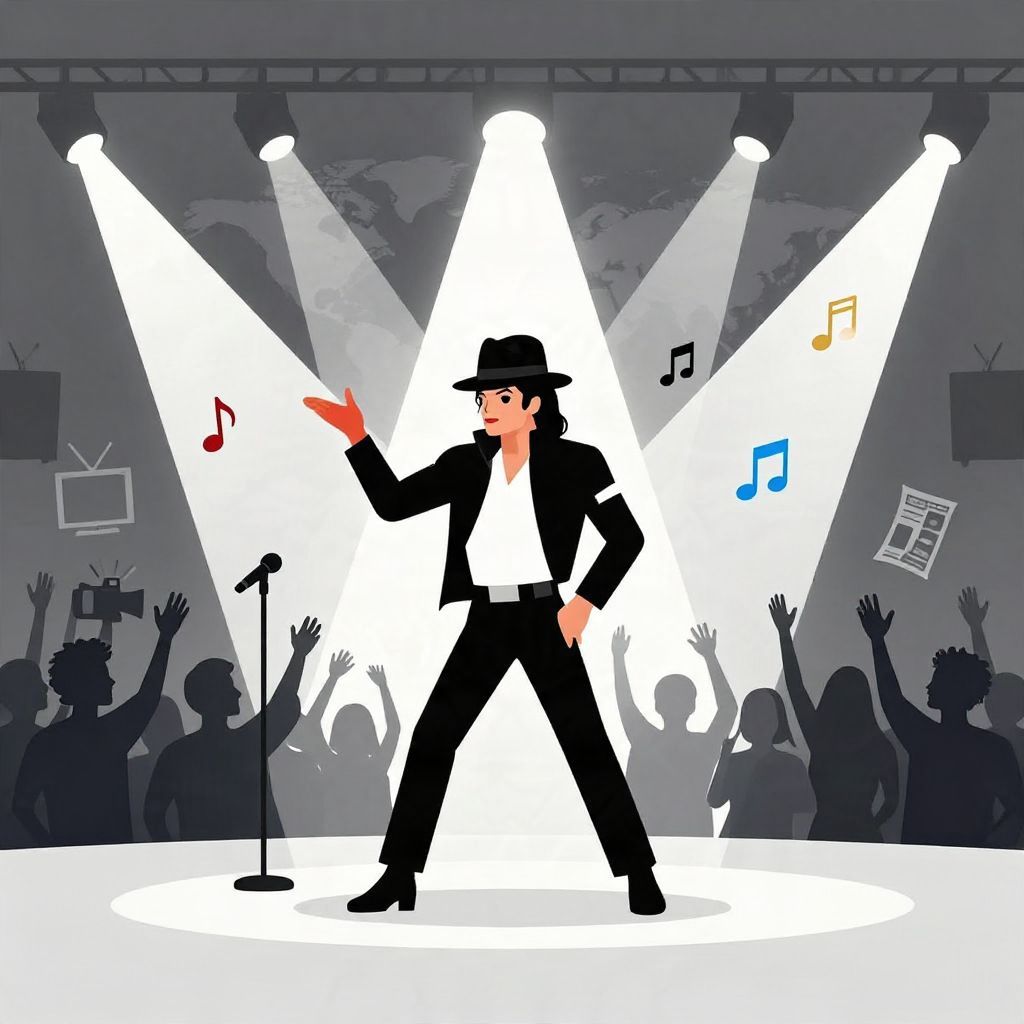
How famous was Michael Jackson? In historical terms, he was one of the most recognizable entertainers of the late 20th and early 21st centuries, with a level of global visibility that crossed music, television, fashion, advertising, and news. His fame was not just large; it was unusually broad, sustained, and international.
To answer the question properly, it helps to look at how his fame grew over time, what made it so powerful, and why historians of popular culture often treat him as a defining figure of the modern celebrity age.
How famous was Michael Jackson?
Michael Jackson was extraordinarily famous—arguably one of the most famous people in the world during the 1980s and 1990s. He was known far beyond music fans, thanks to record-breaking albums, landmark music videos, major television appearances, and constant global media attention. His fame was comparable to the biggest cultural icons of the era.
From child star to global celebrity
Michael Jackson’s fame did not begin overnight. Born in 1958 in Gary, Indiana, he first became known as a child performer with the Jackson 5, the Motown group that broke through in the late 1960s and early 1970s. Even then, he stood out for his voice, stage presence, and charisma.
As a solo artist, he moved from being a successful young singer to a figure with worldwide reach. His 1979 album Off the Wall was a major success, but it was Thriller in 1982 that made him a global phenomenon. The album became one of the best-selling records in history and turned Jackson into a household name across continents.
Why his rise mattered
Jackson’s rise came at a moment when television, music videos, and international record distribution were expanding rapidly. He did not just benefit from those changes; he helped shape them. His fame grew because his artistry was matched by a media environment that could broadcast his image almost everywhere at once.
Why was Michael Jackson so famous?
Jackson’s fame came from a rare combination of talent, innovation, and timing. He was a gifted singer and dancer, but he also understood performance as spectacle. His music videos, costumes, choreography, and public appearances were designed to be unforgettable, and they often were.
Thriller and the music video revolution
The Thriller era is central to understanding his fame. The title track’s music video, with its elaborate storytelling and cinematic style, helped transform the music video into a serious cultural form. By the mid-1980s, Jackson was not only a pop star; he was a visual icon whose work could dominate television and conversation.
Record sales and mass popularity
His commercial success was immense. Thriller became a historic best seller, and later albums such as Bad and Dangerous also sold in huge numbers. Exact totals are debated because sales records have changed over time and different counting methods are used, but there is no dispute that he was among the most commercially successful musicians ever.
Crossing national and cultural boundaries
Unlike many stars whose fame is strongest in one country or language group, Jackson was globally recognized. He was popular in the United States, Europe, Latin America, Asia, Africa, and the Middle East. In many places, he was not just a singer but a symbol of modern pop culture itself.
How big was his fame compared with other stars?
Jackson’s fame is often compared with figures such as Elvis Presley, The Beatles, Madonna, and later Beyoncé or Taylor Swift. These comparisons are useful, but they are not exact. Each star belonged to a different media era. Jackson’s peak fame, however, was exceptional because it combined album sales, television reach, and international celebrity in a way few artists had achieved before.
What made his celebrity unusual
Several features set him apart:
- He was instantly recognizable by name and image in much of the world.
- His music videos became cultural events, not just promotional tools.
- His dance moves, especially the moonwalk, were widely imitated.
- His public life attracted intense coverage beyond the music press.
- He remained famous across multiple decades, not just a single era.
That combination made him more than a successful performer. He became a reference point for fame itself.
The peak years of his fame
Jackson’s highest level of fame is usually associated with the 1980s, especially the period from 1982 to the late 1980s. During these years, he was everywhere: on radio, on television, in magazines, in fashion trends, and in public debate. His appearance at events could become international news.
Major moments that expanded his visibility
- 1982: Release of Thriller, which became a cultural milestone.
- 1983: The televised Motown 25 performance, where he popularized the moonwalk for a mass audience.
- Mid-1980s: Heavy rotation of his videos on MTV and other outlets.
- 1985: Co-writing “We Are the World,” which linked him to global humanitarian pop culture.
- 1987: Release of Bad, which confirmed that his fame was not limited to one album.
These moments mattered because they kept him visible not as a passing trend but as a continuing cultural force.
His fame beyond music
Jackson’s celebrity extended far beyond songs and concerts. He became a fashion icon, influencing jackets, gloves, hats, and performance style. His public image was so powerful that even his look could become headline news. He also appeared in films, commercials, and major televised events, which widened his audience further.
Media attention and public fascination
As his fame grew, so did scrutiny. His changing appearance, private life, and unusual habits became subjects of constant speculation. This is an important part of his history: fame did not simply bring admiration. It also brought relentless attention, rumor, and pressure. By the 1990s and 2000s, coverage of Jackson often mixed celebration with controversy.
Global recognition in everyday life
One sign of his fame was how widely his image circulated in ordinary settings. Children imitated his dance steps. Fans across many countries recognized his songs immediately. His face appeared on posters, magazine covers, and television screens around the world. For many people, he was one of the first truly global pop stars they ever knew.
Was he the most famous person in the world?
That question is difficult to answer with precision because fame is not measured in one official way. Still, during his peak, Jackson was certainly among the most famous people alive. In some years, he may have been the most widely recognized entertainer on the planet. His name was known even by people who did not listen to pop music.
It is important, however, to avoid exaggeration. Fame is relative to time, place, and media access. In some regions, political leaders, religious figures, or local celebrities may have been more familiar to specific audiences. But in the realm of global entertainment, Jackson’s reach was exceptional.
The effect of controversy on his fame
Jackson’s fame did not remain purely celebratory. From the early 1990s onward, allegations, legal disputes, and tabloid coverage increasingly shaped how he was seen. These controversies did not erase his celebrity; in some ways, they intensified it. He remained a figure people watched closely, whether with admiration, concern, or criticism.
Fame and vulnerability
This part of his story shows something important about modern celebrity: being famous can make a person more visible, but not necessarily more understood. Jackson’s life became a public spectacle, and that spectacle often overshadowed his music. Historians of popular culture often note that his career reveals both the power and the cost of global fame.
What happened to his fame after his death?
After Jackson died in 2009, his fame did not disappear. In many ways, it intensified. Sales of his music surged, documentaries and retrospectives multiplied, and his legacy became a subject of renewed debate. Death often freezes a celebrity’s image in public memory, and for Jackson this meant continued global recognition.
His posthumous fame also reflects how deeply he had entered modern culture. Even people too young to remember his peak years often know his songs, dance moves, or image. That kind of afterlife is one of the strongest signs of historical celebrity.
Why historians still study Michael Jackson
Jackson matters historically not only because he was famous, but because his fame helps explain the late 20th century. He stands at the intersection of race, media, commerce, technology, and performance. His career shows how a performer could become a global brand while also remaining a deeply contested public figure.
His lasting significance
He influenced later pop stars in music production, stagecraft, video aesthetics, and celebrity branding. He also helped define the modern expectation that a superstar should be both an artist and a visual phenomenon. In that sense, his fame was not just personal; it changed the standards of popular culture.
In short, Michael Jackson was not merely famous—he was one of the defining global celebrities of the modern era. His fame reached across generations and borders, and it remains a major subject in cultural history. For readers interested in the later chapter of his story, you may also want to read about when Michael Jackson passed and what year Michael Jackson passed away.