
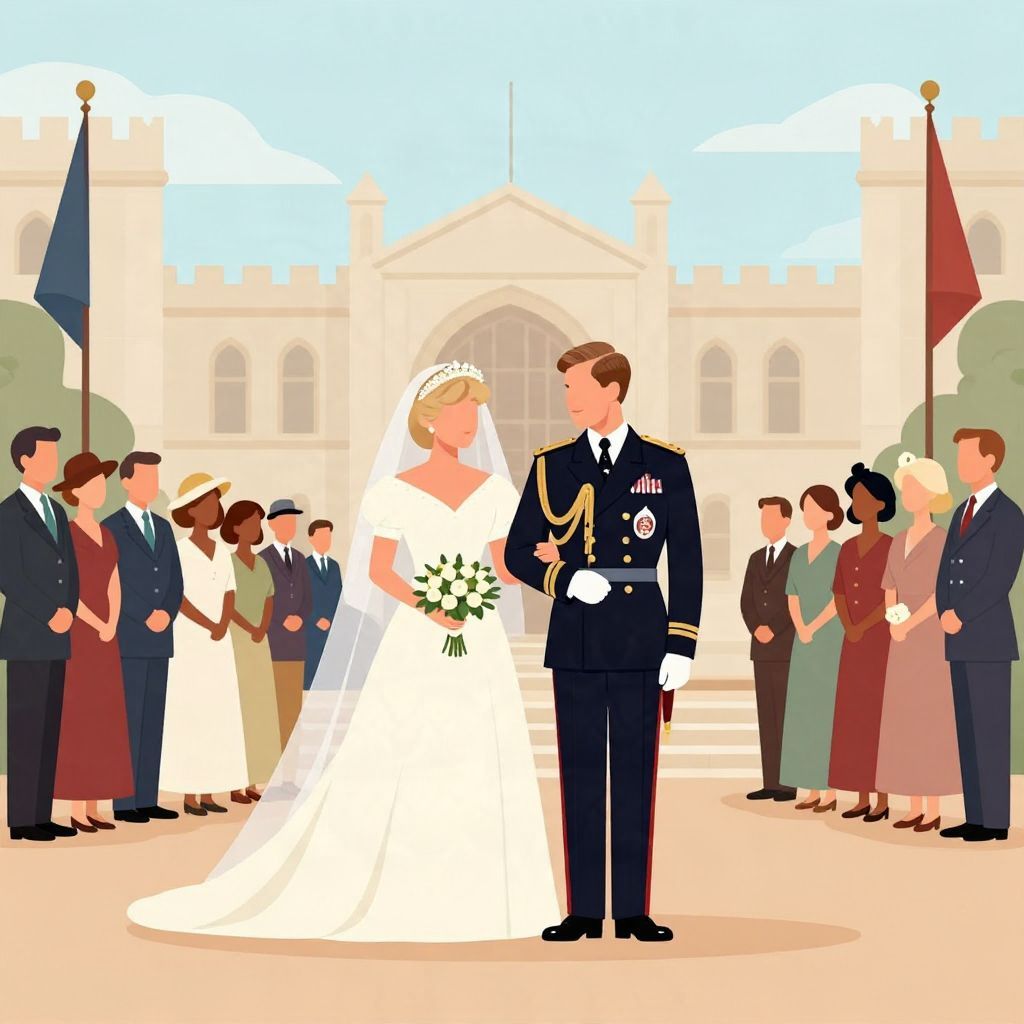
How old was Diana when she married Charles? The answer is straightforward: Lady Diana Spencer was 20 years old when she married Prince Charles on 29 July 1981. She was born on 1 July 1961, so she had just turned 20 less than a month before the wedding.
The marriage became one of the most watched royal events of the 20th century, but the age question also opens a window onto the pressures surrounding the British monarchy, public expectations of a princess, and the long historical aftermath of the wedding itself.
How old was Diana when she married Charles?
Diana was 20 years old at the time of her wedding to Prince Charles. Charles was 32. Their age difference drew attention then and later, especially because Diana was very young by modern standards for a future queen consort. She was still in the early stage of adult life, while Charles had already spent years in public royal duty.
The basic timeline
- 1 July 1961 — Diana Spencer was born.
- 29 July 1981 — Diana married Prince Charles at St Paul’s Cathedral in London.
- Age at marriage — 20 years old.
This is not a disputed historical fact. The wedding date and Diana’s birth date are well established, making her age at marriage easy to calculate precisely.
The historical timeline of Diana and Charles’s wedding
From courtship to engagement
Diana and Charles’s relationship developed in the late 1970s and early 1980s, a period when the British royal family was under intense public scrutiny but still retained a strong ceremonial role. Their engagement was announced in February 1981, after a courtship that attracted enormous media interest. Diana’s youth became part of the public fascination, along with her background as a member of the Spencer family, one of Britain’s prominent aristocratic families.
At the time, the engagement was widely presented as a fairy-tale match. In hindsight, historians and biographers often note that the relationship was shaped by institutional expectations as much as personal compatibility. Charles, as heir to the throne, faced pressure to marry and secure the line of succession. Diana, still very young, entered the royal spotlight with limited experience of the demands that would follow.
The wedding day: 29 July 1981
The wedding took place at St Paul’s Cathedral, not Westminster Abbey, which made it unusual for a royal wedding. The ceremony was watched by millions around the world and became a defining media event of the era. Diana’s gown, the long train, the carriage procession, and the scale of public attention helped turn the wedding into a global spectacle.
For many observers, the ceremony symbolized continuity in the monarchy. Yet it also marked the beginning of a marriage that would later reveal deep personal strain. The contrast between the public image and private reality is one of the reasons the wedding remains such a powerful historical moment.
Why Diana’s age mattered historically
A young bride in a highly public role
Diana’s age mattered because she was stepping into one of the most demanding public roles in Britain at a very young age. At 20, she was younger than many brides in late 20th-century Britain, though not extraordinarily so by historical standards. What made her situation unusual was not simply her age, but the combination of youth, celebrity, and constitutional importance.
She was expected to adapt quickly to royal protocol, public scrutiny, charitable work, and the pressures of producing an heir. The monarchy has often depended on carefully managed marriages, but Diana’s experience showed how difficult it could be when private life and public symbolism collided so dramatically.
The age gap and public perception
The 12-year age gap between Diana and Charles was not extraordinary in itself, especially in aristocratic or royal marriages. Still, it contributed to later public narratives about mismatch and imbalance. Charles was established, duty-bound, and shaped by years of preparation for kingship. Diana was young, inexperienced, and thrust into a role that demanded emotional resilience and political tact.
Historians are cautious about reducing the marriage to age alone. The breakdown of the relationship involved many factors: personality differences, expectations, infidelity, media intrusion, and the rigid structure of royal life. But Diana’s youth at marriage remains central to understanding how quickly the pressures accumulated.
Who was Diana before the marriage?
Background and upbringing
Diana Frances Spencer was born into the British aristocracy. Her family had long connections to public service and royal circles. Before her marriage, she had worked in London and lived a relatively private life compared with the one that awaited her after the engagement. Her transformation from aristocratic young woman to Princess of Wales happened almost overnight in the public imagination.
That rapid transition is important historically. In earlier centuries, royal and noble marriages often involved similarly young brides, but the modern media environment made Diana’s age and vulnerability much more visible. She was not simply entering a marriage; she was entering a global role.
From Lady Diana Spencer to Princess of Wales
After the wedding, Diana became Princess of Wales. The title carried ceremonial prestige, but it also came with expectations about behavior, appearance, motherhood, and public service. Her early twenties were spent under extraordinary pressure, and her personal struggles later became part of a wider conversation about marriage, mental health, and the human cost of monarchy.
What the wedding meant for the monarchy
A moment of national and international celebration
The 1981 wedding was designed to project stability, romance, and continuity. Britain was emerging from economic difficulty and social change, and the monarchy remained a symbol of national identity. The wedding offered a hopeful image: a young princess, a future king, and a seemingly ideal union.
Internationally, the event helped reinforce the monarchy’s global visibility. Television coverage brought the ceremony into homes around the world, making Diana one of the most recognizable public figures of the late 20th century almost instantly.
The long aftermath
What followed, however, was far more complicated than the fairy-tale narrative suggested. The marriage deteriorated over time, and the couple separated in 1992. Their divorce was finalized in 1996. Diana died in 1997, only 36 years old, but by then she had already become a central figure in modern royal history.
Looking back, historians often see the wedding as a turning point. It was not only a royal ceremony but also the beginning of a public story about expectations, media pressure, and the limits of a marriage shaped by institution as much as affection.
Common questions about Diana’s age at marriage
Was Diana underage when she married Charles?
No. Diana was 20, which was legally adult in Britain. She was young, but not underage. The significance of her age lies in the life stage she was in, not in any legal issue about consent or marriageability.
How old was Charles when he married Diana?
Prince Charles was 32 years old at the time of the wedding. The age gap between them was 12 years.
Why do people still ask how old Diana was?
People ask because her age helps explain the public reaction to the marriage and the later reassessment of it. Diana’s youth, combined with the grandeur of the wedding and the eventual breakdown of the marriage, makes the age question a useful entry point into a larger historical story.
Why this question still matters
Asking how old Diana was when she married Charles is not just a trivia question. It helps place the wedding in historical context: a 20-year-old woman entered one of the most visible institutions in Britain, at a time when the monarchy was still heavily shaped by tradition but increasingly exposed to modern media scrutiny. Her age is a small fact with large historical significance.
The clearest answer remains simple: Diana was 20 years old when she married Charles. But the meaning of that fact lies in the wider story of a marriage that began as a national celebration and became one of the most closely examined royal relationships in modern history.