
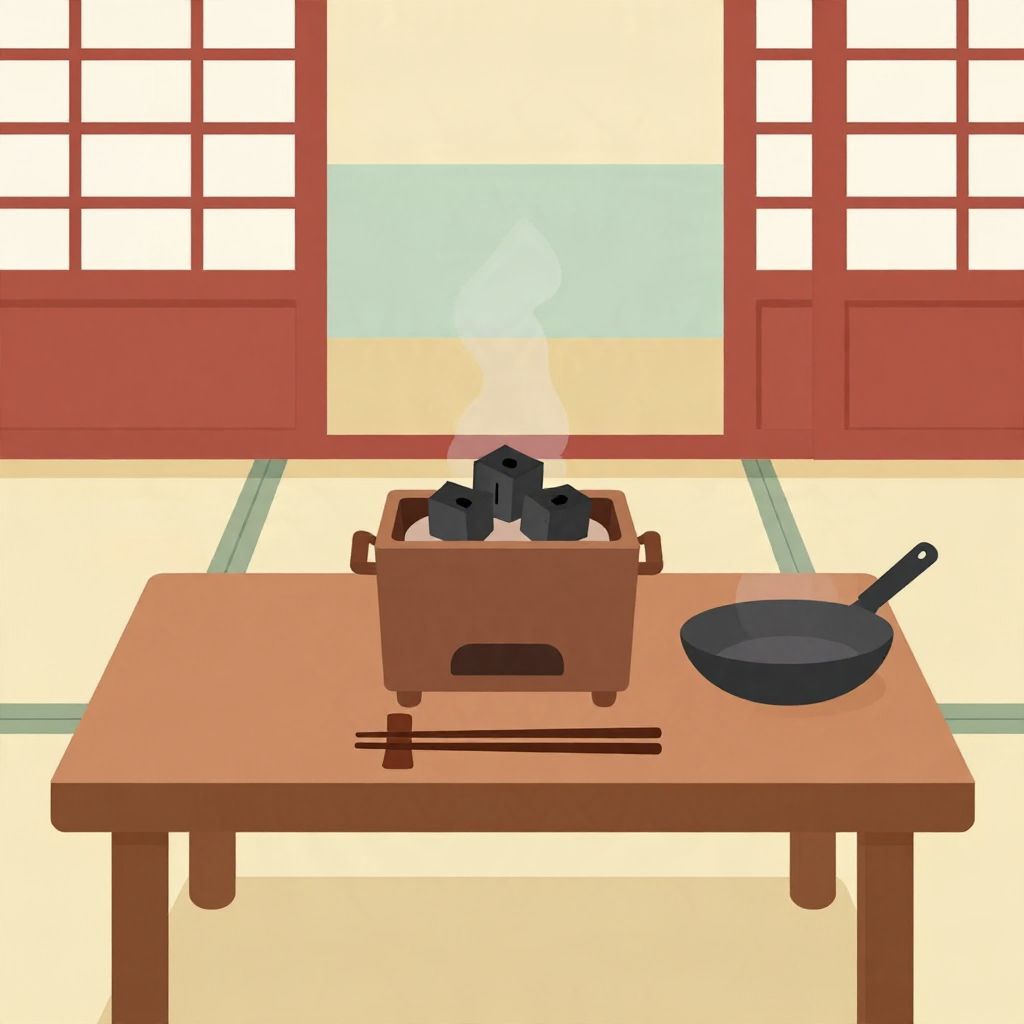
Is hibachi Chinese or Japanese? The short historical answer is that hibachi is Japanese, not Chinese. In Japan, the word originally referred to a traditional heating device, and later in the modern era it became associated in English with tabletop grilling and restaurant cooking. The confusion comes from the fact that many “hibachi” restaurants outside Japan actually use teppanyaki-style griddles.
So the name is Japanese, but the food culture people often mean when they say “hibachi” in the United States is a modern Japanese-American restaurant style, not an ancient Chinese tradition.
Is Hibachi Chinese or Japanese?
Hibachi is Japanese. Historically, the term comes from Japan and originally described a charcoal brazier used for heating, not a cooking grill in the modern American sense. The restaurant style many people call hibachi today is a later Japanese-American adaptation, while Chinese cuisine has its own distinct grilling and stir-frying traditions.
What “hibachi” originally meant in Japan
The Japanese word hibachi literally means “fire bowl.” For centuries in Japan, a hibachi was a portable container for charcoal used to provide warmth indoors. It was part of everyday domestic life, especially before modern central heating. In that original sense, it was a household object rather than a restaurant appliance.
A domestic object before it became a food term
Traditional hibachi were often made of wood, ceramic, or metal and filled with ash and charcoal. People used them to heat rooms, warm water, or keep a small fire going. Because they were associated with fire and charcoal, the word later made sense to English speakers as a label for a cooking setup, even though that was not its original meaning in Japan.
Why people think hibachi is Chinese
The confusion usually comes from modern restaurant culture outside Japan. In many Western cities, “hibachi restaurant” became a catch-all phrase for Japanese-style dining where chefs cook in front of guests. Since Chinese, Japanese, and broader East Asian cuisines were often grouped together in the public imagination, the exact origin of the term was blurred.
Restaurant marketing and American usage
In the United States, the word “hibachi” was widely used for entertainment-style Japanese dining, especially from the mid-20th century onward. But the cooking surface in many of these restaurants is actually a teppan, a flat iron griddle. That means much of what Americans call hibachi is more accurately teppanyaki, a Japanese style of cooking on a griddle rather than over a small charcoal brazier.
Hibachi vs. teppanyaki: the key historical distinction
To understand the issue clearly, it helps to separate the original Japanese hibachi from the restaurant style people know today. The two are related in popular usage, but they are not the same thing. The distinction matters because it shows how language changes when food traditions travel across cultures.
Hibachi
- Original meaning: a charcoal heating vessel
- Origin: Japan
- Historical use: warming homes, heating water, small indoor fires
Teppanyaki
- Meaning: cooking on an iron plate
- Origin: Japan
- Modern restaurant use: chefs cook meat, seafood, vegetables, and rice on a flat griddle in front of diners
So if someone says “hibachi” to mean a table grill in a restaurant, they are usually using the word in a modern, popular sense rather than its older historical meaning.
How Japanese cooking traditions developed
Japanese cuisine developed over many centuries through local agricultural practices, Buddhist dietary influences, court culture, and regional foodways. Grilling, steaming, simmering, and raw preparations all became important in different periods. Charcoal cooking and tabletop heat sources fit naturally into this broader culinary history, but they were not the same as Chinese regional cuisines.
Japanese grilling and charcoal use
Japan has long used charcoal in cooking because it produces intense, controllable heat and relatively little smoke. That made it useful for grilling fish, meat, and vegetables. The later restaurant-style use of a grill or griddle in front of diners draws on this broader Japanese appreciation for careful, visible cooking, even if the exact modern format is relatively recent.
How Chinese cuisine differs historically
Chinese cuisine is one of the world’s oldest and most diverse culinary traditions, with its own techniques, ingredients, and regional styles. Stir-frying, steaming, braising, roasting, and wok cooking are central to many Chinese food traditions. While Chinese cooking also uses grills and charcoal in some regions, “hibachi” is not a Chinese term and does not come from Chinese culinary history.
Why the cuisines get mixed up
Outside East Asia, people often grouped Asian foods together without distinguishing their national or regional origins. Menus, restaurants, and popular media sometimes reinforced that habit. As a result, a Japanese word like hibachi could be mistaken for something Chinese simply because it sounded foreign and was associated with Asian dining generally.
The rise of “hibachi” restaurants in the modern era
The restaurant meaning of hibachi is largely a modern development. In the 20th century, Japanese and Japanese-American restaurateurs adapted cooking styles for international audiences, especially in the United States. Table-side cooking became a performance as well as a meal, and the term “hibachi” became attached to that experience in English-speaking countries.
Why the word changed meaning abroad
Language often shifts when it crosses borders. English speakers borrowed “hibachi” because it sounded distinctive and seemed to fit the idea of open-flame cooking. Over time, the term became detached from its original domestic meaning in Japan. This is a common historical process: imported words can acquire new meanings in the places where they are adopted.
What is historically accurate to say today?
If you want the most accurate answer, say this: hibachi is Japanese in origin, but in modern English it often refers to a restaurant cooking style that is not exactly the same as the traditional Japanese hibachi. It is not Chinese. The confusion comes from translation, marketing, and the blending of East Asian food terms in popular culture.
Simple rule of thumb
- If you mean the word itself, it is Japanese.
- If you mean the original object, it was a Japanese charcoal brazier.
- If you mean the restaurant experience, it is usually Japanese-American and often closer to teppanyaki.
- If you are asking whether it is Chinese, the answer is no.
Why this distinction matters historically
Getting the origin right is more than a language quiz. It shows how cultural terms can travel, change, and sometimes lose precision over time. It also helps avoid flattening different Asian traditions into one category. Japanese and Chinese cuisines have long, separate histories, even though they have influenced one another across centuries through trade, migration, and cultural exchange.
Understanding hibachi as Japanese also highlights how modern restaurant culture can reshape older traditions for new audiences. The word’s journey from a household fire bowl to a global dining label is a small but revealing example of cultural adaptation in the modern world.
So, is hibachi Chinese or Japanese? Historically and linguistically, it is Japanese. The popular restaurant usage is a modern adaptation, not a Chinese tradition. If you want to explore related food history, you may also want to look into the broader history of Japanese cuisine and the development of Chinese culinary traditions.