
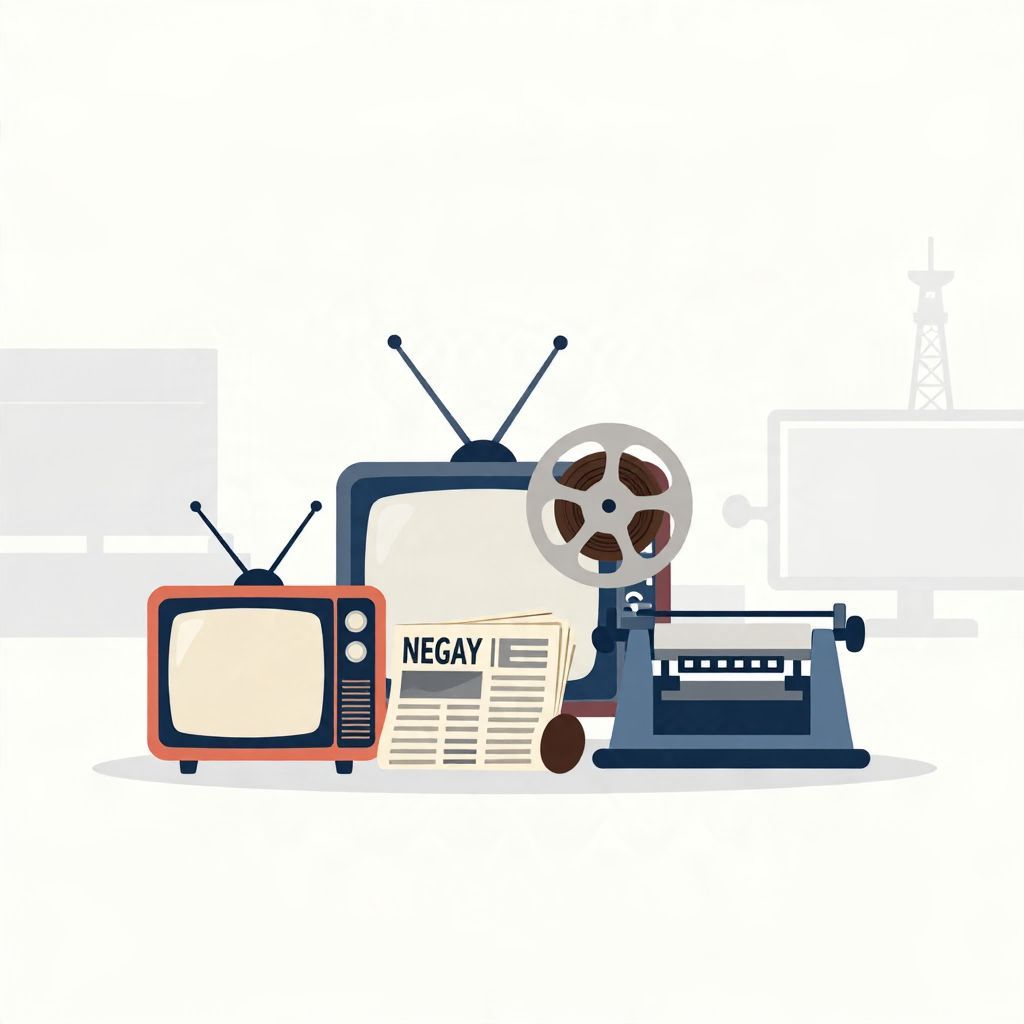
What is legacy media? In historical terms, it refers to older mass communication systems—especially print newspapers and magazines, radio, and broadcast television—that dominated the public information landscape before the rise of the internet. The phrase is modern, but the institutions behind it shaped politics, culture, and everyday life for more than a century.
To understand legacy media, it helps to see it as both a set of technologies and a social system. These older media did not disappear when digital platforms emerged; they adapted, competed, and in many cases still remain influential. Their history explains how modern public debate, journalism, advertising, and entertainment developed.
What Is Legacy Media?
Legacy media usually means established mass media organizations and formats that predate the digital age, especially newspapers, magazines, radio, and television. The term is often used today to distinguish these older institutions from online-only outlets, social media platforms, podcasts, and streaming services. It is a contemporary label, not a historical period name used by people in the 19th or early 20th centuries.
Why the term matters
The phrase reflects a major shift in how information is produced and consumed. For much of the 20th century, a small number of large media companies and public broadcasters set the agenda for news and entertainment. In the internet era, that dominance weakened as audiences fragmented and many people began getting information from search engines, social platforms, and independent digital publishers.
The Historical Origins of Legacy Media
Legacy media did not begin all at once. It grew out of earlier print culture, industrial printing, expanding literacy, postal systems, and later electrical communication. Each new medium built on the last, creating a layered history rather than a clean break.
Print journalism and the rise of mass newspapers
Newspapers are among the oldest forms of mass media. By the 18th and 19th centuries, cheaper paper, steam-powered presses, and urban growth made daily newspapers practical on a large scale. In many countries, newspapers became central to political life, commercial advertising, and public debate. They also helped create the modern idea of a shared news cycle.
Radio and the first electronic mass audience
Radio transformed communication in the early 20th century. After the 1920s, broadcasting could reach millions simultaneously, making news, music, drama, and political speeches immediate and national in scope. Governments and private firms quickly recognized radio’s power. In some countries, it became a public service; in others, a commercial business model took hold. Either way, radio established a new relationship between media institutions and mass audiences.
Television and the age of visual mass culture
Television became the dominant household medium in many places after World War II, especially from the 1950s through the 1980s. It combined sound and image, making news, advertising, and entertainment more immersive than radio or print alone. TV newscasts, live events, and serialized programming helped standardize national culture and gave broadcasters enormous influence over public attention.
How Legacy Media Developed Over Time
The history of legacy media is really a history of changing systems of production, distribution, and authority. Each major medium emerged from specific technological and social conditions, then reshaped public life in turn.
1. The print era
- 17th–18th centuries: Newspapers and pamphlets spread alongside expanding literacy and political debate.
- 19th century: Industrial printing and urban markets created mass-circulation newspapers.
- Early 20th century: Professional journalism, wire services, and advertising became central to the business model.
2. The broadcast era
- 1920s–1930s: Radio became a household medium and a tool of national communication.
- 1940s–1960s: Television spread rapidly and became the main source of news and entertainment in many countries.
- Late 20th century: A few major networks, newspapers, and magazines still dominated the cultural conversation.
3. The digital transition
- 1990s: News organizations moved online, but often treated websites as extensions of print or broadcast operations.
- 2000s: Search engines, blogs, and early social media began weakening the old gatekeeping model.
- 2010s onward: Smartphones, algorithmic feeds, streaming, and creator platforms accelerated audience fragmentation.
What Made Legacy Media Powerful?
Legacy media mattered because it controlled access to large audiences. Editors, producers, and broadcasters decided what counted as news, what stories received attention, and how events were framed. This gatekeeping role gave legacy outlets political and cultural power far beyond their size.
Agenda-setting and public trust
For much of the 20th century, many people relied on a small number of trusted institutions for information. Newspapers and broadcasters did not simply report events; they helped define which events were important. This agenda-setting power shaped elections, wars, social movements, and consumer behavior.
Advertising and the business model
Legacy media often depended on advertising revenue. That model encouraged large audiences and broad appeal, which in turn favored standardized formats and wide distribution. Commercial pressures helped create recognizable genres such as the evening news, the Saturday newspaper supplement, and the prime-time television schedule.
Professional norms
Legacy media also developed strong professional cultures. Reporters, editors, and producers often emphasized verification, deadlines, editorial hierarchy, and institutional reputation. These norms did not eliminate bias or error, but they did create standards that many newer digital outlets still borrow.
Legacy Media in the Digital Age
The arrival of the internet did not erase legacy media. Instead, it changed the environment in which older institutions operated. Newspapers launched websites, television networks built streaming services, and radio adapted through podcasts and online distribution. Yet the balance of power shifted dramatically.
What changed
Digital media broke the old scarcity model. Instead of a few channels competing for attention, users could choose from an almost unlimited supply of content. Social media platforms also altered distribution by using algorithms rather than editorial judgment to decide what people saw. As a result, legacy outlets lost some of their monopoly over news and public discussion.
What remained
Despite these changes, legacy media still matters. Major newspapers, broadcasters, and magazines continue to influence political reporting, investigative journalism, cultural criticism, and live event coverage. In moments of crisis—elections, wars, disasters, or emergencies—many people still turn to established outlets for confirmation and context.
Common criticisms
Critics often argue that legacy media can be slow, overly centralized, commercially constrained, or disconnected from younger audiences. Others say the term itself is sometimes used dismissively, implying that older institutions are obsolete. But historians and media scholars usually treat legacy media as a durable phase of communication history, not merely a failed one.
Legacy Media Versus New Media
The distinction between legacy media and new media is useful, but it is not absolute. Many older outlets now publish digitally, while digital-native platforms increasingly behave like traditional media companies. The boundary is therefore fluid rather than fixed.
Key differences
- Legacy media: traditionally centralized, edited, professionally staffed, and distributed through print, radio, or broadcast television.
- New media: often digital-first, networked, interactive, and distributed through websites, apps, streaming, and social platforms.
Why the distinction can be misleading
Some digital platforms now perform functions once associated with legacy media, including news aggregation, commentary, and entertainment production. At the same time, many legacy organizations have become digital publishers. In practice, the media landscape is hybrid, with old and new forms constantly overlapping.
Historical Significance of Legacy Media
Legacy media helped build modern public life. It supported mass politics, national identity, consumer culture, and shared entertainment. It also created the professional journalism systems that many societies still depend on for investigative reporting and fact-checking.
Political consequences
Governments learned to use newspapers, radio, and television to communicate with citizens, mobilize support, and manage crises. Opposition movements also used these media to organize and persuade. The struggle over access, ownership, and regulation became a major part of modern political history.
Cultural consequences
Legacy media standardized accents, fashions, celebrity culture, and national narratives. A radio hit, a front-page headline, or a television broadcast could shape what millions of people discussed at once. This shared cultural experience is one reason older media remain historically important even in an age of constant digital choice.
Economic consequences
Legacy media helped create modern advertising, public relations, and consumer branding. These industries depended on the ability to reach large audiences through trusted channels. When digital platforms disrupted that model, they did not just change media companies; they altered the wider information economy.
Key Facts About Legacy Media
- The term legacy media is modern and mainly used in the digital era.
- It usually refers to older mass media such as newspapers, magazines, radio, and television.
- Its roots go back to the expansion of print culture in the early modern period.
- Radio became a major mass medium in the 1920s.
- Television became dominant in many countries after World War II.
- Digital media did not eliminate legacy media; it reduced its monopoly and changed its business model.
- Legacy media still plays an important role in news verification, live coverage, and public debate.
Conclusion
So, what is legacy media? It is the older, institutionally established side of mass communication—especially print, radio, and television—that shaped modern journalism and public culture long before the internet. Its history is the history of how societies learned to inform, persuade, entertain, and organize themselves at scale. For readers interested in the broader evolution of communication, the history of mass communication and the rise of digital media offer useful next steps.