
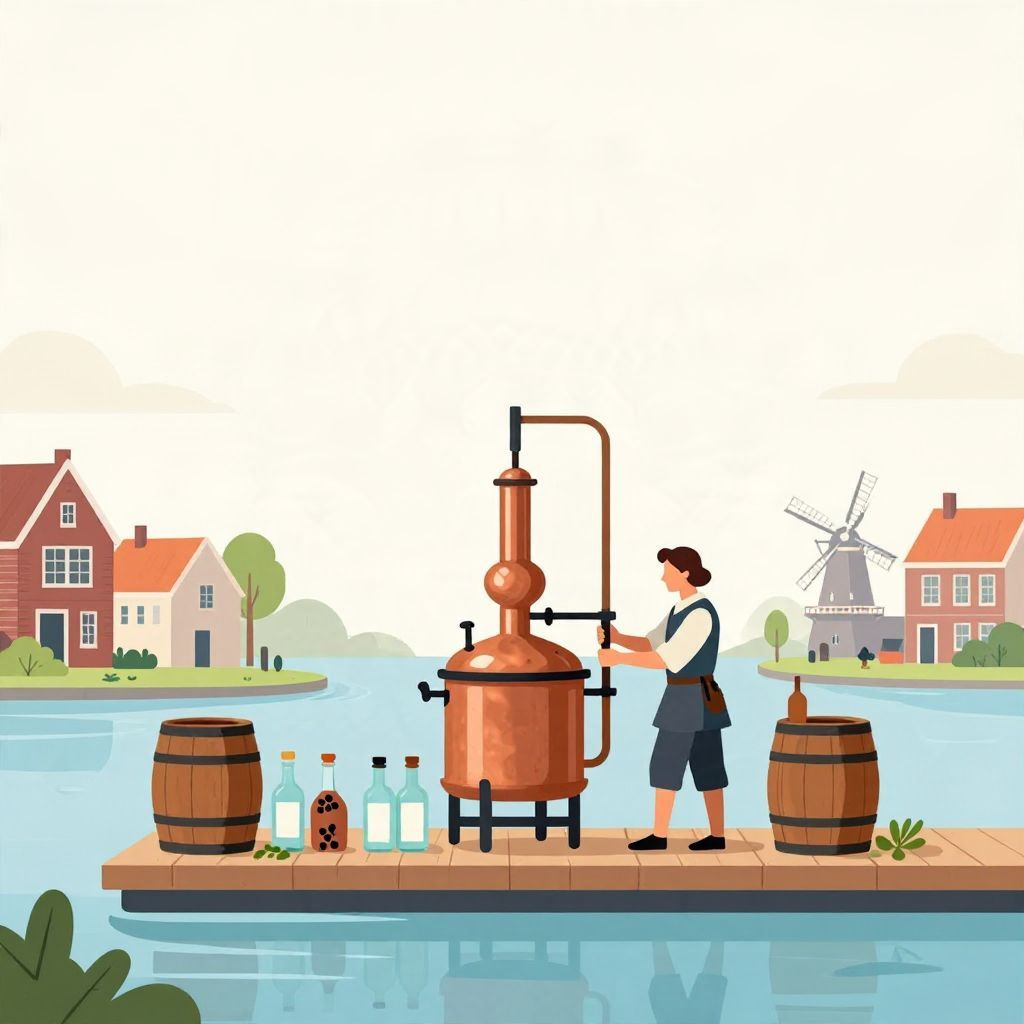
Where is gin from? The short answer is that gin originated in the Dutch-speaking Low Countries, especially the Netherlands, where a juniper-flavored spirit called jenever emerged in the late medieval or early modern period. The drink later took on its modern English identity in Britain, where it became deeply associated with the 18th century.
So gin has a dual historical story: Dutch in origin, but British in fame. Its development reflects trade, medicine, war, and changing tastes across Europe.
Where Is Gin From?
Gin comes from the Netherlands and nearby parts of the Low Countries, where distilled grain spirits flavored with juniper were first developed. The earliest clear ancestor of gin was jenever, a Dutch and Flemish spirit that began as a medicinal preparation and later became a popular drink. Modern gin grew out of this tradition.
The Dutch Origins of Gin
The story of gin begins with distillation in northern Europe. By the later Middle Ages, European distillers had learned how to produce strong spirits from grain, wine, and other fermentable materials. In the Netherlands, these spirits were often flavored with juniper berries, which were believed to have medicinal value and helped mask harsh flavors. This drink became known as jenever or genever.
Jenever and the early spirit tradition
Jenever is the clearest historical ancestor of gin. The name comes from the French and Dutch word for juniper, the key botanical used to flavor the spirit. Although exact origins are difficult to pin down, jenever was being produced by the 16th century and probably earlier in some form. It was not yet “gin” in the modern English sense, but it was the same family of drink.
At first, these spirits were often sold as remedies rather than leisure drinks. In premodern Europe, alcohol was commonly linked to health, and distillers, apothecaries, and physicians sometimes recommended juniper-based preparations for stomach complaints, kidney troubles, or general vitality. Whether these claims were effective is another matter; historically, the important point is that medicine helped launch the drink.
Why juniper mattered
Juniper gave the spirit its distinctive aroma and taste. It also connected the drink to older herbal traditions, since juniper had long been used in European folk medicine. The botanical flavor was not just decorative; it defined the drink itself. Even today, a spirit cannot legally be called gin in many jurisdictions unless juniper is the dominant flavor.
How Gin Became Associated with Britain
Although gin began in the Low Countries, it became famous in England after the late 17th century. English soldiers and travelers encountered Dutch jenever during the Eighty Years’ War and other conflicts, and the drink gained further attention when William of Orange, a Dutch ruler, became king of England in 1689. Under his reign, gin production and consumption expanded rapidly in England.
The “Dutch courage” connection
English observers noticed that Dutch soldiers sometimes drank jenever before battle or in stressful situations, giving rise to the phrase “Dutch courage.” This expression reflects how closely the spirit was associated with the Netherlands in English imagination. It does not mean the Dutch invented all distilled spirits, but it does show where gin’s reputation first took shape.
From imported spirit to English gin
In England, the spirit was adapted to local grain supplies and tastes. By the early 18th century, gin had become cheap and widely available, especially in cities like London. The English version was often rougher and less regulated than later forms, which helped create the famous “Gin Craze.” That episode made gin a symbol of urban poverty, social anxiety, and government concern.
The Gin Craze in 18th-Century London
Gin’s historical identity is inseparable from 18th-century Britain, especially London. Low taxes on grain spirits and restrictions on imported brandy encouraged domestic gin production. Because it was inexpensive and easy to make, gin spread quickly among working people. By the early 1700s, it was consumed on a massive scale in the capital.
Why gin spread so quickly
- It was cheap to produce from grain.
- It was easier to obtain than many other alcoholic drinks.
- Urban life created demand for affordable alcohol.
- Weak regulation allowed many small producers to enter the market.
The result was a social crisis in the eyes of many contemporaries. Reformers blamed gin for drunkenness, family breakdown, crime, and public disorder. These concerns led to stricter laws, including the Gin Acts of the 18th century. While moral panic was real, historians also note that poverty, housing conditions, and labor insecurity were major parts of the problem. Gin became a scapegoat for deeper urban hardships.
Regulation and reform
British authorities tried to control gin through taxation and licensing. Some measures failed or were resisted, while others gradually reduced the worst excesses of the trade. Over time, gin production became more standardized and respectable. The harsh, adulterated spirit of the Gin Craze gave way to more refined versions in the 19th century.
What Makes Gin Different from Other Spirits?
Gin is a distilled spirit flavored primarily with juniper. That feature distinguishes it from whiskey, rum, brandy, and vodka, even though all are spirits. Historically, gin’s identity was shaped not just by its alcohol base but by the herbs and spices added to it. Different regions developed different styles, but juniper remained the defining ingredient.
Common historical styles of gin
- Jenever — the Dutch and Belgian ancestor, often maltier and closer to grain spirit.
- Old Tom gin — a sweeter English style popular in the 18th and 19th centuries.
- London Dry gin — a later, more refined style that became internationally famous.
These styles show how gin evolved from a medicinal juniper spirit into a broad category of drinks. The basic idea remained the same, but production methods and consumer expectations changed over time.
Is Gin Dutch or British?
The most accurate answer is both, depending on what you mean. Gin’s deepest historical roots are Dutch, because the earliest recognizable form was jenever from the Netherlands and surrounding Low Countries. But gin as a global cultural symbol became British, especially through London’s 18th-century drinking culture and later imperial trade networks.
Why the distinction matters
People often ask where gin is from because the word itself sounds English, yet the drink’s origin story is more complicated. If the question is about the first juniper spirit, the answer is the Netherlands. If the question is about the drink that shaped modern cocktail culture and popular imagination, Britain plays the leading role. Both parts of the story are historically true.
Gin’s Spread Beyond Europe
As the British Empire expanded, gin traveled with soldiers, merchants, and administrators. It became part of colonial drinking culture in many regions, though local consumption varied widely. In India, for example, gin later mixed with tonic water as a way to make quinine more palatable, producing the famous gin and tonic. That drink belongs to a later imperial era, not the original origins of gin, but it shows how the spirit adapted to new historical settings.
From medicine to recreation
This transition is important. Gin began as a medicinal or semi-medicinal spirit, then became a mass-market drink, and eventually evolved into a refined product associated with cocktails and social ritual. Few alcoholic drinks have moved through so many social meanings while keeping the same core botanical identity.
What Historians Can Say with Confidence
There are some things historians can say clearly about gin’s origins. It emerged in the Low Countries, especially the Netherlands, from a tradition of juniper-flavored distilled spirits. It was influenced by medicine, trade, and local distilling practices. It later became central to English drinking culture, where it acquired both notoriety and prestige.
What historians should avoid is pretending there was a single inventor or a precise “birth date” for gin. Like many long-evolving foods and drinks, gin developed gradually. Its history is best understood as a process rather than a single event.
Conclusion: The Historical Home of Gin
Gin is from the Netherlands in origin, but Britain made it world-famous. Its earliest form was Dutch jenever, a juniper-flavored spirit that began as a medicinal drink and spread through European trade and warfare. In England, gin took on a new life in the 18th century, becoming both a social problem and a defining cultural drink. For related history, you may also enjoy reading about the history of whiskey and the origins of cocktails.