
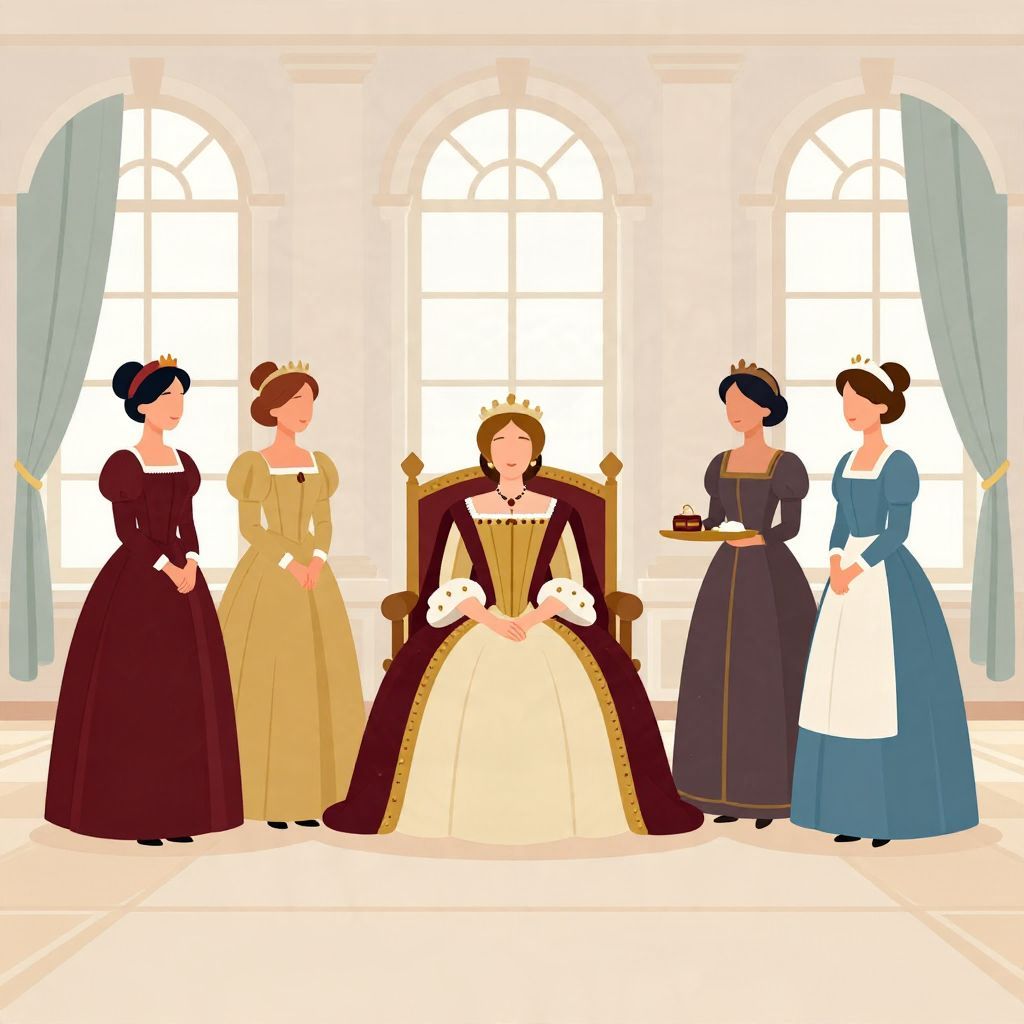
What is a lady in waiting to the queen? In simple terms, she was a woman of rank who attended a queen in daily life, helped manage her household, accompanied her in public, and offered companionship as well as practical support. The role was most important in European courts, especially in medieval and early modern monarchies.
Although the title sounds romantic today, a lady in waiting was part of a serious court system shaped by hierarchy, etiquette, patronage, and politics. The office changed over time, but it usually combined service, status, and proximity to power.
What Is a Lady in Waiting to the Queen?
A lady in waiting was a noble or gently born woman appointed to attend a queen or other royal woman. She helped with personal and ceremonial duties, kept company with the queen, and often served as a trusted member of the court. The position was prestigious, but it was also highly dependent on rank, favor, and court politics.
Origins and Historical Background
The idea of women attending a queen or princess is very old, but the formal office of lady in waiting developed gradually in medieval European courts. By the later Middle Ages, royal households had become more organized, with separate staffs for men and women. Queens needed attendants for privacy, ceremony, travel, dressing, correspondence, and public appearances.
In many courts, these attendants were drawn from aristocratic families. That was not accidental. Royal households were not simply places of service; they were also political spaces. Families sought appointments because access to the queen could lead to influence, patronage, marriages, land grants, or preferment for relatives.
Why the role emerged
- Privacy: Queens, especially married queens, needed female attendants for intimate daily tasks.
- Status: Court life was organized by rank, and noblewomen were expected to serve in ways suited to their social position.
- Politics: Close attendance on the queen could create access to the monarch’s inner circle.
- Etiquette: Courts relied on elaborate ritual, and attendants helped maintain it.
What Did a Lady in Waiting Actually Do?
The exact duties varied by country and period, but a lady in waiting usually assisted the queen with personal care, dressing, escorting, conversation, and ceremonial attendance. She might accompany the queen at meals, processions, church services, hunts, or visits. In some courts she also read letters, relayed messages, or helped organize the queen’s household.
Importantly, this was not the same as being a servant in the modern sense. Many ladies in waiting were themselves noblewomen. They were expected to behave with refinement and discretion, and their presence signaled the queen’s rank and dignity.
Common duties
- Attending the queen in her private chambers.
- Helping with clothing, jewelry, and ceremonial dress.
- Accompanying the queen in public and during travel.
- Serving as companions in conversation and leisure.
- Assisting with messages, introductions, and household routines.
Was a Lady in Waiting a Servant or a Noblewoman?
Usually, she was both an attendant and a woman of elevated social standing. In many European monarchies, ladies in waiting came from noble families or the gentry. Their work was service, but their status was not low. In fact, serving a queen could be a mark of honor and a sign that a family had royal favor.
This is one reason the term can be misleading to modern readers. A lady in waiting was not typically a maid. She was a courtier, often educated, well connected, and expected to move comfortably in elite society. Her role blended domestic service with aristocratic representation.
How the Role Worked at Court
Royal households were carefully structured. A queen might have a chief lady or mistress of the robes, along with several ladies in waiting, maids of honor, chamber attendants, and other staff. The hierarchy depended on the kingdom and the era. Some women served full-time, while others rotated in and out of attendance.
In the British court, for example, the queen’s ladies were part of a formal household with distinct offices. In other monarchies, the terminology differed, but the basic idea remained similar: close female attendants helped the queen function within the strict rhythms of court life.
Typical court hierarchy around a queen
- Senior household officers: women of high rank who oversaw the queen’s female household.
- Ladies in waiting: noble attendants who accompanied and assisted the queen.
- Maids of honor or junior attendants: younger unmarried women serving in a more junior capacity.
Why the Position Mattered Politically
Because ladies in waiting were near the queen, they could become important political intermediaries. They might carry messages, observe court tensions, or influence who gained access to the royal household. In some periods, queens themselves were politically active, and their attendants could become part of factional struggles.
However, it would be too simple to say that every lady in waiting was a secret power broker. Many were primarily household figures rather than political actors. Their influence depended on personality, proximity, the queen’s own authority, and the broader political culture of the court.
Examples of political significance
- They could help shape a queen’s circle of trust.
- They sometimes served as channels between the queen and petitioners.
- They might be drawn into court factions through family ties.
- They could influence fashion, etiquette, and social reputation at court.
How the Role Changed Over Time
In the medieval period, royal households were still developing, and the structure of female attendance could be less formalized. By the Tudor, Stuart, Bourbon, and Habsburg courts of the early modern era, the office became more clearly defined. Court ceremony grew more elaborate, and the queen’s household became a visible part of state culture.
By the 18th and 19th centuries, ladies in waiting remained important in many monarchies, but the role increasingly reflected court tradition rather than direct political necessity. In constitutional monarchies, they often served as companions and ceremonial aides rather than administrators of any real state business.
In the modern British monarchy, for example, the traditional office has evolved. The term still appears in historical discussion, but the practical functions of royal households have changed significantly from earlier centuries.
Famous Historical Ladies in Waiting
Some ladies in waiting became well known because they were close to powerful queens or became involved in major events. Their stories show how the role could range from quiet domestic service to high political drama.
Notable examples
- Jane Boleyn, Lady Rochford served in the Tudor court and became entangled in the dangerous politics surrounding Anne Boleyn and Catherine Howard.
- Mary Seton, one of the “Four Maries,” attended Mary, Queen of Scots and became part of her intimate court circle.
- Sarah Churchill, Duchess of Marlborough was not merely a servant but a powerful court figure and close attendant to Queen Anne before their relationship broke down.
These examples show that ladies in waiting could be trusted companions, political confidantes, or, in some cases, figures caught in the rivalries of the court. Their closeness to the queen could be a source of prestige, but also danger.
What Made a Good Lady in Waiting?
Courts expected ladies in waiting to be discreet, well mannered, loyal, and socially polished. They were often judged on appearance, speech, family background, and ability to navigate etiquette. Education could matter too, especially for reading, writing, music, languages, and conversation.
Since they represented the queen in public, they were expected to embody taste and propriety. A lady in waiting’s behavior could reflect on the queen herself, which made trust and discipline essential.
Common qualities valued at court
- Discretion and confidentiality
- Good breeding and courtly manners
- Loyalty to the queen
- Ability to follow ceremonial rules
- Social tact and emotional intelligence
How Is the Term Used Today?
Today, “lady in waiting” is mostly a historical term. It still appears in books, films, and discussions of monarchy, especially when describing earlier royal households. In modern usage, the phrase can also be used loosely or inaccurately to mean any female royal attendant, but historically it referred to a specific court office with social and ceremonial meaning.
Because the phrase is so familiar, it is sometimes used in fiction in a simplified way. Real court life was more formal and more political than popular culture often suggests. A lady in waiting was not just a friend at the queen’s side; she was part of a structured institution.
Why the Role Matters in History
Studying ladies in waiting helps explain how royal courts functioned. Monarchies were not only ruled by kings and queens; they depended on households, rituals, and networks of access. Women at court could exercise influence through proximity, family connections, and ceremonial importance, even when they held no formal political office.
The role also reveals how gender and status worked together in premodern societies. A lady in waiting was expected to serve, but her service was shaped by privilege, rank, and the politics of elite households. The office shows that power in history was often indirect, personal, and highly social.
Conclusion
A lady in waiting to the queen was a noble or well-born woman who attended the queen in daily life, ceremonial duties, and courtly companionship. The role began in medieval royal households, grew more formal in the early modern period, and remained a symbol of rank, access, and service for centuries. To understand the office is to understand how royal courts worked: through hierarchy, favor, and close personal attendance. For related reading, see what a duke was in royalty and what a royal advisor did.