
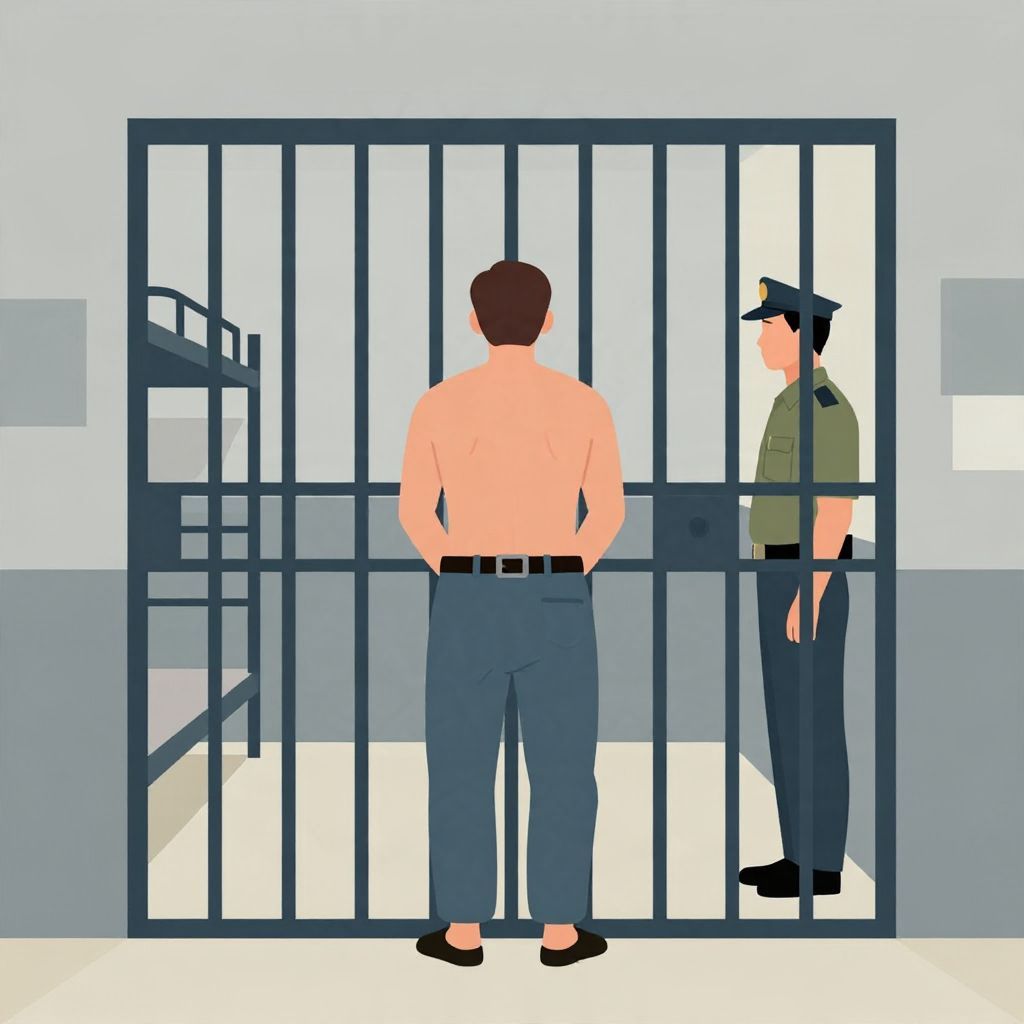
What does sagging pants mean in jail? The short answer is that, in many prisons and jails, sagging pants can be read as a sign of disrespect, defiance, or a willingness to ignore institutional rules. But the meaning is not fixed everywhere. It depends on the facility, the era, the local prison culture, and whether the clothing is being worn by choice, by necessity, or under duress.
To understand the phrase historically, it helps to separate prison slang, prison discipline, and the broader cultural history of sagging pants outside jail. What looks like a simple fashion style in public can carry very different meanings behind bars, where clothing is tightly regulated and small acts of appearance often become symbols of status, resistance, or vulnerability.
What does sagging pants mean in jail?
In jail, sagging pants usually suggest a violation of dress rules or a refusal to conform to authority. In some settings it has been associated with disrespect, gang identity, or a challenge to prison discipline. However, the meaning is not universal: sometimes sagging results from poor-fitting issued clothing, lack of belts, or the practical realities of incarceration rather than a deliberate message.
The prison meaning of clothing is about control
Across modern prisons and jails, clothing has long been used to enforce order. Uniforms, restrictions on belts, and rules about how garments are worn are not just about appearance. They are part of a larger system designed to reduce violence, prevent concealment of contraband, and make inmates easy to identify and manage.
Why belts are often restricted
Many jails and prisons limit or remove belts because they can be used as weapons, for self-harm, or to hide items. Once belts are banned, pants may hang lower than they would in ordinary life. That means some sagging is not symbolic at all; it is a practical consequence of correctional policy.
Why appearance matters behind bars
In a confined environment, small details of dress can signal rank, attitude, or affiliation. A person who appears careless about rules may be seen as testing boundaries. In some facilities, that can attract attention from officers or from other inmates, because visible noncompliance is often interpreted as a sign of challenge.
How sagging pants became a cultural symbol
The broader style of sagging pants emerged in public fashion in the late 20th century, especially in the United States, and became associated with hip-hop culture, youth style, and urban identity. Its prison association is partly historical and partly cultural: prison restrictions, street fashion, and media stereotypes fed into one another over time.
From practical conditions to public style
One commonly repeated explanation is that sagging began in prison because inmates were issued oversized clothing or were denied belts. That may be true in some cases, but it should not be treated as the single origin of the style. Fashion historians and cultural observers generally see sagging as a mix of influences: prison conditions, street style, and the spread of hip-hop aesthetics in the 1980s and 1990s.
Why the prison origin story became popular
The prison explanation gained popularity because it offered a simple moral reading: a style associated with incarceration was then adopted in public as a form of rebellion. That story resonated with critics of sagging pants, but it can oversimplify a more complicated history. Cultural styles often move between marginalized communities, music scenes, and mainstream fashion without a single clear starting point.
What sagging can signal inside a jail
Inside jail, sagging pants may carry several overlapping meanings. The exact interpretation depends on context, but common readings include rule-breaking, nonconformity, toughness, or membership in a social group. In some places, it can also be a form of youthful posturing rather than a serious statement.
1. Defiance of authority
Because jails are highly regulated spaces, ignoring clothing rules can be a visible way to resist authority. Even small acts matter in institutions where order depends on compliance. A person who deliberately wears pants low may be signaling that they will not fully submit to the institution’s expectations.
2. Group identity
Clothing can mark belonging. In some prison environments, style choices may be linked to neighborhood identity, gang symbolism, or a shared street culture. That does not mean every person who sags is signaling gang affiliation. But in a setting where symbolism is closely watched, others may interpret it that way.
3. Practical necessity
Sometimes sagging is simply the result of issued clothing that does not fit well. Jails often house people quickly and with limited resources. Clothing may be oversized, and replacement options may be limited. In those cases, the appearance may have little to do with identity or attitude.
Prison culture and the meaning of respect
To understand why sagging pants can matter in jail, it helps to know that prison culture often places great emphasis on respect, posture, and self-presentation. In a place where personal freedom is restricted, how someone carries themselves may be read as a statement about strength, weakness, or willingness to follow unwritten rules.
Unwritten rules can be as important as written ones
Official jail rules are only part of the picture. In many facilities, there are also informal codes shaped by inmates themselves. These codes vary widely by institution and time period, but they often govern how people dress, speak, and interact. A style that seems harmless outside may be seen as provocative inside.
Why officers may respond strongly
Correctional officers may view sagging pants as a disciplinary issue because it can complicate security and because it may encourage broader noncompliance. Even if the clothing itself is not dangerous, the behavior can be treated as part of a larger pattern of resistance. That is why a simple fashion choice can become a correctional concern.
How the meaning differs from public life
Outside jail, sagging pants has often been read as a fashion statement, a youth trend, or a symbol of cultural identity. Inside jail, the same look can mean something very different because the setting changes the stakes. In a prison environment, almost every visible choice is filtered through discipline, hierarchy, and surveillance.
Outside: style and subculture
In public, sagging has been associated with hip-hop, skate culture, and youth rebellion. Supporters may see it as self-expression, while critics may see it as sloppy or disrespectful. The meaning is socially contested, which is common for fashion trends that emerge from marginalized communities and spread into the mainstream.
Inside: compliance and survival
In jail, the same look may be less about fashion than about whether a person is complying with rules. Because inmates live under constant observation, clothing can become a quick indicator of attitude. A sagging waistband may therefore be interpreted less as style and more as a sign of how someone is navigating power.
What historians can say with confidence
There is solid historical evidence that prison systems regulate clothing closely and that inmates have often adapted or resisted those rules in visible ways. There is also strong evidence that sagging pants became a recognizable style in late 20th-century youth culture. What is less certain is any single, universal origin story linking the style directly and exclusively to prison life.
What is well supported
- Correctional institutions frequently restrict belts and regulate clothing for safety and control.
- Oversized or ill-fitting prison clothing can make pants appear to sag.
- Sagging pants became a visible fashion trend in the United States by the late 20th century.
- In jail, visible noncompliance with dress rules can be read as defiance or disrespect.
What should be treated cautiously
- The idea that sagging pants began only in prison.
- The claim that every person who sags is signaling gang membership.
- The assumption that the style has the same meaning in every jail or prison.
Why this question matters historically
The history of sagging pants in jail shows how clothing can become a language of power. Incarceration is not just about confinement; it is also about regulating bodies, appearance, and behavior. A waistband worn low can be read as a practical issue, a cultural marker, or a challenge to authority depending on who is looking and where.
That flexibility of meaning is what makes the topic historically interesting. A style that may seem trivial in everyday life becomes loaded in institutions built on discipline. The story of sagging pants in jail is therefore less about a single fashion trend than about how prisons turn ordinary objects into symbols of control, identity, and resistance.
In historical terms, sagging pants in jail usually means noncompliance or defiance, but the full story is more complex than the stereotype. The look can reflect prison rules, poor clothing fit, or wider cultural fashion history. For related questions about clothing, identity, and social meaning in the past, you may also want to explore other history topics on prison life and youth culture.