
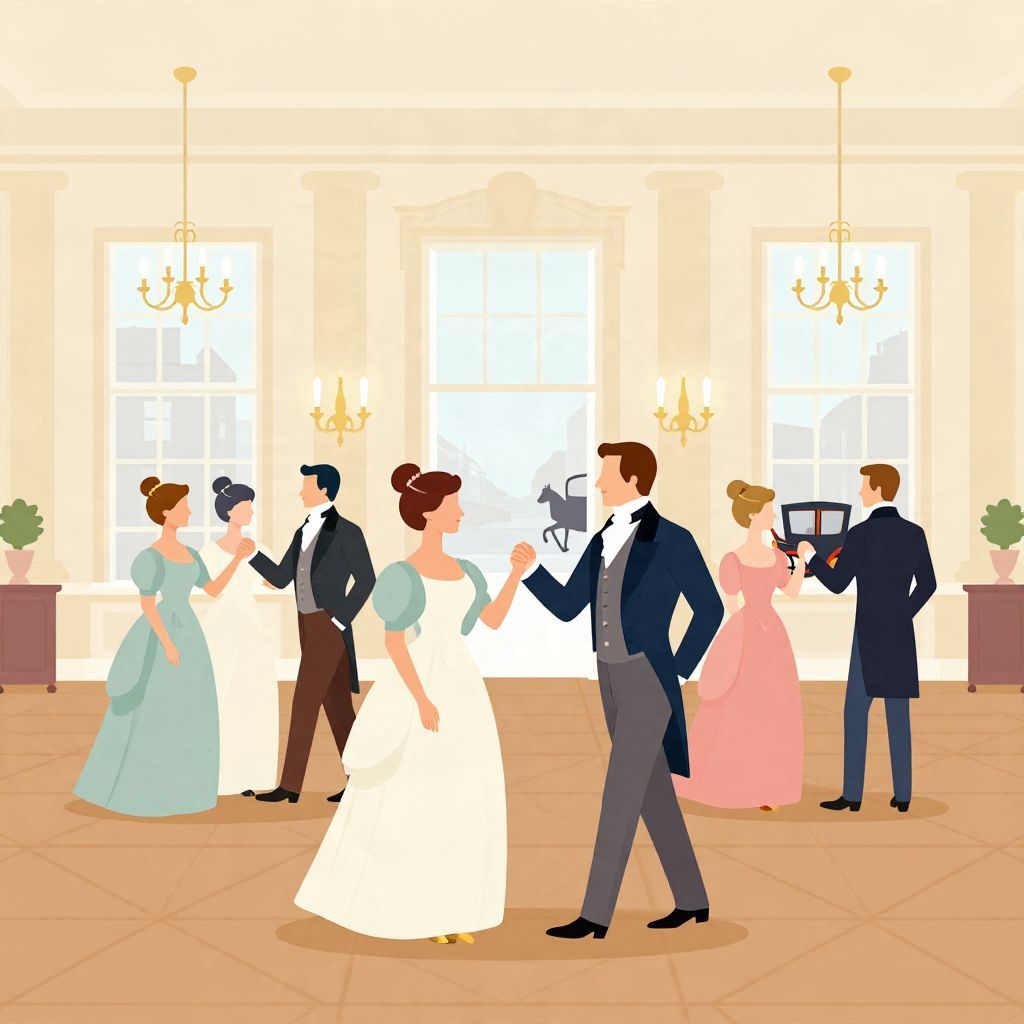
What era is Bridgerton? The short answer is that the series is set in the Regency era of early 19th-century England, especially the years around the 1810s. It draws on the social world of London high society, with its balls, marriage markets, strict etiquette, and aristocratic power.
That said, Bridgerton is not a strict historical documentary. It is a romanticized, alternate-history version of the Regency period, blending real customs and fashions with modern music, a more diverse elite society, and dramatic storylines designed for fiction.
What era is Bridgerton set in?
Bridgerton is set in the Regency era, usually understood as the period from 1811 to 1820 in Britain, when George, Prince of Wales, ruled as regent for his father, King George III. The show captures the look and social rituals of that time, though it takes creative liberties with history, class, race, and politics.
Why the Regency era fits the show
The Regency is the perfect historical setting for Bridgerton because it was a world built around rank, reputation, and marriage. Elite families moved through a carefully structured social season in London, where debutantes were presented to society and marriage negotiations often determined a family’s future. That is the social engine of the series.
The show also reflects a period when fashion, manners, and public image mattered enormously. Men wore tailored coats, waistcoats, breeches or trousers depending on context, and women wore high-waisted gowns inspired by classical styles. The polished surface of Regency society, with its gossip and competition, is central to the drama.
What was the Regency era in real history?
The Regency era was a brief but influential phase in British history. It began in 1811, when George III’s illness made him unable to rule, and ended in 1820, when he died and the Prince Regent became George IV. In broader cultural terms, historians sometimes extend “Regency” a little beyond those exact years to include the surrounding decades of the late Georgian period.
This was a time of major change. Britain was fighting the Napoleonic Wars until 1815, expanding its empire, and experiencing rapid shifts in economy and society. Yet the world of the upper classes still prized inherited status, landownership, and marriage alliances. That tension between old hierarchy and modern change helps explain why the period remains so dramatic on screen.
A quick timeline of the historical Regency
- 1811 – The Prince of Wales becomes Prince Regent.
- 1815 – Napoleon is defeated at Waterloo, reshaping Europe.
- 1816–1819 – Postwar unrest, economic strain, and political tension grow in Britain.
- 1820 – George III dies; the Regency ends and George IV becomes king.
How accurate is Bridgerton historically?
Bridgerton is inspired by the Regency era, not bound to it. Its architecture, carriages, balls, courtship rituals, and general elite culture are rooted in the early 1800s. But the series is intentionally stylized, and it often reshapes history to serve its themes of romance, social mobility, and emotional drama.
Some of the biggest departures from strict history include its modern soundtrack, its very contemporary dialogue style, and its alternative social order. The show presents a more racially inclusive aristocracy than existed in real Britain, and it does so as a deliberate creative choice rather than a claim that the Regency was actually like that.
Historical inspiration versus historical realism
It helps to think of Bridgerton as a historical fantasy with a Regency foundation. The series borrows the outward forms of the period—titles, balls, debutante presentations, and etiquette—but rearranges them for modern storytelling. This makes it accessible to contemporary audiences while still evoking the feel of the early 19th century.
In other words, the show is historically influenced rather than historically literal. That distinction matters because viewers sometimes assume the costumes and customs are exact reconstructions. In reality, the series mixes authentic period elements with invention.
What did Regency society actually look like?
Real Regency society was highly stratified. The aristocracy and landed gentry dominated elite life, while most people lived far from the glamour of London ballrooms. Wealth, title, and family connections shaped opportunities, especially for women, whose social and economic futures were often tied to marriage.
For upper-class women, the “season” in London was a crucial social period. Families introduced daughters to society in hopes of securing suitable matches. Courtship was public, chaperoned, and heavily governed by reputation. A single scandal could damage a young woman’s prospects, which is one reason gossip plays such a large role in Bridgerton.
Common features of Regency elite life
- Debutante season in London for marriage-minded families
- Balls and assemblies as major social events
- Strict etiquette governing visits, letters, and introductions
- Family alliances shaped by wealth, rank, and inheritance
- Public reputation as a form of social power
Why does Bridgerton feel both historical and modern?
The show’s creators wanted the audience to experience the emotional stakes of the Regency without needing a deep background in British history. To do that, they used recognizable modern storytelling tools: fast pacing, pop music arranged for period instruments, and dialogue that feels accessible to today’s viewers.
This approach makes the series feel less like a museum piece and more like a living social drama. The result is not a textbook version of the 1810s, but a version that uses the past to explore timeless themes—desire, pressure, family duty, and the search for personal freedom.
The appeal of the Regency setting
The Regency era is especially attractive for fiction because it sits at a crossroads. It is old enough to feel distant, with carriages, country estates, and formal codes of conduct, yet close enough to the modern age that readers and viewers can still recognize its social anxieties. That balance gives Bridgerton both elegance and immediacy.
It also offers a world where small gestures can carry enormous meaning. A dance, a glance, a calling card, or a rumor can alter a person’s future. That concentration of social pressure makes the setting ideal for romance and conflict.
What parts of the show come from real Regency history?
Several parts of Bridgerton are grounded in historical reality, even if they are dramatized. The importance of marriage, the use of titles, the role of inheritance, and the prominence of London’s social season all reflect real Regency customs. So do the emphasis on manners and the social importance of public events.
The show also reflects the era’s fascination with appearance and respectability. Clothing, posture, speech, and behavior all signaled class and breeding. In a society where wealth and lineage mattered so much, performance was part of daily life.
Examples of real Regency features in the series
- Seasonal social life centered on London
- Marriage as strategy for families and estates
- Titled nobility and inherited rank
- Formal dances as a key courtship setting
- Public scrutiny of women’s behavior and reputation
Where does Bridgerton depart from history?
The show departs from history in several ways, and some of them are important. Most notably, it imagines a more racially integrated aristocratic society than existed in early 19th-century Britain. While people of African and Asian descent certainly lived in Britain at the time, they were not represented in the British nobility in the way the series depicts.
The series also compresses or simplifies political and social realities. Real Regency Britain was shaped by war, empire, poverty, reform movements, and deep inequalities. Those forces are mostly background in Bridgerton, which focuses instead on romance and elite domestic life.
Why these changes matter
These creative choices are not simply errors; they are part of the show’s artistic design. By reimagining who holds power and visibility, the series creates a fantasy of inclusion within a historically exclusive world. That can be inspiring, but it should not be mistaken for a literal portrait of the period.
For viewers interested in history, the best approach is to enjoy the series as a gateway into the Regency era rather than as a substitute for it. The show can spark curiosity about real British social history, women’s lives, fashion, and the politics of the early 1800s.
Why the Regency era still matters today
The Regency era endures because it captures a society in transition. It was still governed by old hierarchies, yet it was moving toward a more modern world shaped by industrial growth, political debate, and changing ideas about identity and class. That tension gives the period lasting historical interest.
Bridgerton succeeds because it turns that historical tension into drama. The series asks what happens when personal desire collides with rigid social expectation, and that question was as real in 1815 as it is now. The setting may be elegant, but the pressures beneath it are deeply human.
So, what era is Bridgerton?
Bridgerton is set in the Regency era, especially the early 1810s in Britain, though it is best understood as a stylized, alternate-history version of that world. It uses the customs and appearance of the period to tell a modern romantic story, not to recreate the past exactly.
If you want to explore the real history behind the series, the Regency era is the key starting point. For more context, you can also look into the broader Regency era and the social history of early 19th-century Britain.