
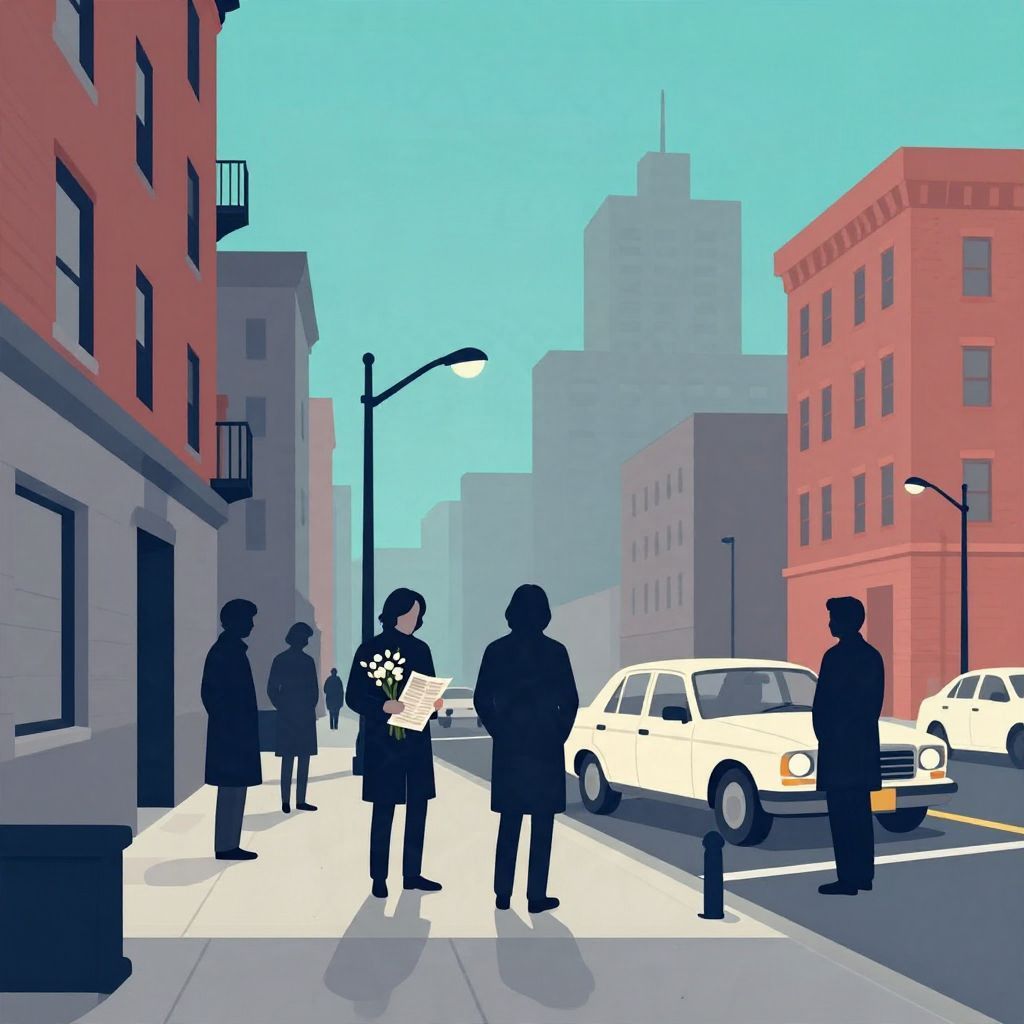
What happened to John Lennon is one of the most famous and tragic events in modern popular history. The former Beatles member was shot and killed outside his New York City apartment building on December 8, 1980, ending the life of a musician whose influence stretched far beyond rock music.
His death shocked the world because Lennon had become not only a cultural icon but also a public voice for peace, politics, and artistic independence. The events of that night, and the aftermath that followed, turned him into a lasting symbol of both creativity and vulnerability.
What happened to John Lennon?
John Lennon was murdered on December 8, 1980, in New York City. As he returned to the Dakota building where he lived with Yoko Ono, he was shot multiple times by Mark David Chapman. Lennon was rushed to Roosevelt Hospital but was pronounced dead shortly after arrival. His killing ended the life of one of the most influential musicians of the 20th century.
The final day: December 8, 1980
Lennon’s last day was, by the standards of celebrity history, unusually ordinary. He spent time in New York with Yoko Ono and later left the Dakota for a recording session. Earlier that day, he and Ono had given an interview and posed for photographs. In the evening, they returned home around 10:50 p.m., where a waiting fan, Mark David Chapman, approached them.
Chapman had been at the building for hours. When Lennon arrived, he asked for an autograph on a copy of Double Fantasy, Lennon’s recently released album. Lennon signed it. Not long afterward, as Lennon and Ono walked toward the building entrance, Chapman fired several shots from a revolver. Lennon was struck in the back and shoulder and collapsed inside the building’s lobby.
Immediate response
Building staff called for help, and police arrived quickly. Lennon was taken by patrol car to Roosevelt Hospital rather than waiting for an ambulance. Despite emergency efforts, the injuries were too severe. He was pronounced dead at 11:15 p.m. The official cause of death was massive blood loss from gunshot wounds.
Who was responsible?
The man who shot Lennon was Mark David Chapman, a 25-year-old from Hawaii. He was arrested at the scene and later pleaded guilty to second-degree murder. Chapman’s motives have been discussed extensively, but the historical record shows that he acted alone. His own statements and later parole hearings have revealed a mix of obsession, resentment, and a desire for notoriety rather than any political conspiracy.
It is important to separate fact from rumor here. Over the years, some people have speculated about larger plots or hidden causes, but there is no credible evidence that Lennon’s death was anything other than a lone-gunman murder. The case is well documented in police records, court proceedings, and contemporary reporting.
Why Lennon was targeted
Chapman later described feeling alienated and fixated on Lennon’s fame and public image. Lennon’s wealth, celebrity, and outspoken views made him a symbolic target in Chapman’s mind. The murder was not the result of a political assassination in the traditional sense, though Lennon’s public activism and anti-war statements had made him controversial in some circles earlier in the 1970s.
John Lennon’s life before the shooting
To understand why the news had such an enormous impact, it helps to remember who Lennon had become by 1980. Born in Liverpool in 1940, he rose to global fame as a founding member of the Beatles. With Paul McCartney, George Harrison, and Ringo Starr, he helped transform popular music in the 1960s.
After the Beatles broke up in 1970, Lennon built a solo career that mixed experimentation, confessional songwriting, and political commentary. Songs such as “Imagine,” “Give Peace a Chance,” and “Working Class Hero” made him more than a pop star; they made him a public figure associated with idealism, protest, and self-examination.
His life in New York
By the late 1970s, Lennon had largely stepped away from public life to focus on family. He and Yoko Ono lived in the Dakota, a historic apartment building on Manhattan’s Upper West Side. In 1980, he had recently returned to recording after a five-year break, making the timing of his death especially painful for fans who had hoped for a creative comeback.
The immediate aftermath
The news of Lennon’s death spread rapidly across the United States and around the world. Radio stations interrupted programming to announce it. Fans gathered outside the Dakota and at hospitals, holding vigils, singing songs, and leaving flowers. In many places, the response was immediate grief mixed with disbelief.
Ono asked for a period of silence rather than a public funeral, and Lennon was cremated. His ashes were given to her, and no public burial site was created. That decision reflected both privacy and the deeply personal nature of the loss.
Public mourning
In New York, a large and spontaneous memorial gathering took place in Central Park, near the Dakota. Similar memorials were held in cities across the world. For millions of people, Lennon’s death felt like the end of an era: not only the loss of a beloved musician, but also the closing of the 1960s cultural world that he had helped define.
How the murder changed public culture
Lennon’s killing had a lasting effect on celebrity security, public mourning, and the way the media handles violent death. In the years that followed, famous figures increasingly lived behind more layers of protection. The murder also sharpened debates about gun violence in the United States, especially when the victim was a globally admired public figure.
For music history, the loss was especially significant because Lennon’s work had been evolving again. Double Fantasy, released just weeks before his death, had been seen as a return to form and a sign that he was entering a new creative phase. His death froze that possibility, leaving fans to imagine what his later career might have been.
Impact on the Beatles’ legacy
Lennon’s death also reshaped how people remembered the Beatles. The group had split a decade earlier, but their story remained central to modern pop culture. After 1980, Lennon’s image became inseparable from the band’s legacy. For many listeners, his death made the breakup of the Beatles feel more final and more tragic.
The legal outcome and Chapman’s imprisonment
Mark David Chapman pleaded guilty and was sentenced to 20 years to life in prison. He became eligible for parole after serving the minimum term, but parole has repeatedly been denied. His case has remained controversial, partly because each hearing revives public outrage and grief.
From a historical perspective, the important point is not only that Chapman was punished, but that the legal process confirmed the basic facts of the crime. There was no mystery about the shooter’s identity, and no serious dispute about the sequence of events. The uncertainty lies more in motive than in the facts of the murder itself.
Why John Lennon’s death still matters
Lennon’s death remains historically important because it brought together several major themes of the late 20th century: celebrity culture, political idealism, mental instability, media spectacle, and urban violence. Few musicians have had their lives interpreted so intensely, and fewer still have had their deaths become such a defining part of their public memory.
He is remembered not only as a Beatle, but also as a solo artist, activist, husband, and father. The tragedy of his death lies partly in its suddenness and partly in the sense of unfinished work. He was only 40 years old, and his renewed recording career suggested that more music was still ahead.
A balanced historical view
It is easy to turn Lennon into a myth, either as a perfect peace advocate or as a flawed celebrity. A more accurate view recognizes both his brilliance and his contradictions. He was a gifted songwriter whose influence was enormous, but he was also a complicated public figure shaped by fame, politics, and personal conflict. His death did not create his legacy, but it fixed it in the public imagination.
Timeline of key events
- 1940 — John Lennon is born in Liverpool, England.
- 1960s — He rises to worldwide fame with the Beatles.
- 1970 — The Beatles break up, and Lennon begins a major solo career.
- Late 1970s — He withdraws from public life and lives in New York with Yoko Ono.
- 1980 — He returns to recording with Double Fantasy.
- December 8, 1980 — Lennon is shot outside the Dakota and dies later that night.
- After 1980 — His death becomes a global moment of mourning and a lasting cultural reference point.
Conclusion
What happened to John Lennon was a shocking act of violence that ended the life of one of the 20th century’s most influential musicians. He was shot in New York City on December 8, 1980, and his death transformed him into an enduring symbol of artistic genius cut short. For readers interested in the wider story, see also when John Lennon was shot and what year the Beatles broke up.