
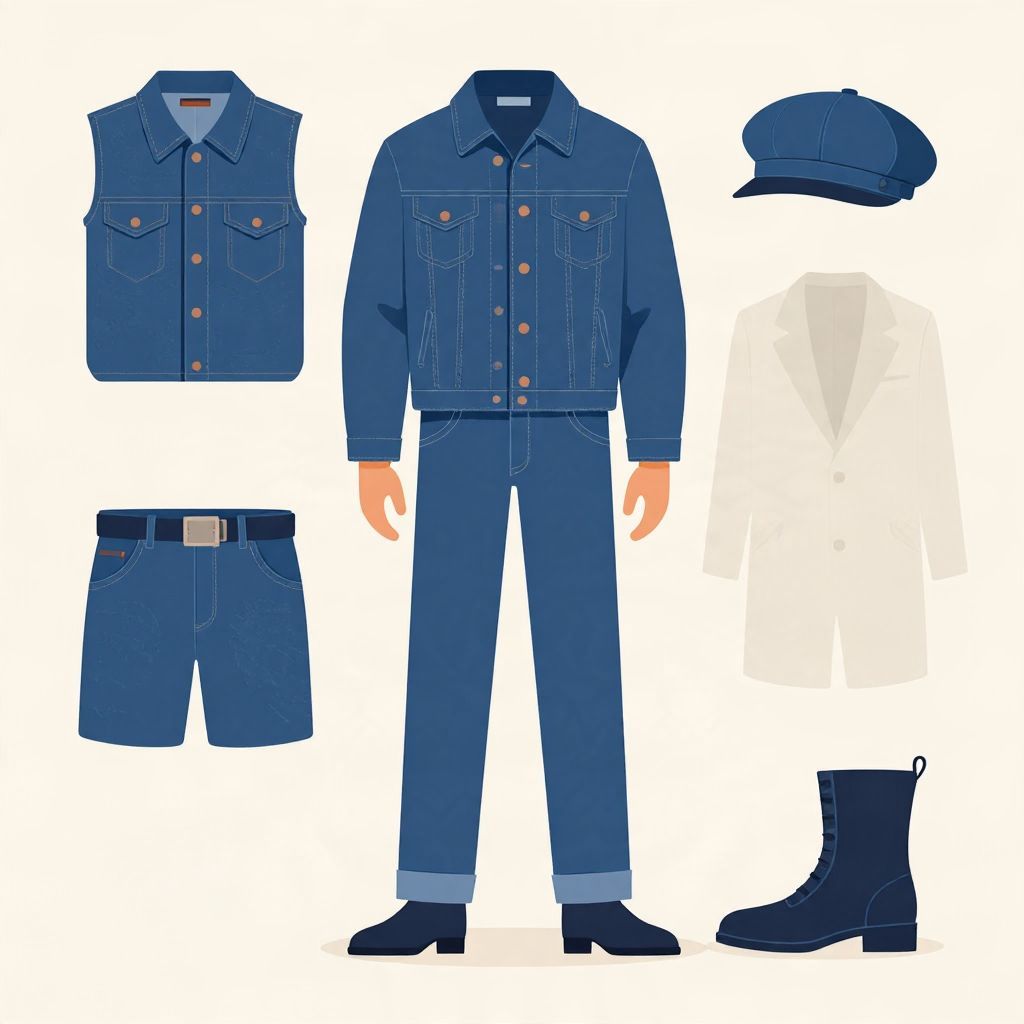
What is a Canadian tuxedo? The phrase usually means an outfit made of denim on top and denim on the bottom, especially a jeans jacket paired with jeans. Today it is often used jokingly, but the look has a longer cultural history tied to workwear, class, music, and North American style.
Its meaning has shifted over time. What began as practical denim clothing became a fashion statement, then a punchline, and later a deliberate style choice embraced by celebrities, designers, and everyday wearers.
What is a Canadian tuxedo?
A Canadian tuxedo is a denim-on-denim outfit, most commonly a blue denim jacket worn with blue jeans. The term is informal and usually playful or teasing. It does not refer to formal dress; instead, it describes a coordinated casual look that became widely recognized in North American popular culture during the 20th century.
Where did the term “Canadian tuxedo” come from?
The exact origin of the phrase is not fully settled, but it is generally linked to North American slang and mid-20th-century humor. The word “Canadian” likely reflects denim’s strong association with rugged outdoor life, workwear, and the North American frontier image, while “tuxedo” is ironic because the outfit is the opposite of formal evening wear.
One well-known story connects the phrase to a 1950s incident involving singer Bing Crosby, who was reportedly denied service at a Canadian hotel because he was dressed in denim. Levi Strauss & Co. later presented him with a custom denim tuxedo as a joke and publicity gesture. This anecdote is often repeated, but historians should treat it as a popular origin story rather than the only proven source of the term.
The Bing Crosby story and its limits
The Crosby episode helped popularize the phrase, but it does not necessarily prove that he invented it. Slang often develops through repeated use rather than a single moment. The story matters because it shows how denim moved from work clothing into the world of celebrity, marketing, and fashion humor.
Why denim became so important in North America
To understand the Canadian tuxedo, it helps to know why denim itself became culturally powerful. Denim was originally valued for durability. In the 19th century, it became closely associated with miners, laborers, ranch workers, and railroad crews. Its strength made it practical, and its affordability made it accessible to working people.
By the late 1800s, companies such as Levi Strauss & Co. had turned denim trousers into a recognizable product. Over time, jeans moved from purely utilitarian clothing into a symbol of toughness, independence, and American-style casual wear. Once denim became common in everyday life, wearing denim from head to toe became noticeable enough to attract jokes.
From workwear to fashion
- 19th century: Denim is mainly work clothing, valued for durability.
- Early 20th century: Jeans spread beyond labor settings into leisure and youth culture.
- Mid-20th century: Denim becomes a mass-market fashion item, especially in the United States and Canada.
- Later 20th century: Denim-on-denim becomes both a style choice and a cultural joke.
How the Canadian tuxedo became a cultural joke
The Canadian tuxedo became funny because it breaks an unspoken rule of dressing: matching too much can look accidental, exaggerated, or unfashionable. A single denim item can seem casual and stylish, but two or more denim pieces together can appear overly coordinated. That tension made the look useful in comedy, satire, and pop culture.
In North American media, denim-on-denim was often used to signal a down-to-earth, unfussy, or slightly awkward character. At the same time, the outfit could also suggest confidence and self-awareness. The joke depended on context: the same clothing could look rustic, ironic, trendy, or outdated depending on who wore it and how.
Why the joke stuck
The phrase lasted because it is vivid and easy to understand. “Tuxedo” suggests elegance, while denim suggests practicality. Putting those ideas together creates a memorable contradiction. That contradiction made the term flexible enough to survive for decades in fashion commentary and everyday speech.
Is a Canadian tuxedo always blue denim?
Not necessarily. The classic version uses blue denim, but the broader idea is any outfit built around matching denim pieces. A black denim jacket with black jeans, for example, can also be described this way in casual conversation. Still, the traditional image is the blue-on-blue combination most associated with North American jeans culture.
Fashion writers and stylists sometimes use the term more broadly than ordinary speakers do. In practice, the phrase usually implies a noticeable denim set rather than simply wearing one denim item with another. A denim shirt with jeans may qualify in some contexts, while others reserve the label for a jacket-and-jeans pairing.
How the Canadian tuxedo changed over time
The meaning of the Canadian tuxedo has never been fixed. In one era it could imply bad taste; in another, it could signal deliberate style. That shift reflects a larger history of fashion, where clothing once tied to labor can later become trendy, nostalgic, or even luxurious.
By the late 20th century, designers and celebrities helped soften the joke. Denim-on-denim appeared on runways, in music videos, and in street style. What had once been a punchline became a look that could be styled carefully with different shades of denim, contrasting shirts, boots, or accessories.
From mockery to fashion statement
- Practical stage: Denim is worn for durability and utility.
- Comedic stage: Wearing too much denim becomes a joke.
- Fashion stage: Stylists and celebrities reclaim the look.
- Retro stage: The outfit becomes nostalgic and intentionally ironic.
Why is it called “Canadian”?
The “Canadian” part of the phrase is more humorous than literal. It does not mean the outfit is uniquely Canadian, nor does it reflect a national dress code. The label likely grew from North American stereotypes about Canada as rugged, practical, and cold-weather oriented—an image that fit denim workwear and layered clothing.
That said, Canadians did not invent denim-on-denim, and the style has been worn widely across the United States and beyond. The name is best understood as slang shaped by cultural association rather than a precise historical classification.
What does the Canadian tuxedo tell us about fashion history?
The Canadian tuxedo is a useful example of how clothing changes meaning over time. Workwear can become fashion, fashion can become satire, and satire can become style again. Denim’s journey from labor clothing to global fashion staple shows how everyday materials can gain symbolic power.
It also shows how humor shapes fashion language. People often name styles by exaggerating them, and those names can outlast the original joke. The Canadian tuxedo survives because it captures both the look and the attitude behind it: casual, bold, slightly ironic, and unmistakably denim.
Key facts about the Canadian tuxedo
- It usually means wearing a denim jacket with jeans.
- The term is informal and often humorous.
- Its exact origin is uncertain, though mid-20th-century popular culture helped spread it.
- The phrase is linked to the rise of denim as everyday clothing.
- What was once mocked can later become fashionable again.
So, what is a Canadian tuxedo?
A Canadian tuxedo is denim worn head to toe, especially a denim jacket with jeans. Historically, the phrase reflects the rise of denim from workwear to mass fashion and the way humor can shape style language. It is less a formal garment than a cultural joke that became a lasting fashion term.
If you want to explore how clothing and identity change over time, you may also find what is cultural divergence and what is American imperialism useful for broader historical context.