
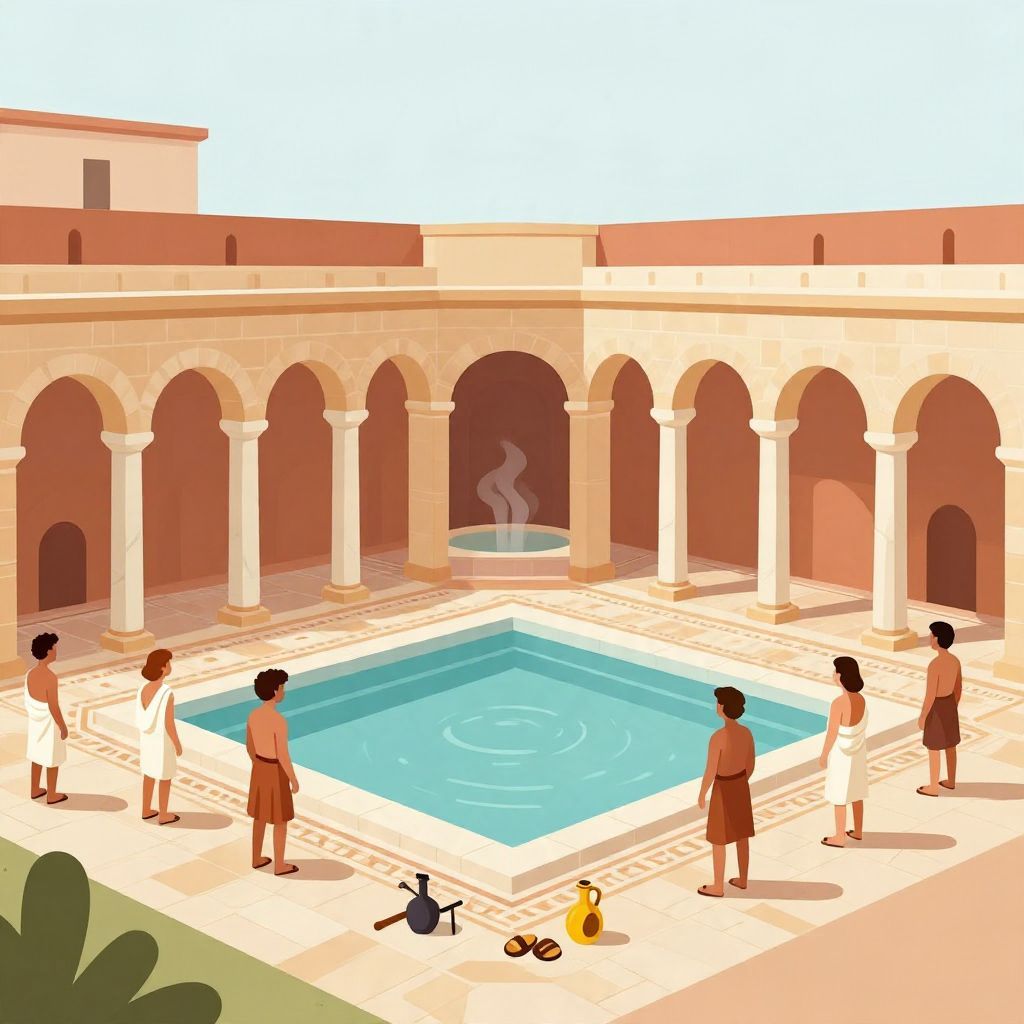
A bath house is a building designed for bathing, washing, and often socializing. In history, bath houses were much more than places to get clean: they were centers of public life, health, ritual, and community, especially in ancient Rome, the Islamic world, East Asia, and parts of Europe.
The answer depends a little on time and place, because bath houses have taken many forms. Some were simple communal washing spaces; others were elaborate complexes with heated rooms, pools, attendants, and rules of etiquette. Their history reveals how societies understood hygiene, leisure, status, and the body.
What Is a Bath House?
A bath house is a purpose-built structure where people bathe, wash, and sometimes relax or socialize. Historically, bath houses could be public or private, simple or luxurious, and they often included hot, warm, and cold bathing areas. They were important not only for cleanliness but also for medicine, religion, and community life.
The Origins of Bath Houses
Bathing spaces are very old, but the bath house as a recognizable institution emerged in several early civilizations. Archaeological evidence shows bathing facilities in the Indus Valley Civilization, ancient Mesopotamia, and later in Greece and Rome. These early examples suggest that organized bathing developed alongside urban life, plumbing, and social hierarchy.
Early bathing in ancient civilizations
In the ancient world, water management made bathing more practical and more meaningful. The famous Great Bath at Mohenjo-daro, usually dated to around the third millennium BCE, is one of the earliest known large bathing structures. While scholars debate its exact function, it shows that bathing had architectural and possibly ritual importance very early on.
Ancient Mesopotamian and Egyptian societies also used bathing in religious purification and daily life. In Greece, bathing became linked to exercise, athletics, and civic culture. By the time of the Roman Empire, bath houses had become one of the most visible public institutions in many cities.
How Roman Bath Houses Worked
Roman bath houses, or thermae and balneae, are among the best-known examples in history. They were usually equipped with changing rooms, exercise areas, heated chambers, and pools of different temperatures. Many relied on sophisticated heating systems, especially the hypocaust, which circulated hot air under floors and through walls.
Typical rooms in a Roman bath house
- Apodyterium — changing room
- Palaestra — exercise yard or gymnasium area
- Tepidarium — warm room
- Caldarium — hot room
- Frigidarium — cold room or plunge pool
Romans used bath houses for more than washing. They met friends, discussed business, listened to news, exercised, and sometimes ate or received services such as massage. Bathing was a regular part of urban life for many free Romans, though access, cost, and gender rules varied from place to place and period to period.
Why Roman bath houses mattered
Roman bath houses reflected imperial wealth, engineering skill, and social organization. Large imperial baths could serve thousands of visitors a day. They also displayed political power, since emperors and elites often funded them as public benefactions. In this way, a bath house was both a practical facility and a statement about civilization itself.
Bath Houses in the Islamic World
Bath houses remained important after the fall of the Western Roman Empire, especially in the Islamic world, where the hammam became a major institution. Hammams were influenced by earlier Roman and Byzantine bathing traditions, but they developed their own architecture, customs, and religious significance. They were often associated with purification, hospitality, and urban culture.
The role of the hammam
In many Muslim societies, bathing was connected to ritual cleanliness before prayer and to broader ideas of bodily purity. Hammams were usually found near mosques, markets, and residential districts. They served men and women at different times or in separate spaces, depending on local custom. Like Roman baths, they were also places where people met, exchanged news, and marked important life events.
Hammams spread widely across the Middle East, North Africa, the Balkans, and parts of South Asia under Islamic rule. Their long survival shows that bath houses were not just a Roman legacy; they were adaptable institutions that fit different religious and social systems.
Bath Houses in East Asia and Other Traditions
Bathing traditions also flourished in East Asia. In Japan, public bath houses called sento became especially important in urban life, while hot spring bathing, or onsen, developed into a major cultural practice. In Korea and China, bathing was tied to cleanliness, medicine, and social custom, though the forms varied widely by region and era.
Japanese bath houses
Japanese bath houses became especially common in cities where private bathing facilities were limited. They offered a practical solution for washing and a social space for neighbors. Over time, bath culture in Japan developed strong etiquette, including careful washing before entering shared tubs. This emphasis on cleanliness before communal soaking remains a defining feature of Japanese bathing culture.
In all these traditions, the bath house was shaped by local beliefs about the body, modesty, health, and community. There is no single global model. Instead, bath houses evolved in response to climate, urban density, religion, and available technology.
Bath Houses in Medieval and Early Modern Europe
In medieval Europe, public bath houses continued in many towns, especially where Roman infrastructure or urban trade networks survived. They were sometimes associated with medical treatments, steam bathing, and social recreation. However, their reputation changed over time, especially during outbreaks of plague and in periods of moral reform.
Decline and suspicion
Historians have often noted that public bath houses in late medieval Europe were increasingly criticized for disorder, sexuality, and disease, though the story is more complicated than a simple collapse of bathing culture. Some bath houses closed, while others adapted or became more private. The rise of private bathing in elite homes gradually changed the meaning of bathing from a public to a more domestic practice.
By the early modern period, some European cities still had bath houses, but the institution was less central than it had been in Roman times or in the Islamic world. New ideas about medicine, modesty, and urban sanitation reshaped bathing habits.
What Bath Houses Were Used For
Bath houses served several overlapping purposes. Their function depended on era, region, and social class, but some common uses appear again and again in the historical record.
- Hygiene — washing the body and hair, especially in crowded cities.
- Health — bathing was often linked to medicine, relaxation, and treatment.
- Religion — purification before prayer or ritual cleansing before sacred events.
- Social life — meeting friends, exchanging news, and building community ties.
- Status and display — wealthy patrons used bath houses to show generosity and power.
Because they combined these functions, bath houses were often highly regulated spaces. Rules could govern dress, timing, gender separation, behavior, and payment. In other words, a bath house was not just a room with water; it was a social institution.
Bath House Architecture and Technology
The design of a bath house usually depended on water supply, heating methods, and local custom. Roman bath houses are famous for their engineered heating systems, but other cultures also developed clever ways to manage steam, hot water, and ventilation. Bath house architecture often included thick walls, controlled light, drainage, and separate rooms for different temperatures.
Key design features
- Access to a reliable water source
- Heating systems for hot rooms or pools
- Drainage and waste removal
- Changing and resting areas
- Separate spaces for privacy, gender, or status
These features made bath houses expensive to build and maintain. That is one reason they often depended on state support, wealthy patrons, religious foundations, or municipal funding. Their survival tells us a great deal about the resources and priorities of the societies that built them.
Were Bath Houses Just for the Rich?
Not always. Some bath houses were luxurious and elite, but many were intended for ordinary urban residents. In Rome, for example, public baths could be relatively affordable, and some were free on special occasions. In other settings, access depended on class, gender, or religious status. The key point is that bath houses often served a broad public, even when elites enjoyed the best facilities.
At the same time, bath houses could reinforce inequality. Wealthier patrons might have private bathing arrangements, better rooms, or more comfortable services. So while bathing could be communal, it was rarely socially equal.
Why Bath Houses Matter in History
Bath houses matter because they reveal how past societies organized everyday life. They show that cleanliness was never only a private matter. It was tied to urban planning, religion, medicine, economy, and public behavior. Bath houses also remind us that social spaces could be both practical and symbolic: places to wash, but also places to belong.
Studying bath houses helps historians understand how people lived together in crowded cities, how they thought about the body, and how public infrastructure supported culture. Their long history across many civilizations makes them one of the clearest examples of a shared human need turned into a social institution.
In short, a bath house is a building for washing and bathing, but historically it was much more than that: a place of health, ritual, engineering, and community. If you want to explore related cultural history, you might also enjoy reading about what a samovar is or what a Brazilian carnival is.