
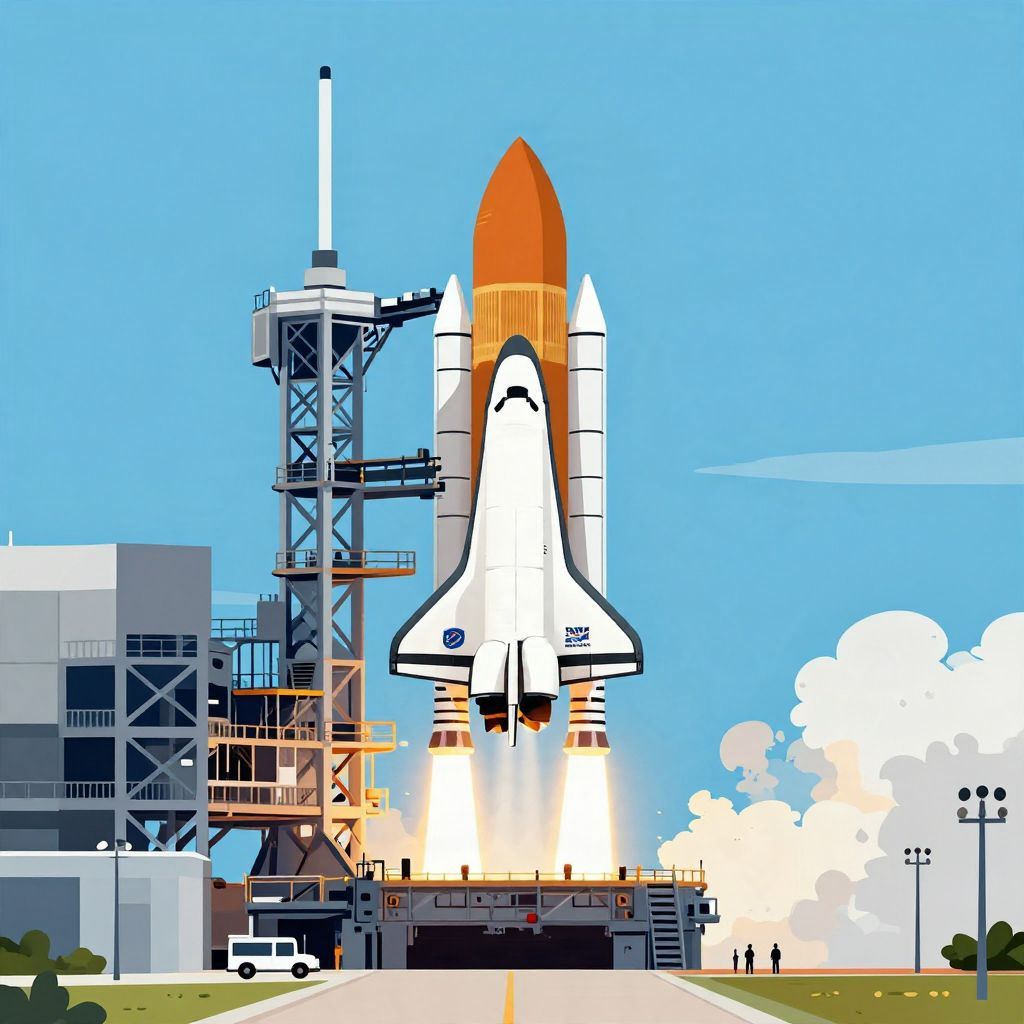
The last Space Shuttle launch took place on July 8, 2011. It was Space Shuttle Atlantis on mission STS-135, the final flight of NASA’s Space Shuttle Program and the end of an era in human spaceflight.
That launch marked the close of a 30-year program that had carried astronauts, satellites, laboratories, and major scientific equipment into orbit. It also ended the Shuttle era with a mission focused on delivering supplies rather than opening a new frontier.
When Was the Last Space Shuttle Launch?
The last Space Shuttle launch was Atlantis lifting off on July 8, 2011, from Launch Complex 39A at the Kennedy Space Center in Florida. The mission was STS-135, and it was the 135th and final Space Shuttle mission. Atlantis returned to Earth on July 21, 2011, bringing the program to a formal close.
Why Atlantis and STS-135 Became the Final Flight
Atlantis was chosen for the final mission because NASA had decided to end the Space Shuttle Program after years of debate over cost, safety, and the future of U.S. human spaceflight. STS-135 was originally planned as a backup mission, but it became the last flight after earlier Shuttle retirements and program changes left Atlantis as the final orbiter available for launch.
The end of the Shuttle era
The Space Shuttle fleet had already seen the retirement of Discovery and Endeavour in earlier years, and Columbia had been lost in the 2003 disaster. By 2011, NASA had shifted toward a transition period in which the Shuttle would be retired and future U.S. access to space would rely on other systems, including international partnerships and later commercial launch providers.
Why the program ended
The Shuttle was an extraordinary machine, but it was also expensive and complex to operate. It was designed to be reusable, yet refurbishment between flights was labor-intensive, and the system still depended on large external fuel tanks and solid rocket boosters. After two fatal accidents—Challenger in 1986 and Columbia in 2003—NASA and policymakers faced continuing questions about the balance between ambition, risk, and cost.
What Happened on the Final Launch Day?
On the morning of July 8, 2011, Atlantis launched from Florida at 11:29 a.m. Eastern Daylight Time. The mission carried a four-person crew and a cargo of supplies and equipment to the International Space Station. The launch was widely watched as a symbolic moment, not only for NASA but for the broader public that had followed the Shuttle program for decades.
The crew of STS-135
- Christopher Ferguson — commander
- Douglas Hurley — pilot
- Sandy Magnus — mission specialist
- Rex Walheim — mission specialist
This was a small crew compared with many earlier Shuttle missions, reflecting the mission’s practical purpose. STS-135 was not a dramatic construction flight or a deep-space departure. Instead, it was a logistical mission designed to deliver supplies, spare parts, and equipment to support the International Space Station after the Shuttle fleet was retired.
What Atlantis carried
Atlantis flew with the Raffaello Multi-Purpose Logistics Module in its cargo bay, a pressurized container used to transport supplies and hardware to the space station. The mission also carried the Mini-Research Module 1 and other equipment needed for station operations. In a sense, the final Shuttle mission was both practical and symbolic: it supported the next phase of human spaceflight while closing the chapter on the Shuttle itself.
The Space Shuttle Program in Historical Context
The Space Shuttle Program began with the first launch of Columbia on April 12, 1981. Over three decades, the Shuttle became one of the most recognizable vehicles in modern history. It launched satellites, repaired the Hubble Space Telescope, helped build the International Space Station, and carried astronauts from many countries into orbit.
What made the Shuttle different
Unlike earlier spacecraft, the Shuttle was designed to return to Earth and land like a glider. It was a reusable winged spacecraft with a large cargo bay, intended to make access to orbit more routine. In practice, it became a highly capable but costly system that required enormous engineering effort before and after each launch.
Major achievements of the program
- Deployment and servicing of major satellites
- Construction and resupply of the International Space Station
- Scientific missions, including Hubble Space Telescope servicing
- International crew transport and long-duration orbital logistics
- Advances in materials, robotics, and operations in space
These achievements made the Shuttle one of NASA’s most important programs, even as its limitations became more visible over time. Its final launch therefore represented not just an ending, but the conclusion of a specific model of space exploration.
Why the Final Shuttle Launch Mattered
The last Space Shuttle launch mattered because it symbolized a transition in American space history. For many people, the Shuttle had defined what spaceflight looked like: a reusable spacecraft, televised launches, astronauts working in orbit, and dramatic returns to Earth. When Atlantis launched for the last time, it also marked the beginning of a period in which the United States had to rely on other vehicles for crewed access to space.
The loss of an era
For NASA, the retirement of the Shuttle meant the end of the agency’s ability to launch astronauts from U.S. soil until later crewed commercial systems came online. During the transition, American astronauts traveled to the International Space Station aboard Russian Soyuz spacecraft. That shift highlighted how much the Shuttle had shaped national space capability, and how significant its retirement really was.
Public memory and symbolism
The final launch drew emotional attention because it combined technical achievement with historical closure. The Shuttle had been part of public life for so long that its departure felt personal to many observers. The image of Atlantis rising from the Florida launch pad became a visual marker of the end of one chapter and the uncertain beginning of another.
What Happened After the Final Launch?
After STS-135, Atlantis docked with the International Space Station, delivered its cargo, and then returned to Earth on July 21, 2011. That landing at Kennedy Space Center was the final landing of the Space Shuttle Program. With that, NASA officially ended Shuttle operations and moved toward new spacecraft development and future exploration goals.
Retirement and preservation
The orbiters were not scrapped as working spacecraft, but retired for display and education. Atlantis was later displayed at the Kennedy Space Center Visitor Complex, while other orbiters were placed in museums and institutions across the United States. Their preservation reflects the program’s place in technological and cultural history.
Legacy for future spaceflight
The Shuttle’s legacy is mixed in the way many major historical programs are mixed: it was brilliant, costly, risky, and transformative all at once. It helped build the International Space Station, advanced orbital operations, and inspired generations of engineers and scientists. At the same time, its retirement underscored the need for safer, more cost-effective, and more flexible systems for the future.
Key Dates in the Final Chapter of the Shuttle Program
- April 12, 1981 — first Space Shuttle launch, Columbia on STS-1
- February 1, 2003 — Columbia disaster during reentry
- July 8, 2011 — last Space Shuttle launch, Atlantis on STS-135
- July 21, 2011 — final Shuttle landing, Atlantis returns to Earth
The Historical Answer, in Brief
The last Space Shuttle launch was July 8, 2011, when Atlantis launched on STS-135. It was the final mission of NASA’s Space Shuttle Program, a program that transformed human spaceflight for 30 years and then ended as NASA turned toward a new era of exploration and space access.