
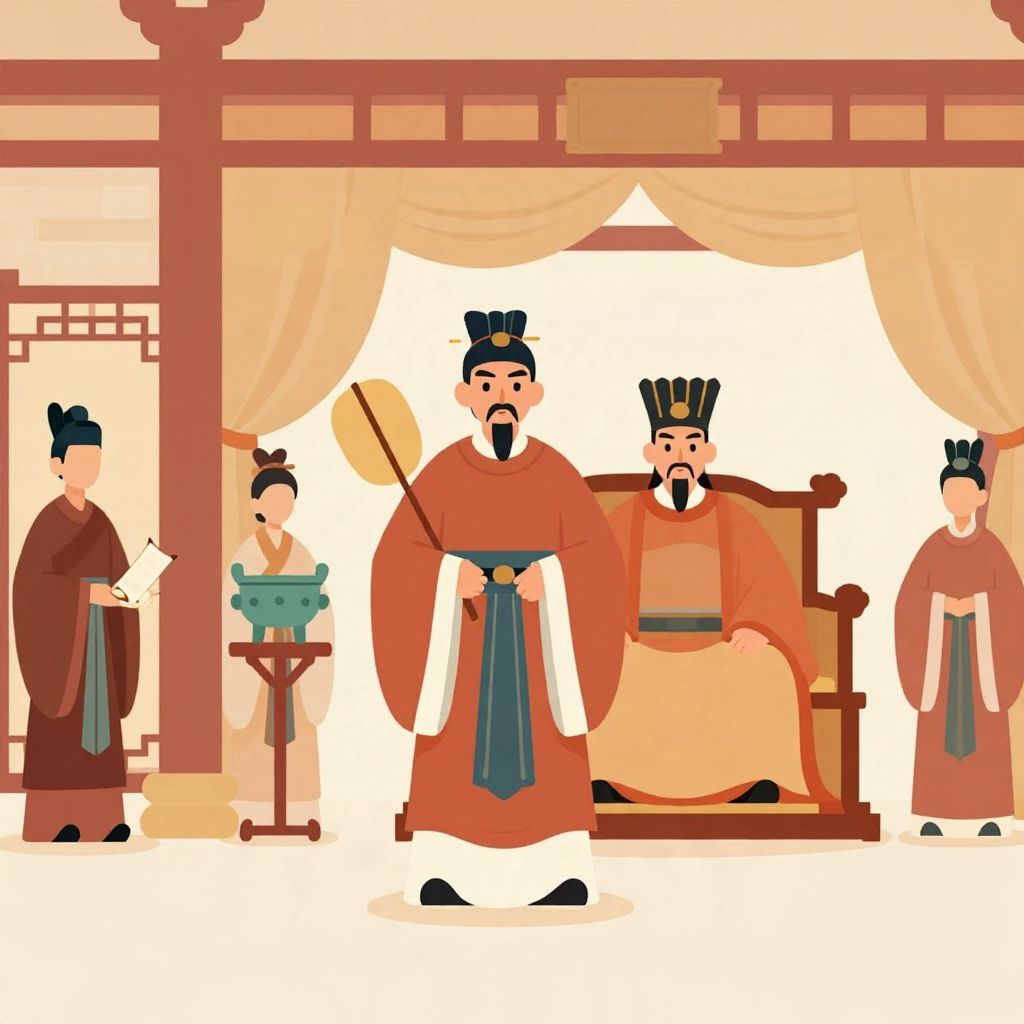
What is a eunuch? In history, the term usually refers to a man who had been castrated, often while young, and who was employed in roles where rulers wanted trusted attendants, administrators, or guardians. The word has also been used more broadly in some societies for men who lived in court service under special social or legal conditions.
Eunuchs appear across many civilizations, from ancient Mesopotamia and Persia to imperial China, Byzantium, and the Ottoman Empire. Their history is tied to power, court politics, slavery, gender norms, and the control of access to rulers.
What Is A Eunuch?
A eunuch was historically a castrated male, usually serving in elite households, palaces, or religious institutions. In many empires, eunuchs were valued because they were thought to pose less dynastic threat and could be trusted in intimate court spaces. Their roles varied widely, from servants and guards to powerful officials.
Where Did Eunuchs Come From Historically?
The practice of creating or employing eunuchs is ancient, but it did not begin in one single place. Evidence appears in the ancient Near East by the first millennium BCE, and eunuchs later became especially prominent in Persian, Roman, Byzantine, Chinese, and Islamic courts. The institution developed for political and social reasons, not because of one shared cultural tradition.
Early ancient evidence
Some of the earliest references come from Assyrian and Persian contexts. In these kingdoms, eunuchs could serve as palace officials, messengers, and guardians of royal women or treasure. Their physical condition made them useful to rulers who wanted loyal intermediaries close to the center of power.
Why rulers used eunuchs
Rulers often feared that powerful male servants might build family dynasties or challenge the throne through marriage and inheritance. Eunuchs were seen as less likely to found rival lineages. That belief was not always accurate—some eunuchs became extremely influential—but it explains why courts repeatedly turned to them.
How Were Eunuchs Used in Different Empires?
The role of eunuchs changed from place to place. In some societies they were household servants; in others they reached the highest levels of administration. Their history shows how a single social category could carry very different meanings depending on political structure and cultural values.
In imperial China
Chinese history offers some of the clearest and longest-lasting evidence of eunuch service. Eunuchs worked in the imperial palace, managed access to the emperor, handled documents, and sometimes controlled military or financial affairs. Their influence could be enormous, especially when emperors were young, weak, or isolated.
At the same time, Chinese officials often distrusted eunuchs. Confucian political culture emphasized family, lineage, and moral order, and eunuchs were sometimes portrayed as corrupt or manipulative. This tension produced repeated cycles: emperors relied on eunuchs, officials criticized them, and then later regimes tried to limit their power.
In the Byzantine Empire
Byzantine eunuchs also held important court and church roles. Because they could not produce heirs, they were often considered suitable for sensitive positions near the emperor and empress. Some became diplomats, chamberlains, military commanders, or even patriarchs and influential church figures.
In the Islamic world
In various Islamic courts, eunuchs served in palaces, guarded harems, and managed elite households. Their use was especially visible in medieval and early modern periods. As elsewhere, their status depended on rank and context: some were enslaved, while others rose to positions of major responsibility.
In the Ottoman Empire
The Ottoman court employed both black and white eunuchs in different palace functions. They were key figures in the administration of the imperial household and in guarding access to the sultan and the women’s quarters. Some became wealthy and politically influential, showing that eunuchs could be both socially constrained and politically powerful.
Were Eunuchs Always Slaves?
No. Many eunuchs were enslaved, especially when they were acquired through warfare, trade, or tribute. But not all eunuchs were slaves in every society. Some were free-born men who underwent castration for religious, social, or service-related reasons, though this was less common and often controversial.
Because the term covers several different historical realities, it is important not to assume one uniform experience. A palace eunuch in Tang China, a Byzantine court official, and a temple servant in another setting might all be called eunuchs, yet their legal status, social standing, and daily life could differ greatly.
How Did Castration Become Linked to Service?
The connection between castration and court service grew out of political logic. If a ruler wanted a servant who would not found a family line, claim legitimacy through children, or build an independent household, a eunuch could seem ideal. This made eunuchs especially useful in spaces where trust and access mattered more than military strength.
However, the logic was never simply practical. It also reflected deep fears about sexuality, lineage, and loyalty. Courts often imagined eunuchs as neutral figures between male and female spaces, or between private household life and public governance. Those ideas shaped their roles, even when reality was more complex.
Common functions of eunuchs
- Guarding royal chambers and women’s quarters
- Managing palace finances and inventories
- Serving as messengers or chamberlains
- Supervising servants and household staff
- Acting as diplomats or political advisers
- In some cases, commanding troops or administering provinces
What Did Eunuchs Mean in Religion and Culture?
Eunuchs had religious as well as political significance. In some traditions, they were associated with purity, separation from ordinary family life, or special access to sacred spaces. In others, they were viewed with suspicion or pity. Their symbolic meaning often depended on ideas about gender, bodily wholeness, and ritual status.
Eunuchs in the Bible
The Bible mentions eunuchs in several contexts, especially in royal courts and later religious interpretation. In the ancient world, the term could refer both to castrated men and, in some passages, to high-ranking court officials more broadly. This is one reason biblical references to eunuchs have been debated by scholars and translators.
Gender and identity
Modern readers sometimes assume eunuchs occupied a category identical to modern ideas of gender identity, but that would be misleading. Historically, eunuchs were defined primarily by bodily status and social function, not by a modern concept of gender. Still, they often occupied an ambiguous social position that challenged simple male/female divisions.
Were Eunuchs Powerful or Marginalized?
Both. Eunuchs could be among the most trusted people in a palace and among the most vulnerable in society. Their proximity to rulers gave them access, information, and influence. Yet they were also often stigmatized, mocked, or feared because they did not fit conventional ideals of masculinity and family life.
This contradiction is one of the most important facts about eunuchs in history. They were not merely victims, and they were not simply powerful insiders. Their lives were shaped by dependence on rulers, court politics, and the unstable trust that made them useful in the first place.
What Happened to Eunuchs Over Time?
The prominence of eunuchs changed as states changed. In some places, modernizing governments reduced or abolished court eunuch systems. In others, the institution faded gradually as palace structures and slavery systems transformed. By the nineteenth and twentieth centuries, eunuchs had largely disappeared from formal political life, though the historical memory of them remained strong.
Long-term consequences
The history of eunuchs reveals how rulers managed power inside courts. It also shows how bodies could be turned into political tools. Their story helps explain broader themes in world history: slavery, elite household organization, gender norms, and the relationship between personal trust and state authority.
Key Facts About Eunuchs
- The word usually means a castrated male, especially in historical court settings.
- Eunuchs are documented in several major civilizations, including Assyria, Persia, China, Byzantium, and the Ottoman Empire.
- They were often chosen for roles requiring close access to rulers.
- Some eunuchs were enslaved; others held high office and real political power.
- Their historical meaning varied widely, so the term should always be read in context.
Conclusion
So, what is a eunuch? Historically, it is a castrated male who often served in elite households or courts, especially where rulers wanted trusted attendants without family claims to power. The institution was widespread, complex, and deeply tied to the politics of empire. For a related look at religious and textual traditions, see what eunuchs meant in the Bible and this broader guide on what a eunuch is.