
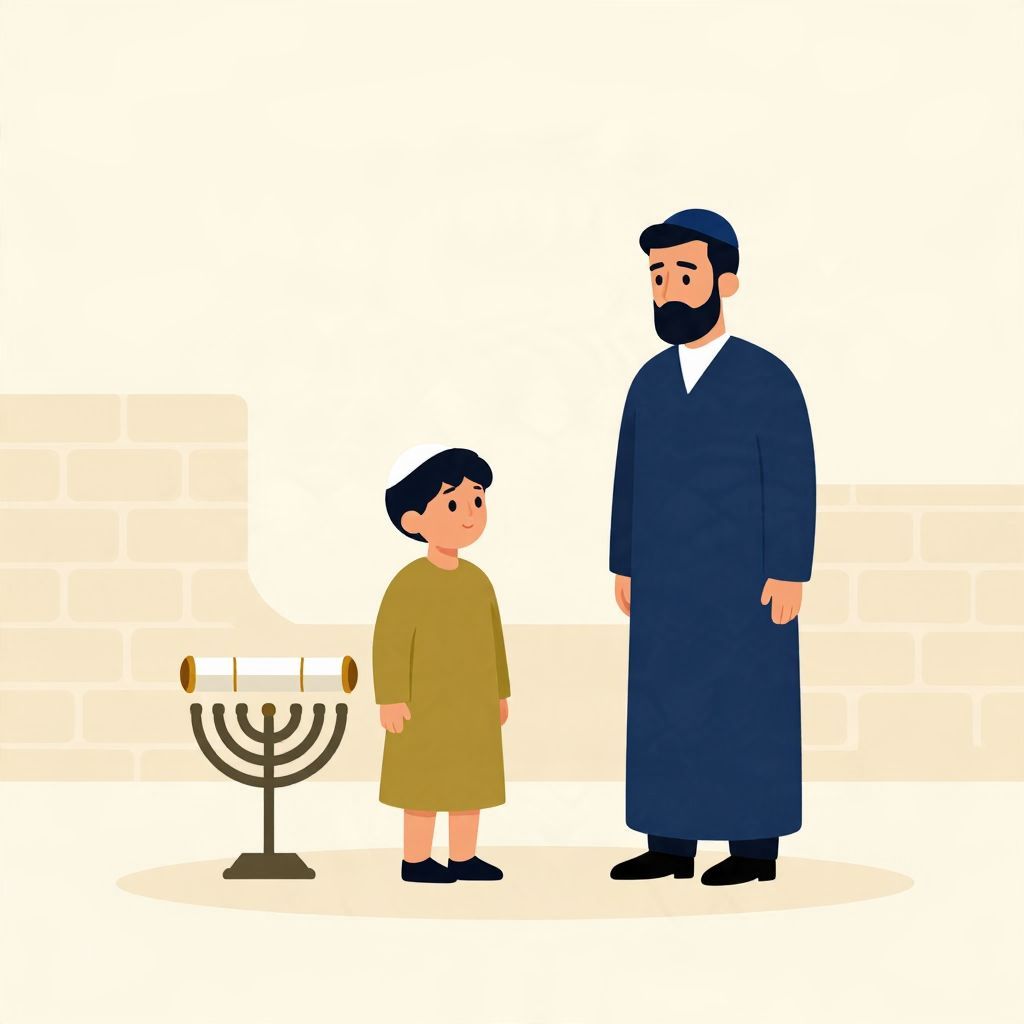
What is a kippah? In Jewish life, a kippah is a small head covering worn by many Jewish men, and by some Jewish women, as a sign of reverence, identity, and religious practice. It is also called a yarmulke in Yiddish and a skullcap in English.
Its meaning has changed over time, but the kippah remains one of the most recognizable symbols of Jewish observance. Understanding it means looking at Jewish law, custom, language, and the long history of how a simple garment came to carry deep religious and cultural significance.
What Is a Kippah?
A kippah is a cap or dome-shaped head covering worn in Jewish settings and, for many observant Jews, throughout the day. It is not a universal biblical command in the strict sense, but a practice that developed through Jewish tradition as a sign of humility before God and as an expression of Jewish identity.
Background and Meaning of the Kippah
The word kippah comes from Hebrew and means “dome” or “covering.” The term yarmulke is more familiar in English-speaking Jewish communities, especially in Ashkenazi tradition. Whatever the name, the object is usually small, round, and worn on the crown of the head.
Its basic symbolism is straightforward: covering the head is a gesture of modesty and reverence. In Jewish thought, the uncovered head can suggest vulnerability before God, while a covered head marks awareness of divine presence. Over time, this custom became both a religious sign and a visible marker of belonging.
Religious meaning
For many Jews, the kippah expresses two ideas at once. First, it signals respect toward God during prayer, study, and ritual life. Second, it can show a person’s connection to the Jewish people and to a shared tradition. In some communities, wearing one is a strong expectation; in others, it is more flexible.
Cultural meaning
The kippah is also a cultural object. Outside strictly religious settings, it may be worn at weddings, funerals, synagogue services, festivals, or family gatherings. In modern public life, it can function as a statement of Jewish visibility, especially in places where Jews have had to balance assimilation, safety, and identity.
How Did the Kippah Develop Historically?
The kippah did not appear as a single invention with one founder or exact date. Instead, it emerged gradually from ancient and medieval Jewish attitudes toward head covering, then became more formalized in rabbinic tradition. The evidence shows a custom that grew over centuries rather than a practice introduced all at once.
In the ancient world, many peoples covered their heads in various contexts, especially for prayer or social status. Jewish sources from antiquity do not present a simple, universal rule that all Jews always covered their heads. Instead, the practice developed unevenly and became more prominent in later rabbinic and medieval Jewish life.
Rabbinic and medieval development
By the medieval period, Jewish legal and ethical writings increasingly treated head covering as an appropriate sign of piety. Some sources describe it as a mark of reverence in prayer and study, while others extend the practice into everyday life. This was not always a legal obligation in the same way across all communities, but it became a respected norm.
In many Jewish communities, especially in Europe and the Islamic world, head covering was also shaped by surrounding customs. Jews often adapted local forms of dress while maintaining distinct religious markers. The kippah’s small size made it practical: it could be worn under other hats or alone, depending on custom and circumstance.
From custom to widely recognized symbol
As Jewish communities became more visibly identified by dress in certain periods, the head covering took on greater symbolic weight. By the early modern era, and especially in the modern period, the kippah was widely recognized as a sign of Jewish observance. In many places it became one of the clearest outward signs of Jewish life.
Is Wearing a Kippah Required by Jewish Law?
The answer depends on how one defines “required.” In traditional Jewish law, head covering is strongly encouraged by many authorities, especially during prayer, blessings, and study. However, the degree to which it is mandatory varies among communities and legal interpretations. It is best understood as a deeply rooted custom that has acquired strong religious force.
Orthodox communities generally treat wearing a kippah as standard practice for men and boys, often throughout the day. Conservative communities may also encourage it strongly, though practice can vary. Reform and secular Jewish settings may treat it as optional, symbolic, or situational rather than obligatory.
Men, women, and changing practice
Historically, the kippah was most commonly associated with men. In some contemporary Jewish communities, however, women also wear head coverings, especially in egalitarian or progressive settings. This reflects modern changes in Jewish religious life, not a single ancient rule.
It is important not to assume one universal Jewish practice. Judaism has always included different legal traditions, regional customs, and levels of observance. The kippah’s meaning is shared, but its daily use has never been identical in every Jewish group.
What Does the Kippah Look Like?
The kippah is usually a small circular or slightly dome-shaped cap that sits on the top of the head. It may be made from cloth, velvet, suede, knit fabric, leather, or crocheted yarn. Some are plain and black; others are colorful, patterned, or decorated.
Different communities favor different styles. A black velvet kippah may be associated with certain Orthodox circles, while knitted or crocheted kippot are common in many modern Jewish communities. Children often wear smaller or simpler versions, sometimes beginning at a young age as part of family and communal education.
Common terms
- Kippah — the Hebrew term, widely used in modern English as well.
- Yarmulke — a Yiddish term common in English-speaking Jewish communities.
- Skullcap — a general English description, though not unique to Judaism.
- Kippot — the plural form of kippah in Hebrew.
Why Is the Kippah Historically Important?
The kippah matters because it shows how a small object can carry centuries of religious meaning. It reflects the development of Jewish law, the strength of communal custom, and the ways Jews have maintained identity across changing political and cultural worlds. It is both practical and symbolic.
Historically, the kippah also reveals how everyday dress can become a marker of belonging. In periods when Jews were pressured to assimilate or hide their identity, the kippah could be an act of continuity. In more open societies, it could be an expression of pride, memory, and religious commitment.
Public visibility and modern Jewish identity
In the modern era, especially from the nineteenth century onward, Jews faced new choices about public identity. Some adopted more secular dress, while others kept traditional markers like the kippah. In the twentieth and twenty-first centuries, wearing a kippah in public can still carry social meaning, including solidarity, visibility, and sometimes vulnerability.
This is why the kippah is more than a religious accessory. It sits at the intersection of faith, culture, and history. Its continued use shows how Jewish tradition adapts while preserving a recognizable form.
Kippah, Yarmulke, and Other Head Coverings in History
The kippah is only one example of head covering in Jewish history. Other forms include hats, turbans, scarves, and larger caps worn in different times and places. In some communities, the kippah is worn under another hat; in others, it is worn alone.
Jewish head covering has also interacted with broader historical dress customs. In many societies, headwear signaled status, profession, piety, or ethnicity. Jewish practice did not develop in isolation, and the kippah’s form reflects both internal religious meaning and external cultural environments.
Not the same as every Jewish head covering
It is useful to distinguish the kippah from other coverings such as the tichel or sheitel worn by some married Jewish women in Orthodox communities, or the larger hats worn by some men. These are related to modesty and tradition, but they are not the same object or custom.
How the Kippah Is Used Today
Today, the kippah appears in synagogues, schools, homes, weddings, funerals, and public spaces. Some Jews wear it all the time; others wear it only during prayer or religious events. Its use depends on denomination, family tradition, personal conviction, and local norms.
In Israel, the kippah is highly visible in public life, though not universal. In the diaspora, it can be a strong marker of Jewish presence in multicultural societies. For many wearers, it is both ordinary and meaningful: a small object that connects daily life to a long religious past.
Practical and symbolic roles
- Reminds the wearer of God’s presence.
- Marks participation in Jewish communal life.
- Signals reverence during prayer and study.
- Expresses identity in public and private settings.
Key Facts About the Kippah
The kippah is simple in appearance but rich in history. It is not tied to one exact moment of origin, and its use has varied across time and place. Yet its basic meaning has remained remarkably stable: humility before God, continuity with Jewish tradition, and visible Jewish identity.
That combination explains why the kippah has endured. It is a small garment with a large historical footprint, shaped by rabbinic thought, communal custom, and the lived experience of Jewish communities across centuries.
In short, a kippah is a Jewish head covering whose history reflects the broader story of Jewish religious life: adaptation, memory, and identity. For readers interested in how clothing expresses culture, see also what cultural divergence means in history and the history of the dashiki.