
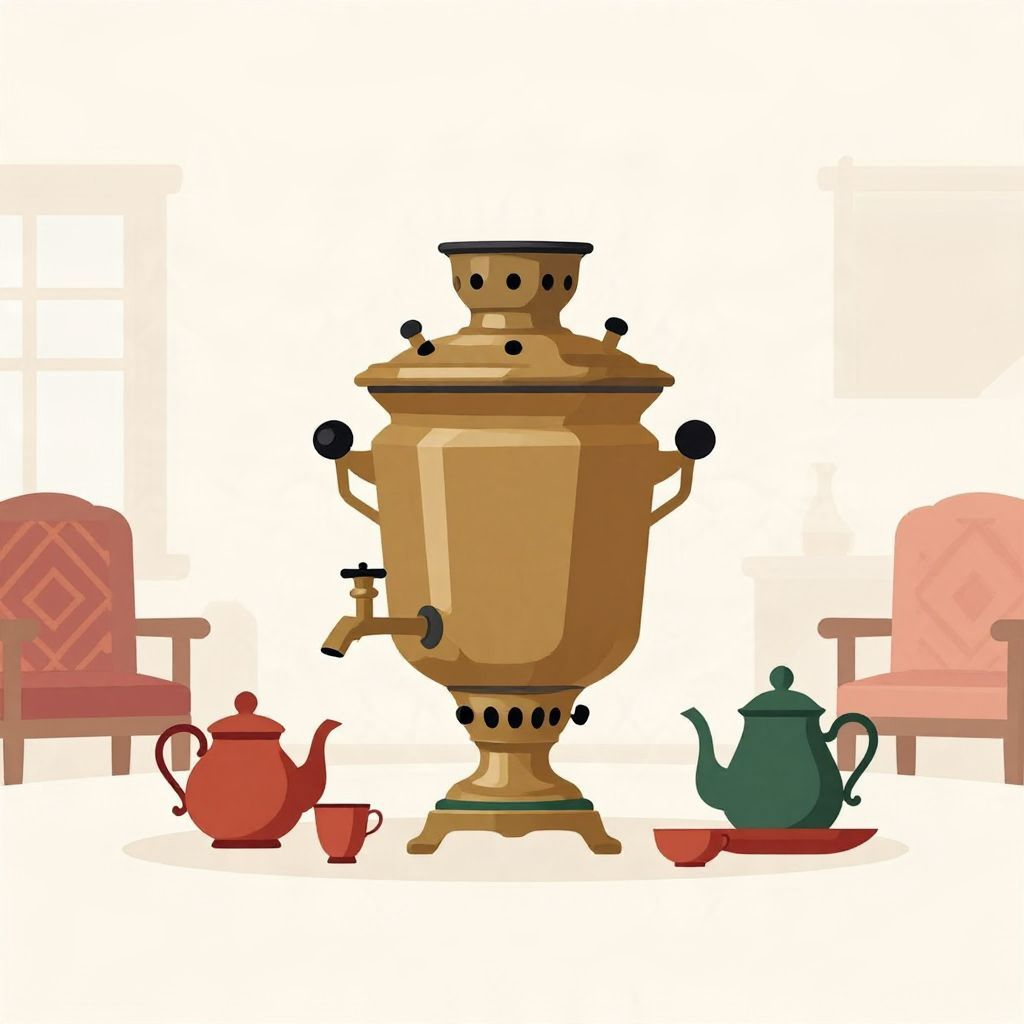
What is a samovar? It is a traditional heated vessel, most closely associated with Russia, used to boil water for tea. More than a kitchen object, the samovar became a symbol of hospitality, domestic ritual, and social life across the Russian Empire and beyond.
Its history reaches into the early modern period, when tea drinking spread through Eurasia and new metalworking traditions shaped everyday objects. Over time, the samovar came to represent both practical technology and cultural identity.
What Is a Samovar?
A samovar is a metal container designed to heat water and keep it hot for tea. Traditional samovars often have a central chimney or tube for fuel, a spout near the bottom, and a teapot placed on top to make a strong tea concentrate. They are best known in Russian culture, but similar devices appeared in other parts of Eurasia.
How Did the Samovar Develop?
The samovar emerged from the broader history of tea drinking, metalworking, and household heating. While its exact origin is debated, the familiar Russian samovar took shape in the 18th century, when tea became more widely consumed in the Russian Empire and artisans refined a vessel suited to keeping water continuously hot.
Tea, trade, and everyday life
Tea reached Russia through trade routes linking China, Central Asia, and Siberia. By the 17th and 18th centuries, it had become increasingly popular among elites and then among wider social groups. Because tea was often prepared in large households or for guests, a durable vessel that could heat and serve water efficiently made practical sense.
Metalworking traditions
Russian craftsmen, especially in towns known for metalwork such as Tula, helped standardize the samovar into the form now most recognized today. Tula became especially famous in the 18th and 19th centuries for samovar production. The city’s reputation was tied to skilled smiths, expanding consumer demand, and the growth of workshop and factory production.
Where Did the Samovar Come From?
The samovar is most strongly associated with Russia, but its deeper background is Eurasian rather than purely national. Some historians trace related heating vessels to earlier Central Asian, Persian, or Ottoman traditions. Others note that the samovar’s final, characteristic form was developed in Russia and became culturally distinctive there. In short, the object has roots in a wider regional history, but its classic identity is Russian.
Why the origin is not simple
There is no single universally accepted “inventor” of the samovar. Popular stories sometimes name one person or one workshop, but the historical record points instead to gradual development. Like many household technologies, the samovar likely evolved through borrowing, adaptation, and local craftsmanship rather than appearing all at once.
How Does a Samovar Work?
Traditional samovars were designed to heat water efficiently and keep it hot for a long time. Fuel was placed inside or beneath the vessel, depending on the model. Water surrounded the heat source, and a teapot could sit on top so that a concentrated brew stayed warm while the samovar maintained hot water for dilution.
Main parts of a traditional samovar
- Body: the main water reservoir
- Chimney or tube: the central passage for heat or fuel in many older models
- Spout: used to pour hot water
- Handles: for carrying or moving the vessel
- Teapot stand: a top platform for keeping tea concentrate warm
Fuel and later changes
Early samovars were often heated by charcoal, wood, or pine cones. In the 19th and 20th centuries, as technology changed, some samovars were adapted for kerosene, gas, or electricity. Electric samovars preserved the familiar shape while replacing the labor of lighting a fire, showing how a traditional form could survive modernization.
Why Was the Samovar Important in Russian Culture?
The samovar mattered because it was both useful and symbolic. It stood at the center of family life, guest hospitality, and informal conversation. In many homes, the samovar was brought out for long tea sessions that could accompany meals, visits, business discussions, and celebrations. It became a visual shorthand for warmth, sociability, and domestic comfort.
A social object, not just a utensil
Tea from a samovar was usually prepared in stages: a strong tea concentrate was made in a small teapot, then diluted with hot water from the samovar. This method encouraged lingering at the table. In that sense, the samovar helped shape a social rhythm, not merely a beverage. It supported the Russian custom of extended tea drinking, often with sweets, jam, bread, or pastries.
Symbol in art and literature
By the 19th century, the samovar had become a familiar motif in Russian painting, literature, and popular culture. It often appeared in scenes of domestic life, merchant households, village gatherings, and urban interiors. Artists and writers used it to signal tradition, comfort, or social identity. Its presence in cultural works shows how everyday objects can become national symbols.
What Kinds of Samovars Existed?
Samovars were made in many forms, sizes, and materials. Their design varied according to wealth, region, and intended use. Some were plain and functional, while others were highly decorative and meant to display status.
Common materials
- Brass: durable and widely used
- Copper: effective for heat conduction and often attractive
- Silver or silver-plated metal: used in wealthier households
- Nickel-plated metal: common in later industrial production
Different forms and uses
- Travel samovars: smaller and easier to carry
- Table samovars: larger household versions
- Decorative samovars: made for display or gifting
- Factory-made samovars: produced in greater numbers during industrialization
How Did Industrialization Change the Samovar?
The 19th century transformed samovar production. As workshops expanded and factory methods developed, samovars became more affordable and more widely available. This mattered because tea drinking was no longer limited to elites. Merchants, townspeople, and some rural households could now own samovars, making them part of broader domestic life.
Tula and mass production
Tula remained especially important as a center of samovar manufacture. Its artisans and factories produced large numbers of vessels, from simple household models to ornate prestige pieces. The city’s association with samovars became so strong that “Tula samovar” turned into a phrase of quality and authenticity.
Changing household habits
Industrial production did not erase the samovar’s symbolic role. Instead, it helped spread that role more widely. As samovars entered more homes, they became part of the material culture of the Russian middle class and urban life. They also traveled with migrants, merchants, and soldiers across the empire.
Did Other Cultures Use Similar Devices?
Yes. The samovar belongs to a larger family of vessels used to heat water for tea or other drinks across Eurasia and the Middle East. However, the Russian samovar is distinctive in shape, social meaning, and historical association. Similarity does not mean identity; the Russian version developed its own recognizable tradition.
Related traditions
In the Ottoman world, Persia, Central Asia, and neighboring regions, people used various kettles, urns, and tea-heating vessels. Some of these may have influenced the samovar’s development, while others reflect parallel solutions to the same practical problem: how to keep water hot for repeated serving.
What Happened to the Samovar in the Modern Era?
By the 20th century, the samovar faced competition from stoves, kettles, and electric appliances. Its everyday role declined in many places, but it did not disappear. In Soviet and post-Soviet culture, it remained a nostalgic object, a collector’s item, and a ceremonial piece used for special occasions.
From household tool to cultural symbol
As modern kitchens changed, the samovar shifted from necessity to heritage. Museums, antique markets, and family traditions preserved older examples, while electric versions kept the form alive. Today, samovars are often seen as emblems of Russian hospitality and historical continuity, even when they are no longer the main way water is heated.
Key Facts About the Samovar
- The samovar is a vessel for heating water, especially for tea.
- It became strongly associated with Russia, particularly from the 18th century onward.
- Tula was the best-known center of samovar production.
- Traditional samovars were often heated by charcoal or wood.
- They became symbols of home life, hospitality, and social gathering.
- Industrial and electric versions extended the samovar’s life into the modern era.
Why Does the Samovar Still Matter?
The samovar matters because it shows how a practical object can become a cultural icon. It reflects trade, technology, domestic life, and the spread of tea across Eurasia. It also reminds us that history is not only made by wars and rulers, but by the objects people used every day to eat, drink, and welcome one another.
So, what is a samovar? It is a tea-heating vessel with a long history, rooted in Eurasian exchange and made famous in Russia. Its significance lies not only in how it works, but in the social world it helped create. For related everyday-history topics, you may also enjoy articles on the history of tea and Russian culture in the 19th century.