
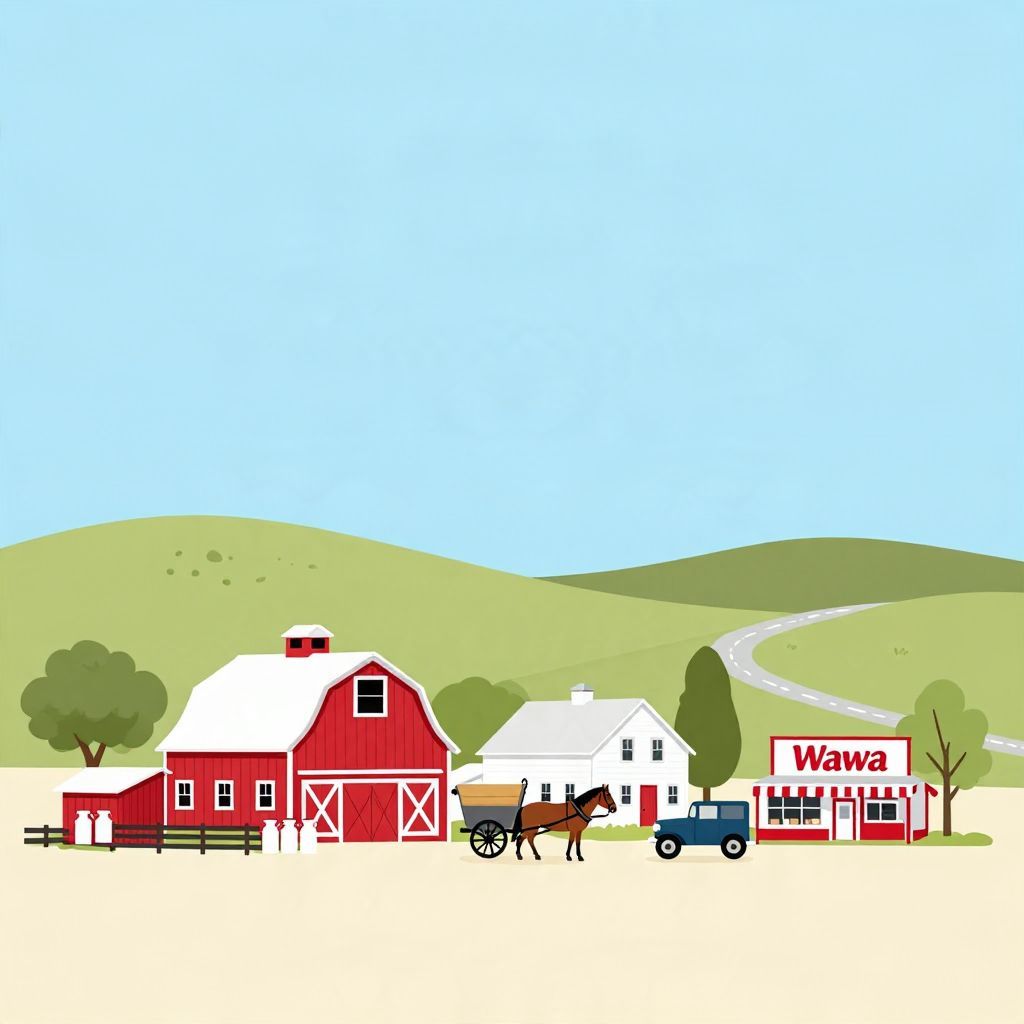
When people ask, “Where did Wawa originate?” they are usually asking about the roots of the Wawa convenience-store chain, not the bird or the place name. The answer is clear: Wawa originated in Wawa, Pennsylvania, in the Delaware Valley, where its parent company began as a dairy business in the early 20th century.
From that local dairy operation grew one of the best-known convenience-store brands in the eastern United States. Its history reflects broader changes in American food retailing, refrigeration, suburban growth, and the shift from home delivery to self-service stores.
Where did Wawa originate?
Wawa originated in Wawa, Pennsylvania, in Delaware County, just west of Philadelphia. The company traces its roots to a dairy business founded in the early 1900s by the Wood family. The name “Wawa” comes from the local area, which itself took its name from a Native American term associated with the Canada goose.
The Pennsylvania roots of Wawa
The story begins in southeastern Pennsylvania, where the Wood family built a dairy operation that eventually became known for high-quality milk and home delivery. The company’s early success came from serving nearby communities around Philadelphia, a region with dense neighborhoods and strong demand for fresh dairy products.
From dairy farm to regional business
The Wood family’s business was not originally a convenience-store chain. Like many early 20th-century dairies, it focused on milk production, processing, and delivery. Before supermarkets became dominant, local dairies often delivered milk directly to customers’ homes, making freshness and reliability central to their reputation.
As refrigeration improved and consumer habits changed, Wawa’s parent company adapted. The dairy business expanded beyond simple milk delivery and gradually moved into retail food service. That evolution is essential to understanding why Wawa became a store brand rather than remaining only a dairy name.
Why is it called Wawa?
The name “Wawa” is tied to the place where the company developed. Wawa, Pennsylvania, was named from a Native American word often associated with the snow goose or Canada goose, though the exact linguistic path is not always explained the same way in every source. What matters historically is that the company adopted the local place name as its identity.
A local name with regional meaning
Using a local name gave the business a sense of place and familiarity. In the early and mid-20th century, many regional companies emphasized local roots as a way to build trust. For Wawa, the name became a brand marker that connected the company to Pennsylvania even as it later expanded into other states.
How Wawa developed from dairy to convenience store
Wawa’s transformation happened gradually. The company began by selling dairy products, then added retail outlets and prepared food as consumer demand shifted. By the late 20th century, Wawa had become known less as a dairy and more as a convenience-store chain with made-to-order food, coffee, and fuel at many locations.
Key stages in the company’s growth
- Early 1900s: The Wood family establishes a dairy business in the Wawa area.
- Mid-20th century: The company expands retail operations beyond home milk delivery.
- Later 20th century: Wawa becomes a convenience-store brand with a growing footprint in the Mid-Atlantic.
- Today: Wawa is recognized as a major regional chain, especially in Pennsylvania, New Jersey, Delaware, Maryland, Virginia, and Florida.
This shift was not unusual in American business history. Many dairy companies either disappeared or reinvented themselves when home delivery declined. Wawa survived by changing with the market, turning a local dairy identity into a broader retail model.
What historical forces shaped Wawa’s origin?
Wawa’s origin makes sense only in the context of early 20th-century American urban and suburban life. Several developments helped create the conditions for its growth: improved transportation, better refrigeration, rising consumer demand for packaged foods, and the decline of small-scale neighborhood food delivery systems.
Refrigeration and changing food habits
As refrigerators became more common in homes and businesses, customers no longer depended on daily milk delivery in the same way they once had. That change forced dairies to adapt. Some became wholesalers, some closed, and some entered retail food sales. Wawa’s later success shows how a company could survive by responding to those shifts.
The Philadelphia region as a business environment
The Delaware Valley was a strong base for a dairy business because it combined urban demand, suburban growth, and access to transportation routes. Philadelphia and its surrounding counties offered a large customer base, while the region’s expanding road network later supported convenience stores and fuel stations.
Is Wawa’s origin story the same as the company’s founding date?
Not exactly. When people ask where Wawa originated, they may mean the geographic origin of the brand, the founding of the dairy company, or the first Wawa store. Those are related but not identical questions. The company’s roots are in the Wawa, Pennsylvania dairy business, while its convenience-store identity developed later.
Why origin stories can be confusing
Corporate histories often compress several stages into one “origin” story. In Wawa’s case, the name, the dairy, the first retail outlets, and the modern convenience-store chain all belong to different moments. A careful historical answer should separate those stages rather than treating them as one event.
Wawa’s place in American retail history
Wawa is part of a larger American pattern: local family businesses becoming regional chains by adapting to consumer change. Its history reflects the move from home delivery to self-service retail, from milk-centered operations to broader food service, and from local identity to regional brand recognition.
Why Wawa became culturally distinctive
Unlike many convenience stores that emphasize only speed or low prices, Wawa built a reputation around fresh food, coffee, and a strong sense of brand loyalty. That reputation grew from its origins as a dairy company focused on quality and consistency. The company’s historical background still shapes how customers perceive it today.
Where Wawa originated in one sentence
Wawa originated in Wawa, Pennsylvania, as a family dairy business that later evolved into a major convenience-store chain serving the Mid-Atlantic region.
In historical terms, Wawa is a good example of how a local business can outlast major economic change by reinventing itself. Its origin lies not just in one place, but in a specific moment in Pennsylvania business history when dairy, retail, and suburban growth came together. For readers interested in related topics, the broader history of Philadelphia and the development of American convenience stores provide useful context.