
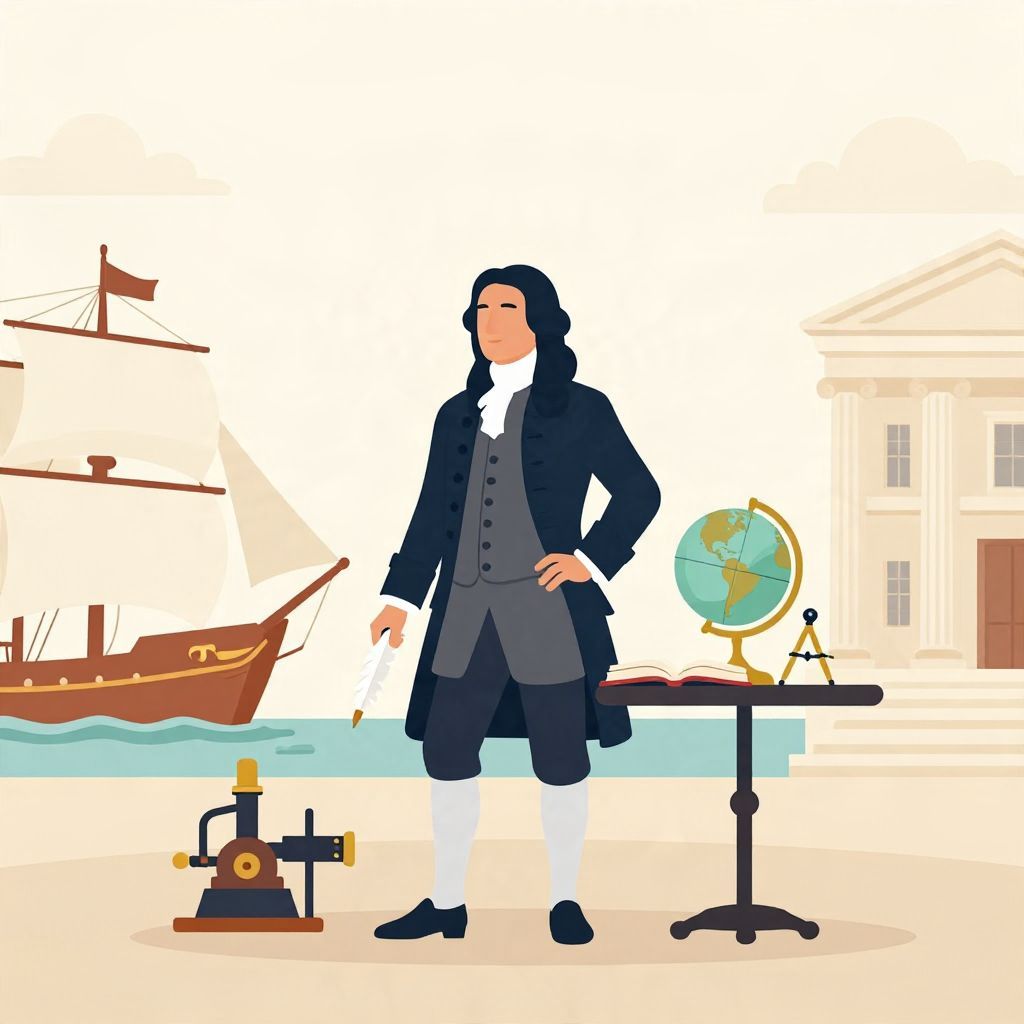
The 18th century is one of the most important periods in modern history. It covers the years from 1701 to 1800 and is often remembered for revolutions, empire-building, scientific change, and the growth of new political ideas.
When people ask “What is the 18th century?” they are usually asking not just for dates, but for the historical meaning of the era. It was a time when older monarchies remained powerful, yet new ideas about rights, trade, and government began to reshape the world.
What Is the 18th Century?
The 18th century is the period from January 1, 1701, to December 31, 1800. In historical terms, it is part of the early modern era and is often associated with the Enlightenment, Atlantic revolutions, expanding global trade, and major shifts in science, politics, and culture.
Why the 18th Century Matters in History
The 18th century matters because it helped create the modern world. Ideas about liberty, citizenship, constitutional government, and economic growth gained influence, while empires competed across Europe, Asia, Africa, and the Americas. Many institutions and conflicts that shaped the 19th and 20th centuries have their roots in this century.
A century of transition
This was not a clean break from the past. Kings, queens, aristocracies, and religious authority still mattered greatly. But new pressures were building: commercial expansion, colonial rivalry, rising literacy, and intellectual criticism of old political systems. The result was a century of tension between tradition and change.
The Historical Background of the 18th Century
To understand the 18th century, it helps to look at what came before it. The 1600s had already seen religious conflict, the rise of centralized states, and the expansion of European overseas empires. By 1700, European powers were competing more intensely for trade, territory, and influence.
Europe after the 17th century
Britain, France, Spain, Austria, Prussia, and Russia all played major roles in European politics. At the same time, the Ottoman Empire remained influential, and Asian states such as Qing China and the Mughal Empire were still central to global trade and diplomacy. The 18th century was therefore a genuinely global age, not only a European one.
Key Features of the 18th Century
Several major developments define the century. These include the Enlightenment, imperial competition, wars among great powers, the growth of Atlantic slavery and plantation economies, and the rise of revolutionary movements in America, France, and Haiti.
1. The Enlightenment
The Enlightenment was an intellectual movement that emphasized reason, observation, debate, and criticism of inherited authority. Thinkers such as John Locke, Montesquieu, Voltaire, Rousseau, and Mary Wollstonecraft influenced discussions of government, education, religion, and human rights. Their ideas did not immediately transform society, but they had lasting impact.
2. Empire and global trade
European states expanded their overseas empires in the Americas, Africa, and Asia. Trade in sugar, tobacco, tea, cotton, spices, and manufactured goods linked distant regions together. This growth brought wealth to some merchants and states, but it also depended heavily on conquest, forced labor, and slavery.
3. War and diplomacy
The century saw repeated warfare among major powers. Conflicts such as the War of the Spanish Succession, the War of Austrian Succession, the Seven Years’ War, and later the wars linked to the French Revolution changed borders and alliances. These wars were expensive and often global in scope, affecting Europe, North America, the Caribbean, India, and beyond.
4. Revolution
The late 18th century produced revolutionary upheaval. The American Revolution challenged British rule in North America. The French Revolution overturned the French monarchy and introduced radical political change. The Haitian Revolution, beginning in 1791, became the most successful slave revolt in history and reshaped debates about freedom and empire.
What Was Life Like in the 18th Century?
Everyday life in the 18th century varied enormously by class, region, and status. Most people were peasants, laborers, or artisans. Life was often shaped by agriculture, seasonal work, local customs, and limited access to medicine. Cities grew, but much of the population still lived in rural areas.
Social hierarchy
Society was usually organized by rank and privilege. Nobles and clergy often enjoyed legal and tax advantages, while common people carried most of the burden of labor and taxation. In many places, women had fewer legal rights than men, though they still played essential roles in family economies, trade, agriculture, and culture.
Daily conditions
Food supply could be unstable, and disease remained a constant threat. Infant mortality was high, and life expectancy was lower than today, though it varied widely. At the same time, some urban centers became more prosperous, and new consumer goods, newspapers, coffeehouses, and salons helped create a more connected public life.
Major Political Changes in the 18th Century
The century saw important changes in how governments were justified and challenged. Absolute monarchies remained strong in many places, but constitutional ideas gained ground. Political debate increasingly focused on representation, rights, and the balance between rulers and the ruled.
Britain and constitutional government
Britain developed a system in which Parliament held significant power alongside the monarchy. This did not create modern democracy, but it did provide a model that later reformers and revolutionaries studied closely. British political institutions also influenced the development of the United States.
The rise of revolutionary politics
The American and French Revolutions showed that subjects could become citizens, at least in principle. These revolutions did not create equality overnight, and both had exclusions and contradictions. Still, they transformed political language by making ideas such as sovereignty, rights, and national identity central to public life.
Economy and Mercantilism in the 18th Century
One of the dominant economic ideas of the era was mercantilism, the belief that national wealth depended on controlling trade, accumulating bullion, and maintaining favorable balances of commerce. States tried to regulate trade, protect domestic industries, and use colonies to strengthen the mother country.
How mercantilism worked
In practice, mercantilism encouraged tariffs, trade restrictions, chartered companies, and colonial monopolies. European empires wanted colonies to supply raw materials and buy finished goods. This system benefited some merchants and governments, but it also created resentment and conflict, especially in places where colonial subjects were heavily taxed or restricted.
Changing economic thought
Toward the end of the century, critics of mercantilism argued for freer trade and less government interference. Thinkers such as Adam Smith challenged the idea that wealth came simply from hoarding precious metals. These debates marked an important turning point in economic history.
Science, Technology, and the Arts
The 18th century was also a period of important intellectual and cultural development. Scientific inquiry became more systematic, and practical innovation slowly accelerated. At the same time, literature, music, architecture, and visual art all reflected the tastes of a changing elite and a growing urban public.
Scientific progress
Natural philosophy increasingly became what we now call science. Researchers improved methods of observation and experimentation. Advances in navigation, astronomy, medicine, and engineering supported trade, warfare, and exploration. The century also saw the spread of scientific societies and encyclopedias that helped organize knowledge.
Cultural styles
In the arts, styles such as Baroque, Rococo, and Neoclassicism flourished at different points in the century. Composers like Bach, Handel, Haydn, and Mozart helped define Western classical music. Writers and artists often served courts, patrons, or urban audiences, reflecting the social hierarchy of the age.
Important Events of the 18th Century
Because the century was so eventful, it helps to see its major turning points in sequence:
- 1701–1714: War of the Spanish Succession
- 1730s–1740s: Intensifying imperial rivalry and dynastic conflict in Europe
- 1756–1763: Seven Years’ War, often called the first global war
- 1775–1783: American Revolutionary War
- 1789: Beginning of the French Revolution
- 1791: Haitian Revolution begins
- 1799–1800: End of the century and the rise of Napoleonic power in Europe
How the 18th Century Ended
The century closed with upheaval rather than stability. The French Revolution and the wars that followed shattered older political assumptions in Europe. Across the Atlantic world, debates over citizenship, slavery, empire, and rights became more urgent. By 1800, the world was entering a new age shaped by revolution and industrial change.
Lasting consequences
The 18th century left behind a powerful legacy. Modern political language, constitutional thought, global capitalism, and revolutionary ideology all developed during this period. It also exposed deep contradictions, especially between liberty and slavery, empire and self-rule, and equality and social hierarchy.
So, What Is the 18th Century in Simple Terms?
The 18th century is the 1700s, from 1701 to 1800. Historically, it was a century of empire, Enlightenment, trade, war, and revolution. It connected the older world of monarchs and aristocracies to the modern world of rights, nation-states, and global politics.
In short, the 18th century was a turning point in world history. If you want to explore related themes, you may also find what mercantilism was and the 18th Amendment in simple terms useful for understanding how later history built on the age of the 1700s.