
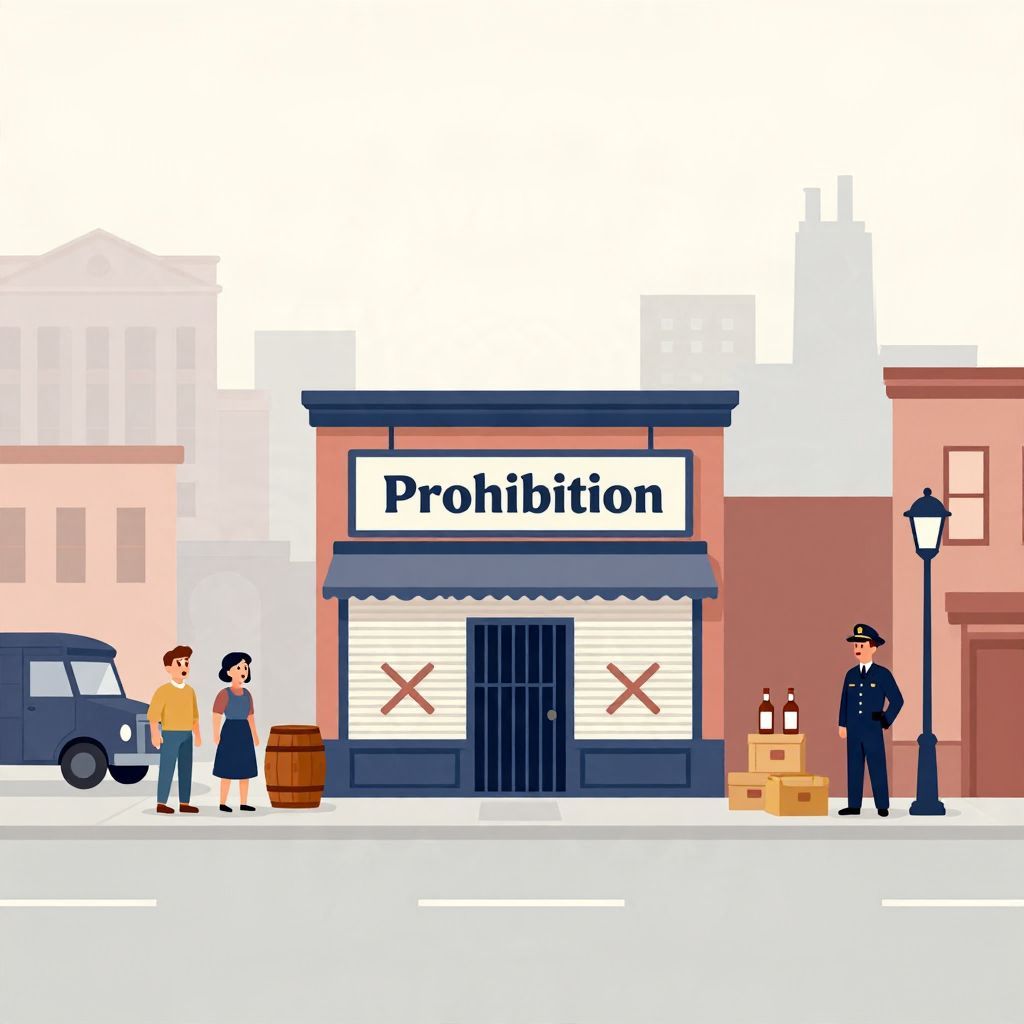
If you have ever heard someone mention the 18th Amendment and wondered what it actually did, the short answer is simple: it made alcohol illegal in the United States. Ratified in 1919 and enforced starting in 1920, it launched the era of Prohibition, one of the most famous social experiments in American history.
But the story is bigger than a ban on drinking. The amendment grew out of decades of reform movements, moral campaigning, and political pressure, and it changed American law, crime, and everyday life in lasting ways.
What Is the 18th Amendment in Simple Terms?
The 18th Amendment to the U.S. Constitution banned the manufacture, sale, and transportation of “intoxicating liquors” in the United States. In simple terms, it made it illegal to produce or sell alcoholic drinks nationwide. It did not stop people from drinking alcohol entirely, but it tried to cut off legal access to it.
Why Was the 18th Amendment Passed?
The amendment was passed because many Americans believed alcohol caused serious social problems. Reformers argued that drinking contributed to poverty, domestic violence, workplace accidents, crime, and political corruption. By the late 1800s and early 1900s, temperance groups had turned those concerns into a powerful national movement.
The temperance movement
Temperance meant moderation or abstinence from alcohol. In the 19th century, religious groups, women’s organizations, and social reformers increasingly argued that alcohol harmed families and communities. Some wanted people to drink less; others wanted alcohol banned completely.
Support from reform groups
Organizations such as the Anti-Saloon League and the Woman’s Christian Temperance Union became especially influential. They framed prohibition as a moral and public health issue. Their political pressure helped convince lawmakers that a constitutional amendment, rather than a simple state law, was needed to make prohibition nationwide.
When Was the 18th Amendment Ratified?
The 18th Amendment was passed by Congress in 1917 and ratified by the states in 1919. It took effect on January 17, 1920. That date marks the beginning of national Prohibition in the United States.
The Volstead Act
The amendment itself did not provide all the details for enforcement. Congress passed the Volstead Act in 1919 to define what counted as “intoxicating liquor” and to create the legal framework for enforcement. In practice, this law made Prohibition much more specific and much more controversial.
What Did the 18th Amendment Actually Ban?
The amendment banned the manufacture, sale, and transportation of alcoholic beverages in the United States and its territories. That meant breweries, distilleries, and saloons could no longer operate legally in the old way. It also meant alcohol could not be legally shipped for sale across state lines.
What it did not ban
The amendment did not explicitly outlaw drinking alcohol itself. It also left some room for exceptions, such as alcohol used for religious purposes or medicinal use under certain rules. However, those exceptions were often abused, and enforcement was uneven.
How Did Prohibition Change American Life?
Prohibition changed daily life in ways that were both practical and symbolic. It shut down legal alcohol businesses, encouraged illegal drinking, and created new habits of secrecy and evasion. For some Americans, it represented moral progress. For others, it felt like government overreach.
Speakeasies and bootlegging
Because demand for alcohol did not disappear, illegal markets quickly grew. People bought liquor from smugglers, homemade distillers, and hidden bars called speakeasies. Bootlegging became a major criminal business, especially in cities. Instead of eliminating alcohol, Prohibition often pushed it underground.
Enforcement problems
Federal and local authorities struggled to enforce the law. There were too few agents, too many loopholes, and widespread public resistance. Some police officers, judges, and politicians were bribed. In many places, the law was obeyed unevenly or ignored altogether.
Why Did the 18th Amendment Fail?
The 18th Amendment failed because it proved difficult to enforce and unpopular with many Americans. It did reduce legal alcohol production, but it also encouraged organized crime, corruption, and illegal drinking. Over time, more people concluded that Prohibition created more problems than it solved.
Crime and corruption
Prohibition gave criminal groups a profitable market. Gangsters could make large sums by importing, producing, and selling alcohol illegally. Violence over territory and supply routes increased in some cities. The law also weakened respect for government when ordinary people saw widespread noncompliance.
Economic pressures
The Great Depression, beginning in 1929, made Prohibition even harder to defend. The government needed tax revenue, and legal alcohol sales were one possible source. At the same time, many Americans wanted jobs in breweries, distilleries, trucking, and related industries restored.
How Was the 18th Amendment Repealed?
The 18th Amendment was repealed by the 21st Amendment in 1933. That was the only time in U.S. history that one constitutional amendment repealed another. Repeal ended national Prohibition, although states and local governments could still regulate alcohol themselves.
Why repeal happened
By the early 1930s, public opinion had shifted. Many people believed Prohibition had failed to achieve its goals. The economic crisis of the Great Depression strengthened the case for repeal, and the new administration under Franklin D. Roosevelt supported change. The 21st Amendment restored legal alcohol production and sale at the federal level.
Key Facts About the 18th Amendment
- What it did: Banned the manufacture, sale, and transportation of intoxicating liquors in the U.S.
- Ratified: 1919
- Took effect: January 17, 1920
- Enforcement law: The Volstead Act
- End of Prohibition: Repealed by the 21st Amendment in 1933
- Main effect: Started the national Prohibition era
Why the 18th Amendment Still Matters
The 18th Amendment matters because it shows how constitutional law can be used to try to reshape everyday behavior. It also shows the limits of law when public opinion, enforcement, and social habits do not align. Prohibition remains a major example in U.S. history of a reform movement with unintended consequences.
In simple terms, the 18th Amendment was the constitutional ban on alcohol in the United States. It began with reform hopes, led to a difficult and often ineffective enforcement era, and ended when Americans decided the experiment had gone too far. If you want more context on this period, you may also find what the Fifteenth Amendment did and how everyday life changed in the early 20th century useful.