
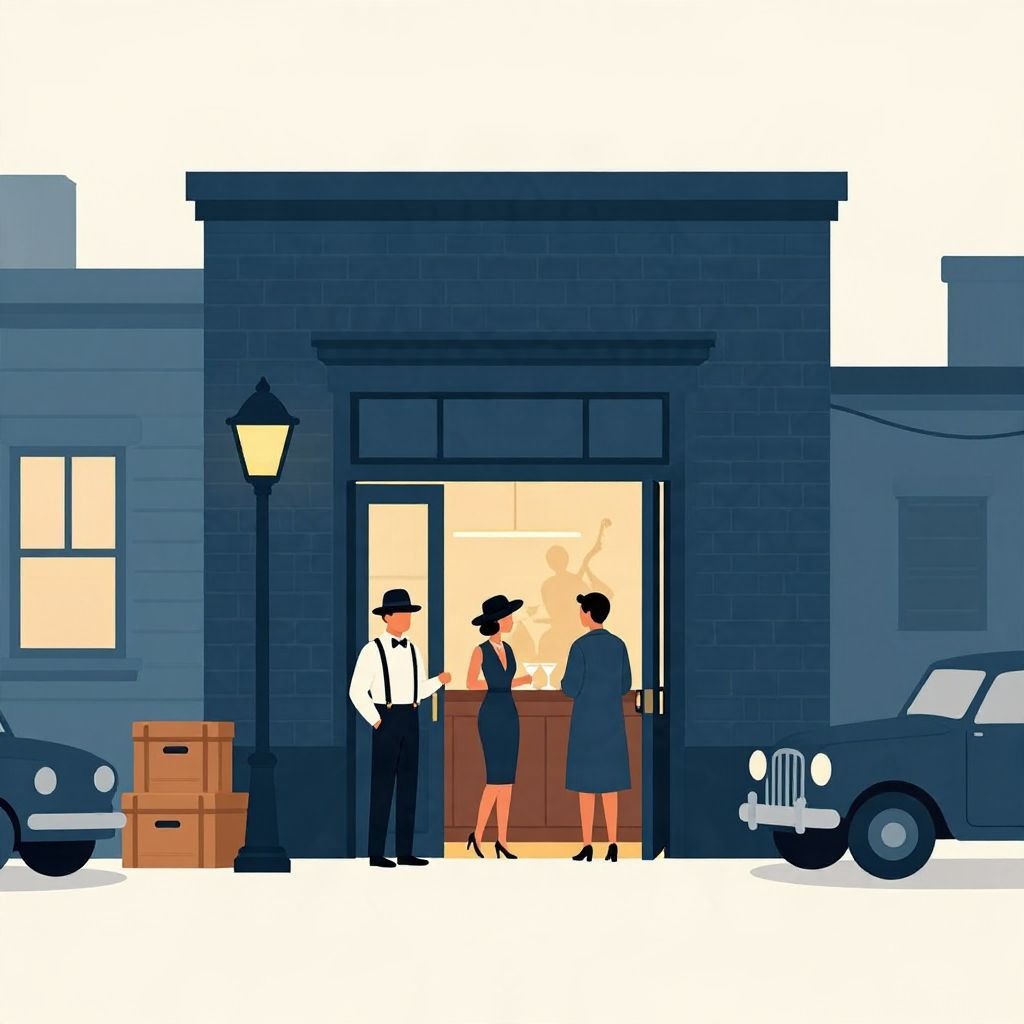
Speakeasies were illicit bars and drinking clubs that flourished in the United States during Prohibition, when the manufacture, sale, and transportation of alcoholic beverages were banned nationwide. They became one of the most recognizable symbols of the 1920s, blending secrecy, entertainment, and defiance of the law.
To understand speakeasies, it helps to see them not just as hidden bars, but as a response to a major social experiment. They emerged from the enforcement of Prohibition after 1920 and faded when that policy ended in 1933, leaving a lasting mark on American nightlife and popular memory.
What Were Speakeasies?
Speakeasies were secret or semi-secret places where people could buy and drink alcohol illegally during Prohibition, especially in the 1920s and early 1930s. Some were rough backroom taverns; others were stylish clubs with music, dancing, and food. They existed because demand for alcohol remained strong despite the ban.
Why Did Speakeasies Appear?
Speakeasies appeared because Prohibition created a large gap between the law and everyday behavior. The 18th Amendment, ratified in 1919, and the Volstead Act, which took effect in 1920, made it illegal to produce or sell alcoholic drinks for beverage purposes in the United States. Many Americans still wanted alcohol, and entrepreneurs moved quickly to meet that demand.
The road to Prohibition
The temperance movement had campaigned for decades against alcohol, arguing that drinking contributed to poverty, violence, family breakdown, and workplace accidents. Reformers, religious groups, and some Progressive Era activists saw Prohibition as a way to improve public morals and social order. During World War I, wartime grain conservation and anti-German sentiment also strengthened support for the ban.
Demand did not disappear
Even after alcohol became illegal, many Americans continued to drink. Some made liquor at home, others bought it from bootleggers, and many visited speakeasies. The persistence of demand made enforcement difficult and helped create a thriving underground economy.
Where Did the Term “Speakeasy” Come From?
The exact origin of the word is uncertain, but the term was already in use before Prohibition in reference to illicit or discreet drinking places. During the 1920s it became the standard label for illegal bars. The phrase likely reflects the need to speak quietly, or “easy,” when asking for alcohol in a place that had to avoid attracting attention.
Because slang often spreads informally, historians cannot point to a single inventor of the word. What is clear is that by the Prohibition era, “speakeasy” had become widely understood as a place where alcohol was sold in secret.
How Did Speakeasies Work?
Speakeasies survived by relying on secrecy, coded language, bribes, and social networks. They were often hidden behind ordinary storefronts, in basements, above restaurants, or behind unmarked doors. Customers might need a password, be vouched for by a regular, or simply know the right entrance.
Common ways they avoided detection
- Hidden entrances: A bar might be concealed behind a bakery, barber shop, restaurant, or apartment building.
- Passwords or knocks: Some clubs admitted only those who knew a code phrase or special signal.
- Corruption and protection: In some cities, owners paid police or officials to look the other way.
- Legitimate cover: Some places operated as soda shops, tea rooms, or private social clubs while secretly serving alcohol.
Not all speakeasies were alike
Some speakeasies were small, smoky neighborhood rooms with cheap liquor and little comfort. Others were elegant venues that catered to middle-class and wealthy patrons. In major cities such as New York, Chicago, and New Orleans, speakeasies could be part of a larger nightlife culture that included jazz, dancing, and live entertainment.
What Was the Experience Like Inside a Speakeasy?
Inside a speakeasy, patrons often found a lively atmosphere that contrasted sharply with the law outside. Alcohol was the main attraction, but music, conversation, and dancing were equally important. Many speakeasies featured jazz bands, and some became important spaces in the spread of jazz culture across urban America.
Music, fashion, and nightlife
Speakeasies helped define the image of the “Roaring Twenties.” Women in shorter dresses and men in stylish suits were part of the changing social scene. The settings varied widely, but the combination of secrecy and glamour gave speakeasies a special aura in later memory. They became associated with modernity, youth culture, and social rebellion.
Who went to speakeasies?
People from many social classes visited them. Some were working-class neighborhood spots; others attracted businessmen, artists, politicians, and celebrities. Although popular culture often imagines speakeasies as glamorous clubs for the rich, they were actually widespread and diverse. Their appeal came from access to alcohol, entertainment, and the excitement of breaking the rules.
How Did Authorities Respond?
Authorities tried to shut down speakeasies through raids, arrests, fines, and surveillance, but enforcement was uneven. The federal government created Prohibition agents, yet they were often understaffed, poorly paid, and vulnerable to bribery. Local enforcement also varied depending on politics and public opinion.
Why enforcement was difficult
Prohibition was hard to police because alcohol was easy to conceal, transport, and produce. Bootlegging networks imported liquor from Canada, the Caribbean, and coastal routes, while domestic operations made moonshine and other illegal drinks. Speakeasies depended on this supply chain, and many were protected by organized crime groups.
The result was a cat-and-mouse struggle. Some establishments were closed quickly, while others reopened under new names or with new owners. In many places, the law existed more strongly on paper than in practice.
What Role Did Organized Crime Play?
Organized crime expanded significantly during Prohibition because illegal alcohol was highly profitable. Gangsters and criminal syndicates controlled production, smuggling, distribution, and in some cases the speakeasies themselves. This did not mean every speakeasy was run by criminals, but many depended on criminal supply networks.
Bootlegging and protection rackets
Bootleggers transported alcohol into cities and sold it to bars, clubs, and private customers. Some criminal groups also used violence or intimidation to protect their territory. In major cities, the profits from liquor helped fuel gang warfare and corruption. This is one reason Prohibition is often associated with figures such as Al Capone, though he was only one part of a much larger illegal economy.
It is important not to oversimplify this history. Organized crime did not begin with Prohibition, but the ban gave criminal enterprises an enormous new source of income and influence.
Why Are Speakeasies So Famous Today?
Speakeasies remain famous because they symbolize both the glamour and the contradictions of the 1920s. They represent a moment when a major law was widely ignored, when urban nightlife changed rapidly, and when jazz, fashion, and illicit drinking became linked in the public imagination. Films, novels, and television have kept this image alive.
Myth and reality
Popular culture often exaggerates speakeasies as all being elegant, secretive clubs full of flappers and gangsters. In reality, many were ordinary rooms serving cheap liquor. Others were noisy, crowded, and unsafe. The romantic image is partly true, but it reflects a selective memory shaped by later storytelling.
When Did Speakeasies Decline?
Speakeasies declined after Prohibition ended in 1933 with ratification of the 21st Amendment, which repealed the national alcohol ban. Once legal drinking returned, the need for hidden bars disappeared. Some operators moved into legitimate business, while others continued in new forms, but the era of the classic Prohibition speakeasy was over.
Lasting effects after repeal
Although speakeasies themselves faded, they left behind important cultural legacies. They helped shape American cocktail culture, influenced nightclub design, and contributed to the mythology of the Jazz Age. The period also left a cautionary lesson about the limits of trying to ban a widely desired product through law alone.
Key Facts About Speakeasies
- Speakeasies were illegal drinking establishments in the United States during Prohibition.
- They became especially common after the 18th Amendment took effect in 1920.
- They often used hidden entrances, passwords, or front businesses to avoid detection.
- Many featured jazz, dancing, and nightlife entertainment.
- They were connected to bootlegging, corruption, and organized crime networks.
- They declined after the repeal of Prohibition in 1933.
What Were Speakeasies in Historical Perspective?
Speakeasies were more than secret bars: they were a visible sign of the tension between law, culture, and personal behavior in early 20th-century America. They grew out of Prohibition, thrived because enforcement was weak and demand remained strong, and became one of the defining images of the Jazz Age. Their story shows how quickly social habits can adapt when law and public behavior collide.
If you want to understand the broader context behind speakeasies, it helps to explore the law that created them and the national ban they responded to: what the 18th Amendment meant and what Prohibition was.