
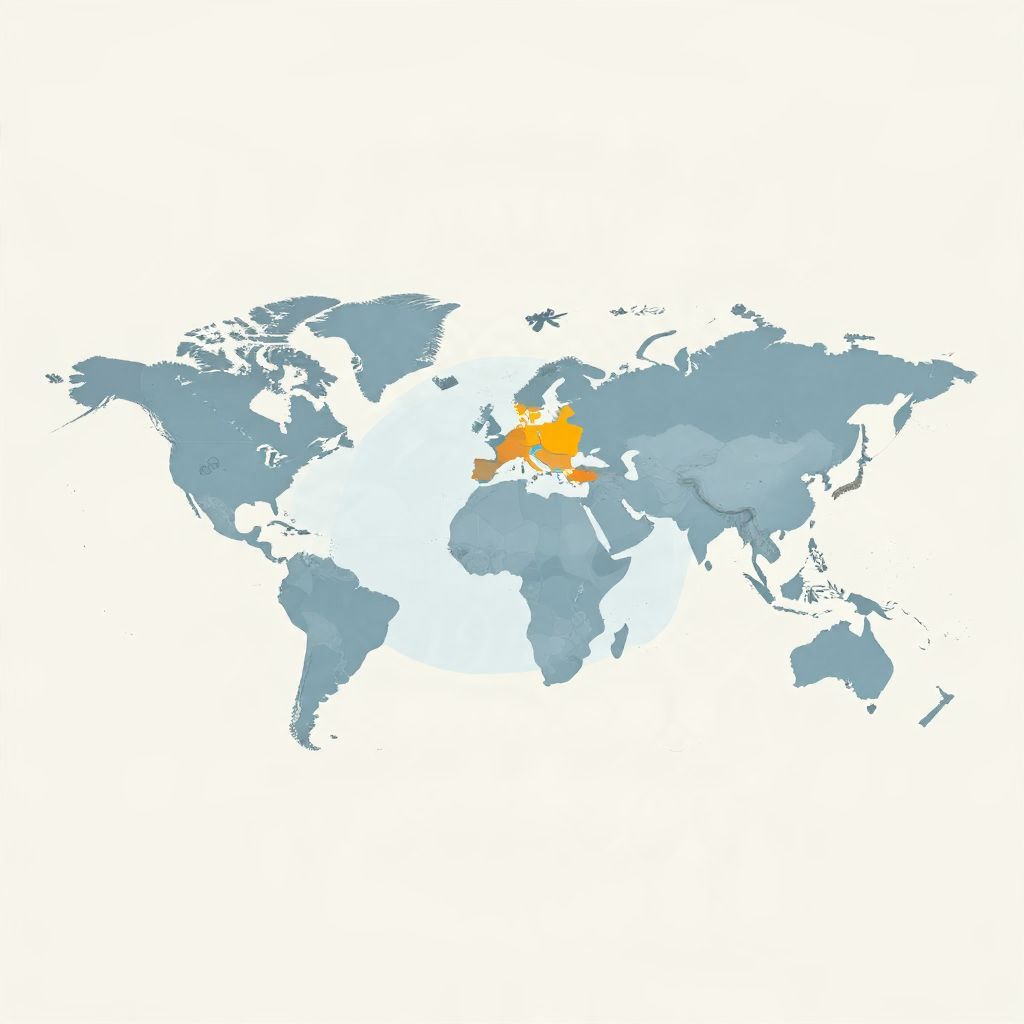
What was the largest empire in history? The short answer is the British Empire, which at its height in the early 20th century governed or controlled territories across every inhabited continent. By land area, it is usually considered the largest empire ever assembled, though historians sometimes note that “largest” can mean different things: total area, population, or political reach.
That distinction matters. If you ask about size alone, the British Empire leads most rankings. If you ask about influence, longevity, or military dominance, other empires such as the Roman, Mongol, and Qing empires also belong in the conversation. The answer depends on how empire is defined and measured.
What Was the Largest Empire in History?
The British Empire is generally recognized as the largest empire in history by land area. At its greatest extent around the early 1920s, it covered roughly one-quarter of the world’s land surface and ruled over a vast and diverse population. Its scale was made possible by naval power, trade networks, industrialization, and colonial expansion over several centuries.
Why the British Empire Became So Large
The British Empire did not appear all at once. It grew gradually from the late 16th century onward, first through exploration, then trade, settlement, conquest, and strategic rivalry with other European powers. Britain’s island location encouraged sea power, and its expanding navy helped it secure ports, trade routes, and colonies across the Atlantic, Asia, Africa, and the Pacific.
Several forces drove this expansion. Commercial interests pushed merchants and chartered companies overseas. Military competition with Spain, France, the Netherlands, and later other powers turned colonies into strategic assets. Industrialization in the 18th and 19th centuries gave Britain economic and technological advantages that strengthened its global reach.
Key features of British expansion
- Maritime power: the Royal Navy protected trade and imperial routes.
- Commercial empire: companies such as the East India Company expanded British influence.
- Settlement colonies: British migrants established major colonies in North America, Australia, New Zealand, and elsewhere.
- Conquest and administration: Britain took control of territories through war, diplomacy, and annexation.
How Big Was the British Empire?
At its peak, the British Empire controlled about 35 million square kilometers of territory, though exact figures vary depending on what is counted as a colony, protectorate, mandate, or dominion. It included territories in North America, the Caribbean, Africa, South Asia, the Middle East, Southeast Asia, and the Pacific.
Its population was equally striking. By the early 20th century, the empire ruled or influenced hundreds of millions of people, many of whom were not British and did not enjoy equal political rights. The empire’s size made it administratively difficult to govern and increasingly controversial in the age of nationalism and anti-colonial movements.
Examples of major imperial holdings
- India: the most important imperial possession, often called the “jewel in the crown.”
- Canada, Australia, and New Zealand: settler colonies that later gained self-government.
- Egypt and the Sudan: strategically important for routes to India and imperial prestige.
- Large parts of Africa: acquired during the “Scramble for Africa” in the late 19th century.
When Did the British Empire Reach Its Peak?
The British Empire reached its maximum territorial extent after World War I, especially around 1920–1922. In the aftermath of the war, Britain gained mandates over former German and Ottoman territories, adding to an already enormous imperial system. This was the moment when the empire was widest in geographic terms.
However, peak size did not mean peak strength. The war stretched British finances and exposed the limits of imperial power. In the decades that followed, nationalist movements, economic pressures, and the rise of the United States and Soviet Union accelerated decolonization.
Were There Other Empires That Could Claim the Title?
Yes, depending on the definition. Some historians and popular writers point to the Mongol Empire because it was the largest contiguous land empire in history. Others note the Roman Empire for its extraordinary longevity and cultural influence, or the Qing Empire for its vast territory and population in East Asia. But when “largest” means total territorial extent across the globe, the British Empire usually comes first.
Mongol Empire
The Mongol Empire, founded by Genghis Khan in the early 13th century, became the largest contiguous empire in history. It stretched across much of Eurasia, linking East Asia to Eastern Europe. Its land area was immense, but it was not as globally dispersed as the British Empire.
Roman Empire
The Roman Empire controlled the Mediterranean world for centuries and shaped law, language, religion, and government in enduring ways. It was far smaller than the British Empire in land area, but its historical legacy is among the most influential in world history.
Qing Empire
The Qing Empire ruled China from 1644 to 1912 and expanded into Inner Asia, Tibet, and Xinjiang. It was one of the world’s largest states by territory and population, though still smaller than the British Empire at its greatest extent.
How the British Empire Was Built
The empire’s growth followed several stages. In the 16th and 17th centuries, England established overseas footholds and trading posts. In the 18th century, imperial competition intensified in North America, the Caribbean, and India. After losing the American colonies in 1783, Britain shifted more decisively toward Asia, Africa, and the Pacific.
In India, British power expanded first through commerce and then through political control. The East India Company defeated rival Indian states and European competitors, while the British Crown took direct control after the Indian Rebellion of 1857. That event marked a major turning point: the company’s rule ended, and the British government assumed direct imperial administration.
During the 19th century, Britain also expanded through the “Scramble for Africa,” in which European powers divided much of the African continent. British rule took many forms, from settler colonies and crown colonies to protectorates and informal influence. This flexibility helped the empire grow, but it also made it uneven and difficult to manage.
What Made the British Empire Different?
The British Empire was not just large; it was also unusually global. Unlike some earlier empires that were concentrated in one region, Britain’s possessions formed a worldwide network of ports, naval stations, trading centers, and colonies. This global spread helped Britain dominate commerce and sea lanes for much of the 18th and 19th centuries.
It was also different because of the variety of its territories. Some areas were settled heavily by Europeans, while others were governed primarily for extraction, trade, or strategic control. Some colonies later became self-governing dominions, while others remained under direct imperial rule far longer.
Forms of British rule
- Colonies: directly administered by Britain.
- Protectorates: local rulers remained, but Britain controlled key policy areas.
- Dominions: self-governing territories within the empire, such as Canada and Australia.
- Mandates: former enemy territories administered under international authority after World War I.
Why the Empire Declined
The British Empire declined after World War II. The war weakened Britain economically and militarily, while anti-colonial nationalism grew stronger across Asia, Africa, and the Middle East. India’s independence in 1947 was a decisive moment, followed by rapid decolonization in the decades after 1945.
Decolonization was not a single event but a long process. Some territories gained independence peacefully, while others experienced conflict, as in Kenya, Malaya, Cyprus, and elsewhere. The empire’s collapse reflected both local resistance and the changing world order after 1945, when imperial rule became harder to justify politically and morally.
Why the Question Still Matters
Asking what was the largest empire in history is really asking how power worked on a global scale. Empires connected distant regions through trade, migration, warfare, and administration, but they also created inequality, coercion, and resistance. The British Empire is the largest by area, yet its history cannot be separated from the peoples who lived under it and shaped its rise and fall.
So the most accurate answer is this: the British Empire was the largest empire in history by land area, though other empires may be larger by other measures such as contiguity, influence, or historical significance. If you want to compare imperial scale in more detail, you may also enjoy reading about how big the Roman Empire was and what American imperialism means.