
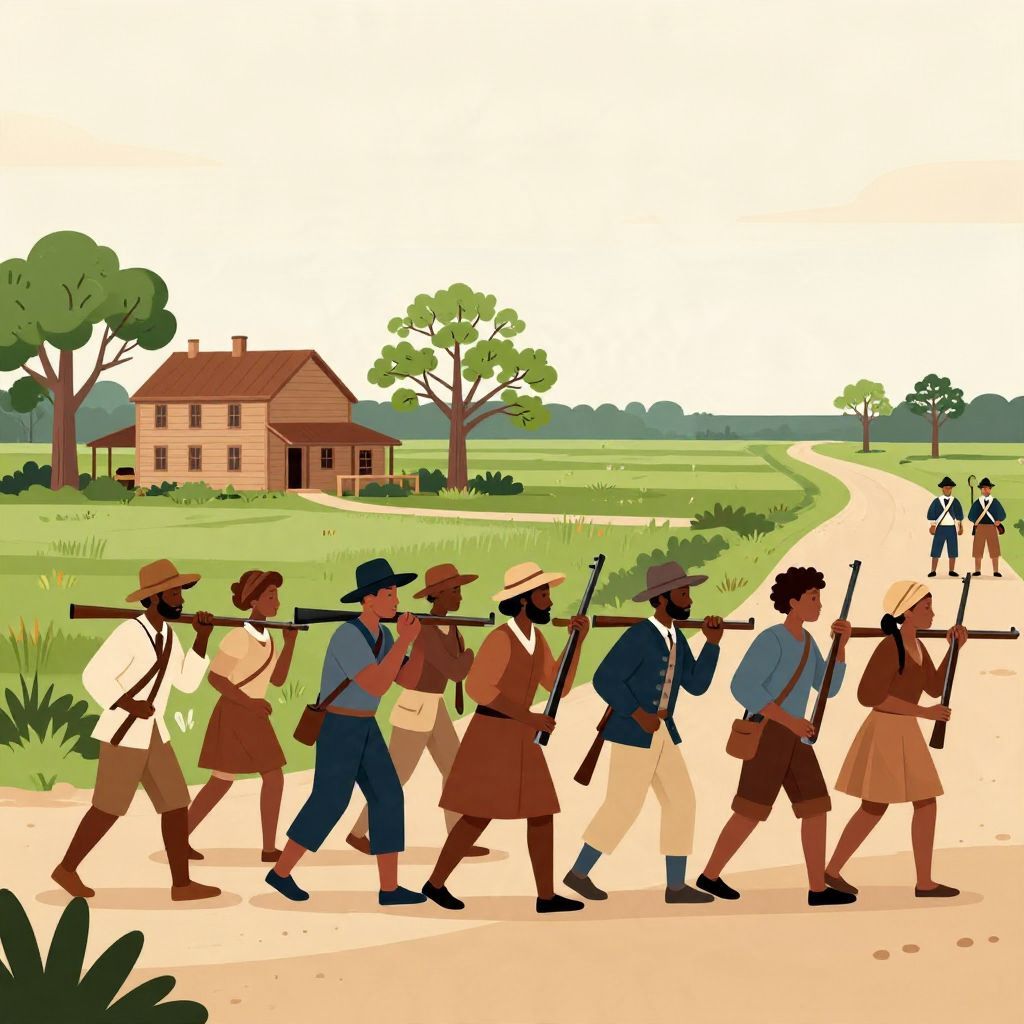
The Stono Rebellion was one of the largest slave uprisings in colonial British North America. It began in South Carolina on September 9, 1739, when a group of enslaved Africans rose up, seized weapons, and tried to march south toward Spanish Florida, where freedom was more attainable for people escaping slavery.
The revolt was quickly suppressed, but it had lasting consequences. It exposed the brutality and instability of plantation slavery, intensified white fears of rebellion, and led to harsher slave laws in South Carolina. Understanding the Stono Rebellion means understanding both resistance to slavery and the colonial world that produced it.
What Was the Stono Rebellion?
The Stono Rebellion was an armed uprising by enslaved people in South Carolina in 1739. Led by a man often identified as Jemmy, the rebels attacked plantations, killed several white colonists, and gathered followers as they moved toward Spanish Florida. The rebellion was defeated within a day, but it became a major turning point in the history of slavery in colonial America.
Background: Why Did the Stono Rebellion Happen?
To understand the rebellion, it helps to look at South Carolina in the early 1700s. The colony depended heavily on enslaved African labor, especially on rice plantations. Enslaved people were forced into brutal working conditions, lived under constant violence, and had little legal protection. Many were newly arrived from Africa and still carried memories of warfare, captivity, and resistance.
South Carolina’s plantation economy
By the 1730s, enslaved Africans made up a large share of South Carolina’s population in some areas, especially near Charleston and along the coast. Plantations were profitable, but they also created a society built on fear. White colonists knew that enslaved workers outnumbered them in many places, and that fear shaped daily life and colonial policy.
The role of Spanish Florida
One reason the Stono Rebellion took the form it did was geography and politics. South Carolina bordered Spanish Florida, where Spanish officials sometimes offered freedom to enslaved people who escaped from British colonies and converted to Catholicism. This made Florida a powerful symbol of refuge. The rebels may have hoped to reach St. Augustine, where freedom was possible under Spanish rule.
War and uncertainty in the Atlantic world
The rebellion also happened during a tense imperial moment. European empires were competing across North America and the Caribbean, and enslaved people were aware of these rivalries. In that world, imperial conflict could create openings for resistance. The Stono rebels were not simply reacting to one local event; they were acting within a wider Atlantic system of slavery, war, and migration.
How Did the Stono Rebellion Unfold?
The rebellion began near the Stono River, southwest of Charleston. On the morning of September 9, a small group of enslaved men gathered, broke into a store, and took guns and ammunition. They then moved along the road, beating drums and calling others to join them. As they traveled, their numbers grew, though the exact total is uncertain and varies in historical accounts.
The march south
The rebels attacked plantations and killed several white colonists along the way. Their movement was organized enough to suggest planning, but the sources are limited and written mostly by white observers after the fact. Because of that, historians must reconstruct the event carefully and avoid pretending to know every detail with certainty.
The rebels likely hoped to keep moving toward Florida, but colonial militia forces caught up with them. A confrontation followed, and many of the rebels were killed in the fighting or captured afterward. Some were executed later. The uprising ended quickly, but its impact spread far beyond the immediate violence.
Who led the revolt?
Many accounts identify the leader as Jemmy or Cato, though the records are inconsistent. Enslaved people in colonial documents were often renamed or misidentified by slaveholders and officials, so historians treat such names cautiously. What is clear is that the uprising had leadership and coordination, even if the surviving evidence cannot fully reveal the rebels’ internal organization.
Key Facts About the Stono Rebellion
- Date: September 9, 1739
- Location: Near the Stono River in South Carolina, southwest of Charleston
- Main participants: Enslaved Africans in colonial South Carolina
- Likely goal: To reach Spanish Florida and escape slavery
- Outcome: The rebellion was suppressed by colonial militia
- Historical significance: It led to stricter slave controls and deepened white fears of revolt
Why Was the Stono Rebellion Important?
The Stono Rebellion mattered because it was one of the clearest examples of organized resistance to slavery in the colonial South. It showed that enslaved people were not passive victims; they resisted in many ways, including escape, sabotage, and open revolt. Stono was especially significant because it was armed, collective, and visibly political.
A challenge to the slave system
For slaveholders, the rebellion was alarming because it revealed how fragile the plantation order could be. The uprising demonstrated that enslaved people could communicate, organize, and act across plantations. Even though the revolt failed militarily, it exposed the instability built into a society that relied on coercion and terror.
Fear and repression after the revolt
In response, South Carolina officials tightened slave laws. The colony passed the Negro Act of 1740, which restricted movement, assembly, education, and economic activity among enslaved people. It also increased surveillance and made it harder for enslaved people to gather in groups or earn money independently. In effect, the rebellion helped produce a more rigid slave regime.
What Were the Causes and Consequences?
The causes of the Stono Rebellion were rooted in slavery itself: violence, exploitation, family separation, and the denial of freedom. But the event also reflected a specific colonial context in which enslaved Africans had reason to believe escape might be possible. Spanish Florida offered a real alternative, and that possibility helped turn desperation into action.
Immediate consequences
- Dozens of enslaved people were killed during or after the uprising.
- Colonial authorities increased patrols and militia readiness.
- South Carolina passed stricter slave codes in 1740.
- White colonists became even more fearful of future revolts.
Long-term consequences
In the longer term, Stono became part of the history of slave resistance in the Americas. It influenced how colonial governments thought about security, race, and labor control. It also became a reminder that slavery was never stable or uncontested. Enslaved people resisted in many ways, and open rebellion was one of the most dramatic forms of that resistance.
How Do Historians Interpret the Stono Rebellion?
Historians generally agree on the broad outline of the rebellion, but some details remain uncertain because the surviving records are limited and biased. Most written sources come from white colonial officials, not from the rebels themselves. That means scholars must read the evidence carefully and avoid overstating what can be proven.
Resistance, not just violence
Modern historians often emphasize that the Stono Rebellion was more than a violent outbreak. It was a deliberate act of resistance against slavery and a search for freedom in a world that denied it. The rebels were making a political choice, even if colonial authorities described them only as criminals or threats.
Limits of the evidence
Some popular retellings give the impression that every step of the rebellion is known in detail. In reality, historians know the broad sequence of events, but not the rebels’ full conversations, exact numbers, or complete plans. Responsible history should acknowledge those limits rather than fill them with guesswork.
The Stono Rebellion in American History
The Stono Rebellion is important because it helps explain the development of slavery in the colonial South. It shows how plantation societies generated resistance and how white authorities responded by making slavery even harsher. It also belongs to a larger Atlantic story of African survival, adaptation, and struggle under colonial rule.
For students of American history, Stono is a reminder that enslaved people shaped the past through action, not only through suffering. Their resistance influenced law, politics, and the everyday operation of slavery. The rebellion did not end slavery, but it exposed its violence and its vulnerabilities.
Conclusion
The Stono Rebellion was a major enslaved uprising in colonial South Carolina in 1739, driven by the realities of plantation slavery and the hope of reaching freedom in Spanish Florida. Although it was crushed, it had a lasting impact on colonial law and on the history of resistance in America. For readers interested in broader patterns of power and revolt, related topics such as American imperialism and other turning points in U.S. history can provide useful context.