
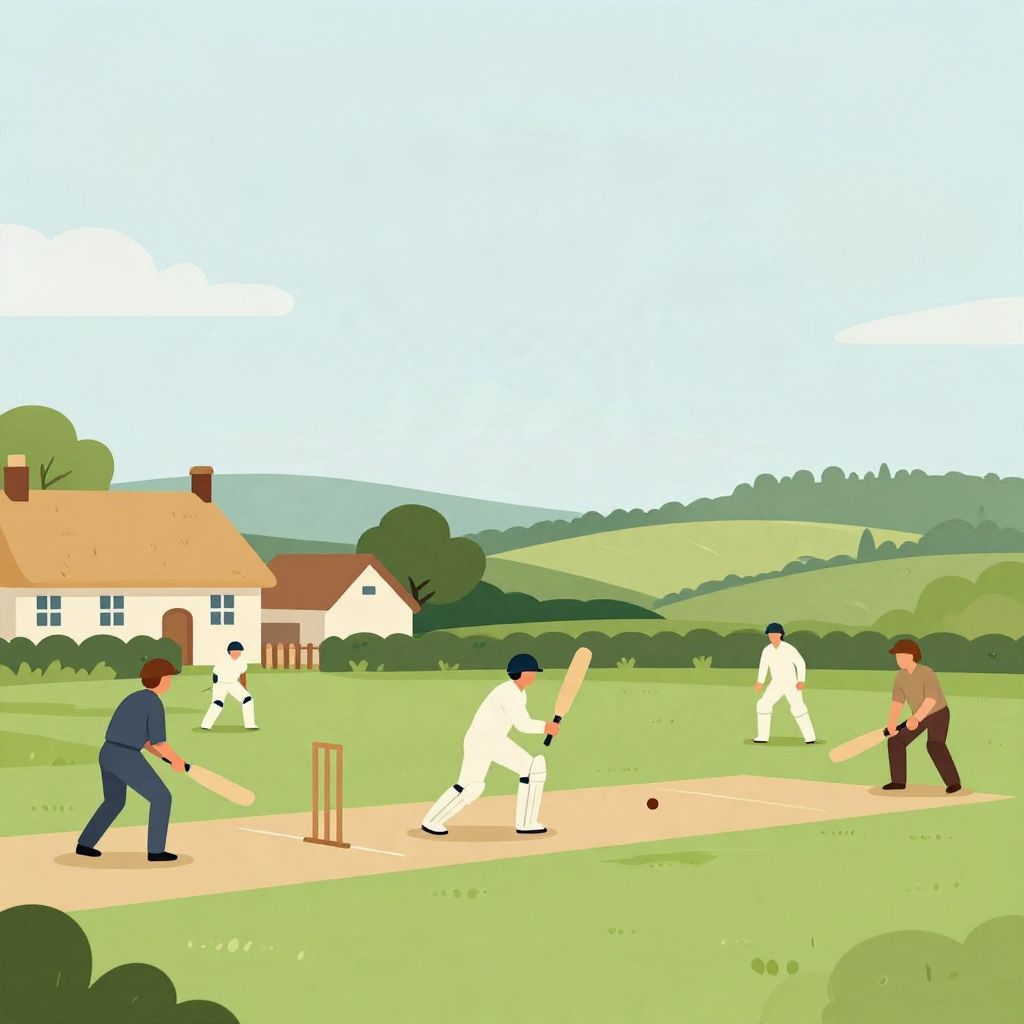
When was cricket invented? The short answer is that cricket emerged in late medieval England, probably by the late 1500s, and was clearly being played by the early 1600s. Historians cannot name a single inventor or exact day, because cricket developed gradually from earlier bat-and-ball games.
What we can say with confidence is that cricket began as a rural English pastime and slowly became a structured sport with rules, clubs, and eventually international reach. Its story is less about invention by one person than about centuries of change.
When was cricket invented?
Cricket was not invented on one exact date. The best historical evidence suggests it originated in England sometime in the late 16th century, with written references appearing by the early 17th century. By the 1700s, it had developed into a recognizable organized sport with formal laws.
The earliest evidence for cricket
The earliest known references to cricket come from England in the late 1500s and early 1600s. These records do not describe a fully modern game, but they do show that people were already playing something called cricket. The sport likely began as a children’s or village game before becoming more organized among adults.
What the records show
- Late 1500s: probable origin period, based on historical references and linguistic evidence.
- 1590s–1600s: the name “cricket” appears in surviving documents.
- 1700s: rules become more formal and the game spreads among clubs and patrons.
Because early records are scarce, historians rely on legal documents, school references, and later descriptions. These sources suggest cricket was already established enough by the early 1600s to be recognized as a distinct game.
Where did cricket come from?
Cricket most likely developed in southern and southeastern England, especially in rural communities. It seems to have grown out of older bat-and-ball games played in the countryside. Rather than appearing suddenly, cricket evolved from local play traditions that were common in medieval and early modern Europe.
Why England?
England provided the social setting in which cricket could take shape: open fields, village communities, and a culture of games played on feast days and holidays. Children may have played early forms first, and adults later adapted the game for betting, competition, and social status.
There is no reliable evidence that cricket was imported fully formed from another country. Some historians have explored possible links to older European stick-and-ball games, but the clearest documented development is English.
How cricket developed from a village game into a sport
Cricket’s history is a good example of how a folk game becomes a formal sport. In its earliest stage, rules were likely local and flexible. Different villages may have played differently, with varying numbers of players, pitches, and methods of scoring. Over time, common practices emerged.
From informal play to standardized rules
By the 17th and 18th centuries, cricket was no longer just a casual pastime. Wealthy patrons supported teams, wagers were placed on matches, and the game became more competitive. This encouraged standardization. Formal laws were written down in the 18th century, helping cricket become the recognizable sport known today.
Important developments included:
- More regular use of bat, ball, wickets, and pitch.
- Growing interest in organized matches and betting.
- Written laws to settle disputes and define fair play.
- Club-based competition and wider social prestige.
Why historians do not give one exact invention date
Unlike a machine or patentable invention, cricket was a cultural creation. It emerged gradually from play, custom, and local variation. That makes it difficult to identify a single inventor or precise year. The question “when was cricket invented” is therefore best answered with an approximate period rather than a fixed date.
Evidence versus legend
Some popular stories try to give cricket a single origin point, but those accounts usually go beyond the evidence. Historians are more cautious. They distinguish between the first surviving mention of cricket and the actual beginning of the game, which likely came earlier.
This is why the safest historical answer is: cricket was invented, or more accurately formed, in England during the late 1500s, and it was clearly established by the early 1600s.
What did early cricket look like?
Early cricket was probably quite different from the modern game. Matches were likely shorter, rules varied by region, and equipment was simpler. The bat may have resembled a curved stick or club rather than the flat blade used later. The wicket also evolved over time as the game became more standardized.
Major differences from modern cricket
- The rules were not yet fixed nationally.
- Teams could vary in size.
- Equipment was less standardized.
- Scoring and match length were more flexible.
As cricket spread, these informal features gave way to a more regulated sport. That transformation helped cricket move from village grounds to elite clubs and eventually to the wider British Empire.
Cricket in the 18th century: the turning point
The 18th century was crucial because cricket became a serious organized sport. London and other parts of England saw the rise of clubs, patrons, and matches that attracted public attention. Written laws helped settle disputes and made the game consistent across different places.
The role of social class
Cricket’s growth was shaped by class as well as geography. Rural origins did not prevent the game from becoming fashionable among the elite. In fact, aristocrats and wealthy landowners helped popularize it by sponsoring teams and matches. This support gave cricket resources, visibility, and prestige.
At the same time, the sport remained connected to ordinary people. That combination of elite backing and popular participation helped cricket survive and expand.
When did cricket become the modern game?
Cricket became recognizably modern during the 18th and 19th centuries. The laws were refined, clubs became stronger institutions, and the game spread beyond England. The rise of county cricket, international touring, and eventually Test cricket turned a local English pastime into a global sport.
Key stages in modernization
- 18th century: laws and organized matches.
- 19th century: county and club cricket expand.
- Late 19th century: international matches begin.
- 20th century: cricket becomes a major global sport.
So if the question is about the sport as we know it today, the answer is more complicated than the origin story. Cricket’s invention was only the beginning; its modern form took shape over several centuries.
How cricket spread beyond England
Cricket spread through the British Empire, especially to South Asia, the Caribbean, Australia, and parts of Africa. In many places it became deeply rooted and took on new cultural meanings. Local communities adapted the game, turning it into something that was both British in origin and global in practice.
This spread matters historically because it shows how sports can travel with empire, migration, education, and trade. Cricket became more than a game: it became part of identity, politics, and social life in many countries.
So what is the best answer to “When was cricket invented?”
The most accurate answer is that cricket was invented, or more precisely gradually developed, in England during the late 16th century, with clear evidence of the game by the early 17th century. It was not created by one person, and there is no single invention date. Its rules and form continued to evolve for centuries afterward.
In other words, cricket began as a local English game and slowly became an organized sport with a long global history. If you want to explore more history topics, you may also enjoy more history articles and a broader look at how cultures diverge over time.