
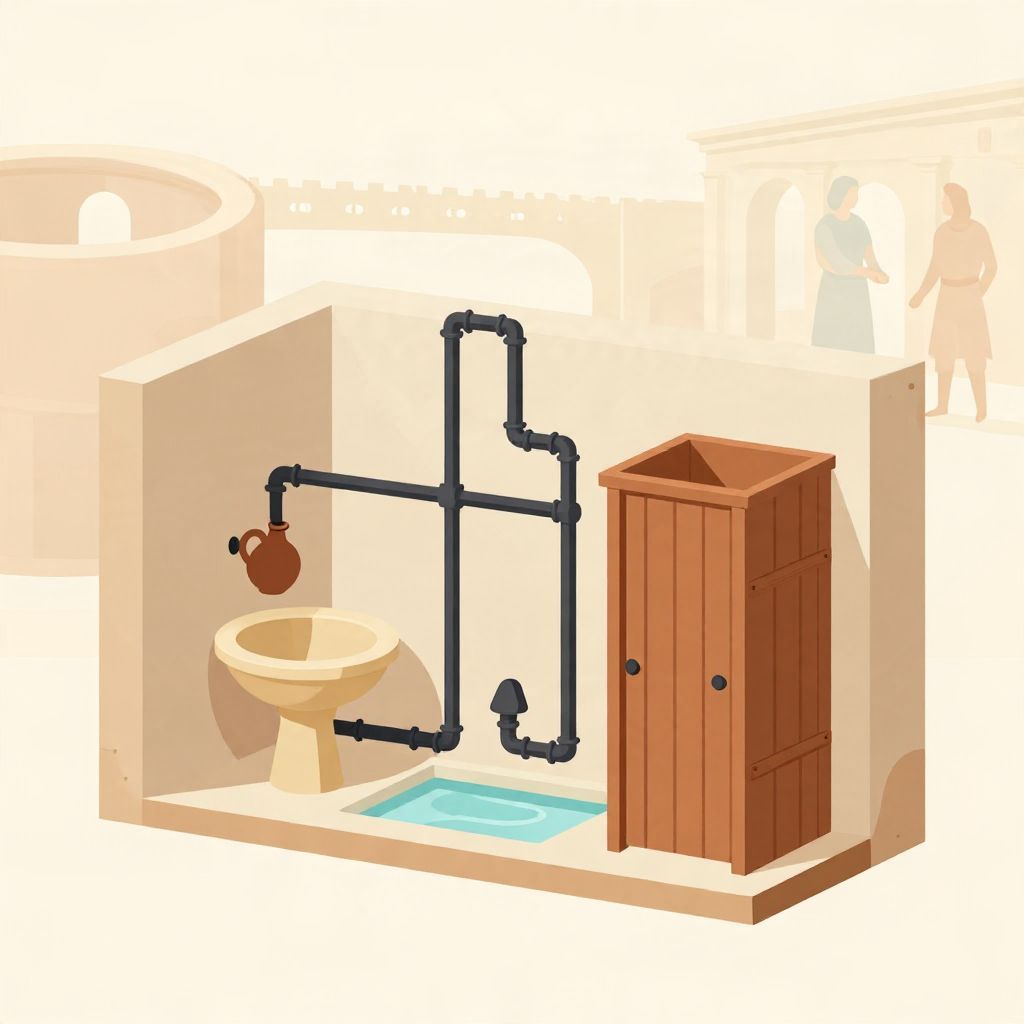
When was indoor plumbing invented? The short answer is that it was not invented all at once. People had indoor water systems in parts of the ancient world thousands of years ago, but the modern idea of indoor plumbing in homes became practical and widespread mainly in the 19th century, especially in Europe and the United States.
So the story is less about a single invention than a long sequence of improvements in pipes, drains, water supply, sanitation, and building design. Indoor plumbing emerged gradually as cities grew, engineers learned how to move clean water and waste safely, and households could finally connect to municipal systems.
When Was Indoor Plumbing Invented?
Indoor plumbing was not invented on one exact date. Early forms existed in ancient civilizations such as the Indus Valley, Minoan Crete, and Rome, but modern indoor plumbing for ordinary homes developed during the 1800s and became common in many cities by the late 19th and early 20th centuries. The key change was the combination of pressurized water, sewer systems, and household fixtures.
Ancient Indoor Plumbing: The First Known Systems
Long before modern bathrooms, some ancient societies built impressive water and waste systems inside palaces, elite homes, and public buildings. These were not “indoor plumbing” in the modern suburban sense, but they were real indoor water technologies.
The Indus Valley Civilization
By about 2600–1900 BCE, cities such as Mohenjo-daro and Harappa had advanced drainage and bathing arrangements. Houses often had wells and bathing areas, and wastewater could flow into covered drains. This was one of the earliest known urban sanitation systems.
Minoan Crete and Ancient Greece
On Crete, the palace at Knossos, dating to the second millennium BCE, had features such as flushing toilets and sophisticated water channels. These systems were limited to elite settings, but they show that the idea of moving water indoors is very old.
Ancient Rome
The Romans are often remembered for aqueducts, but they also used indoor water in baths, fountains, and some private homes. Wealthy Romans sometimes had piped water and latrines connected to drainage systems. Still, this was not universal household plumbing. Most people relied on public fountains, wells, and shared facilities.
Why Ancient Plumbing Did Not Become Modern Plumbing
Ancient systems were impressive, but they did not create the same conditions as modern indoor plumbing. They were usually limited to elites, depended on gravity rather than pumps, and were not supported by citywide networks that could reliably supply clean water and remove waste for millions of people.
After the fall of the Roman Empire in the West, many urban water systems declined or disappeared in Europe. In medieval and early modern towns, people often used wells, chamber pots, privies, and street drainage. Indoor water use existed in some places, but it was not yet a standard feature of homes.
The 19th Century: The Real Birth of Modern Indoor Plumbing
The modern version of indoor plumbing took shape in the 19th century. This was when cities expanded rapidly, apartment buildings and row houses multiplied, and public health concerns pushed governments to improve water supply and sewage disposal. The crucial breakthrough was not just having pipes inside a building, but connecting them to reliable municipal systems.
Clean Water and Public Health
Industrial cities often suffered from contaminated wells, polluted rivers, and deadly outbreaks of cholera and typhoid. Reformers and engineers increasingly understood that safe water and proper waste removal were essential to urban life. That public health crisis helped drive investment in waterworks and sewers.
Engineering Improvements
Several technical developments made indoor plumbing practical:
- Cast-iron and lead piping allowed water to be carried through buildings.
- Water pumps and reservoirs helped supply homes with pressurized water.
- Traps and venting systems reduced sewer gases from entering houses.
- Flush toilets became more reliable and more common.
- Municipal sewer networks carried waste away from neighborhoods.
These were not isolated inventions. Indoor plumbing became possible when all of them came together.
When Did Indoor Plumbing Become Common in Homes?
Indoor plumbing became common first in wealthier urban homes and new apartment buildings during the mid- to late 1800s. It spread more broadly in the early 1900s, but many rural areas and poorer neighborhoods still lacked full indoor plumbing well into the 20th century. In the United States, widespread adoption accelerated after the 1930s and especially after World War II.
Urban Homes First
In large cities, developers and homeowners could connect to water mains and sewer lines sooner than rural residents could. Middle- and upper-class households were the earliest to install indoor sinks, bathtubs, and toilets. At first, these features were often signs of status as much as convenience.
Rural Adoption Lagged Behind
In the countryside, indoor plumbing spread slowly because it required expensive infrastructure. Wells, outhouses, and hand pumps remained common for decades. Even in industrial countries, the gap between city and country was often large. So if someone asks when indoor plumbing was invented, it is important to remember that “invented” and “common” are not the same thing.
The Flush Toilet and the Bathroom Revolution
Indoor plumbing is closely tied to the history of the toilet, but the two are not identical. A house could have indoor water without a full bathroom, and a toilet could exist without modern plumbing infrastructure. Still, the flush toilet became one of the most important symbols of indoor plumbing.
Early Flush Toilets
Flush toilets existed in earlier forms, but they were not widespread. A major step came in the late 16th century, when Sir John Harington described a flushing device for Queen Elizabeth I. However, this remained a curiosity rather than a common household fixture.
19th-Century Improvements
By the 1800s, toilet design improved enough to be installed more widely in homes and public buildings. Better traps, bowls, and sewer connections made flush toilets more practical. As cities built sewer systems, the bathroom began to take on a modern form.
Indoor Plumbing and the Rise of the Modern House
Indoor plumbing changed the layout and meaning of the home. Kitchens, bathrooms, and laundry spaces became more specialized. Water no longer had to be carried in buckets from a well or pump, and waste no longer had to be managed entirely outdoors. This transformed daily routines, especially for women and servants who traditionally did much of the household labor.
The change also affected architecture. Homes needed space for pipes, drains, water heaters, and bathrooms. Apartments and tenements were redesigned with shared or private plumbing. Over time, indoor plumbing became so standard that it is easy to forget how recent it really is.
Was Indoor Plumbing a Single Invention?
No. Indoor plumbing was a system, not a single invention. It depended on many separate innovations developed over centuries. If you want one historical takeaway, it is this: indoor plumbing was “invented” in stages, and it became truly modern only when cities could provide safe water and sewage disposal on a large scale.
Key Stages in the Development of Indoor Plumbing
- Ancient water and drainage systems appeared in early civilizations.
- Medieval and early modern decline left many places without advanced household plumbing.
- 18th- and 19th-century engineering improved pipes, pumps, and fixtures.
- Urban waterworks and sewers made household plumbing practical.
- 20th-century mass adoption made indoor plumbing normal for most homes in industrialized countries.
Why the Date Depends on the Definition
If by “indoor plumbing” you mean any indoor water or drainage system, then the answer goes back to ancient civilizations more than 4,000 years ago. If you mean the modern household system of sinks, bathtubs, toilets, and connected sewer lines, then the answer is mainly the 19th century. If you mean when it became common for ordinary families, the answer is the late 19th and early 20th centuries, with rural areas lagging behind.
The Lasting Impact of Indoor Plumbing
Indoor plumbing greatly improved convenience, but its historical importance goes far beyond comfort. It helped reduce waterborne disease, supported denser cities, changed domestic labor, and made modern urban life possible. Few inventions have shaped everyday life so deeply while remaining so invisible.
So, when was indoor plumbing invented? The best historical answer is that it was developed gradually, with ancient roots and a modern breakthrough in the 1800s. For a broader look at how these systems spread, see when indoor plumbing became common and when the toilet was invented.