
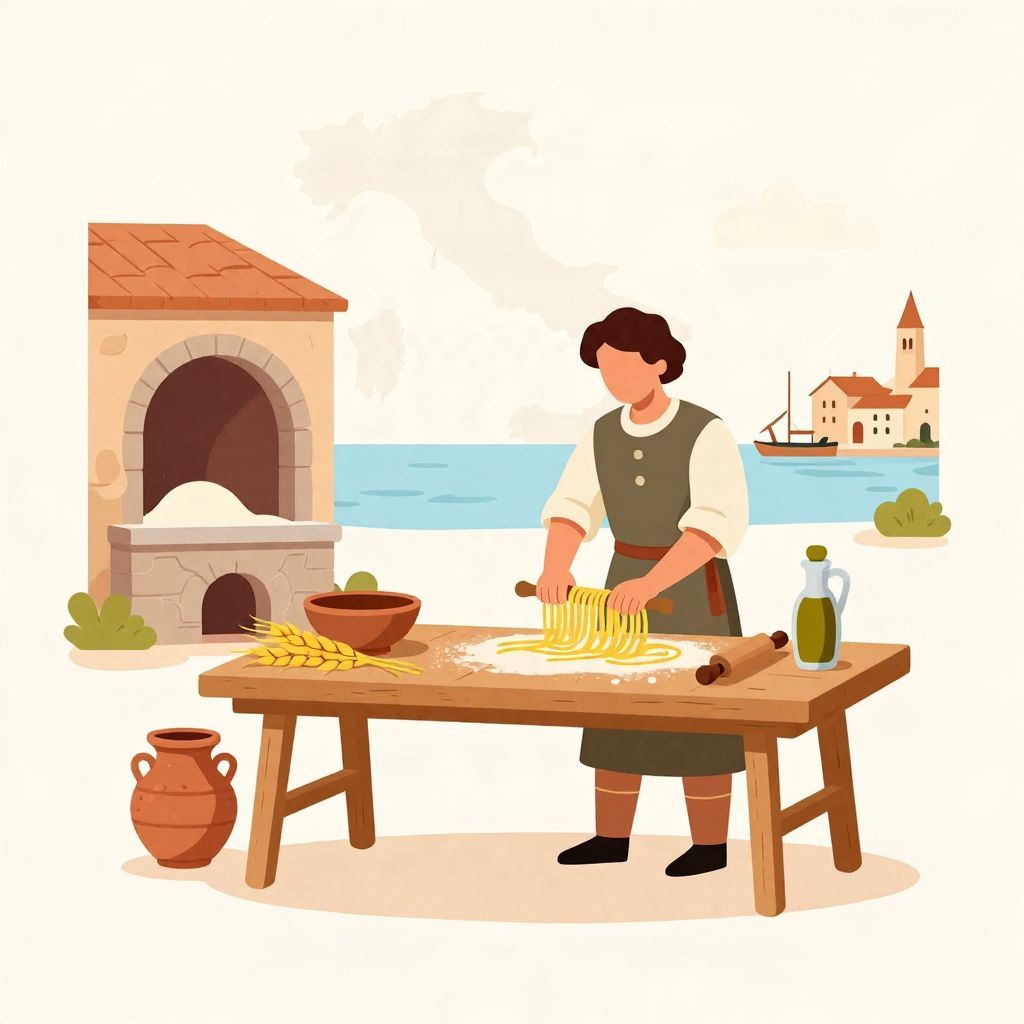
Spaghetti is one of the world’s most familiar foods, but its origin is often misunderstood. The short answer is that spaghetti originated in Italy, where long, slender pasta became part of the culinary tradition over many centuries.
Its deeper history is broader than a single invention story, though. Noodle-like foods existed long before modern spaghetti, and historians still debate how much influence came from the Mediterranean, the Middle East, and Asia. What is clear is that spaghetti as a distinctly Italian pasta developed and became famous in Italy.
Where did spaghetti originate?
Spaghetti originated in Italy, especially in the southern and central regions where dried pasta became a staple food. While earlier noodle traditions existed elsewhere, the form, name, and cultural identity of spaghetti are tied to Italian food history, with strong evidence for its growth in medieval and early modern Italy.
The Italian roots of spaghetti
The word spaghetti comes from the Italian spago, meaning “string” or “twine,” which fits the pasta’s long, thin shape. Italian cooks did not invent the idea of dough cut into strips, but they refined and popularized dried pasta in ways that made spaghetti practical, durable, and widely available.
Why Italy became the home of spaghetti
Italy was especially well suited to pasta development because of its climate, grain production, and trade connections. Durum wheat, which makes firm pasta, grew well in parts of southern Italy. Drying pasta also made it easier to store and transport, which mattered in a region with busy ports and changing food supplies.
By the Middle Ages, Italian cities and coastal communities were producing and eating many kinds of pasta. Over time, long strands became one of the most recognizable shapes. Spaghetti was not a single sudden invention; it emerged from a long tradition of pasta-making that was gradually standardized in Italian cooking.
Was spaghetti invented in ancient times?
There is no solid evidence that spaghetti was invented in one exact ancient moment. However, historians do know that pasta-like foods existed in the ancient Mediterranean. The key question is not whether people made dough-based noodles, but when those foods became the specific Italian pasta we now call spaghetti.
Ancient Mediterranean pasta-like foods
Ancient Greeks and Romans made foods from grain and water, including flat or layered dough dishes, but these were not the same as modern spaghetti. Some ancient references describe sheets or strips of dough, yet the techniques, ingredients, and culinary culture were different from later pasta traditions.
In other words, ancient people ate grain-based foods that may resemble pasta in a broad sense, but that does not mean spaghetti already existed. The historical record supports continuity in grain cookery, not a direct one-step invention of spaghetti in antiquity.
Did spaghetti come from China?
One of the most common legends says that Marco Polo brought pasta from China to Italy in the late 13th century. This story is popular, but historians generally consider it oversimplified and misleading. Pasta was already present in Italy before Marco Polo returned from Asia.
The Marco Polo myth
Marco Polo did travel extensively in Asia, where noodle traditions were well established. But Italian sources mention pasta before his return, so he cannot be credited with introducing spaghetti to Italy. At most, his travels may have broadened European awareness of Asian noodle foods, not created Italian pasta from scratch.
China does have a long and important history of noodles, and those traditions are older than many European pasta forms. Still, similarity does not prove direct origin. Spaghetti belongs to the Italian pasta tradition, even if the wider history of noodles connects many cultures across Eurasia.
When did spaghetti become recognizable as spaghetti?
By the late medieval and early modern periods, Italian pasta makers were producing many shapes, including long strands similar to modern spaghetti. The exact date of “spaghetti” as a named product is hard to pin down, but the food became increasingly associated with Italian regional cooking over the centuries.
From handmade dough to dried pasta
Early pasta was often made fresh and eaten soon after preparation. Later, drying methods allowed pasta to be stored for longer periods, which was a major advantage in pre-modern households and on ships. This helped spaghetti and related shapes become everyday foods rather than occasional luxuries.
Southern Italy, especially areas around Naples and Sicily, played a major role in popularizing dried pasta. By the 18th and 19th centuries, pasta consumption had become strongly associated with Italian urban life, and spaghetti was among the most recognizable forms.
How spaghetti spread beyond Italy
Spaghetti spread internationally through migration, trade, and the global popularity of Italian cuisine. In the 19th and early 20th centuries, large numbers of Italians emigrated to the Americas and elsewhere, bringing pasta traditions with them. Restaurants and cookbooks then helped turn spaghetti into an international dish.
Immigration and global popularity
In the United States, for example, Italian immigrant communities helped make pasta a common part of everyday cooking. Over time, spaghetti with tomato sauce became especially famous, though that combination is more a product of modern culinary history than of medieval Italy.
This global spread changed the dish in interesting ways. Different countries adapted spaghetti to local tastes, ingredients, and dining habits. Yet even as recipes changed, the pasta itself remained closely linked to its Italian origin.
What makes spaghetti historically Italian?
Spaghetti is historically Italian because Italy is where the pasta shape, name, production methods, and culinary identity came together. The history is not about a single inventor, but about a long tradition of Italian grain cookery that turned a simple strand of pasta into a defining national food.
Key features of the Italian tradition
- Name: The word itself is Italian.
- Production: Italy developed strong traditions of dried pasta-making.
- Regional use: Southern and central Italy especially favored many pasta shapes.
- Cultural identity: Spaghetti became a symbol of Italian cuisine worldwide.
This does not mean Italy was the only place where noodle-like foods existed. It means that spaghetti, as we understand it today, belongs to the Italian historical food tradition.
Why the origin story is more complicated than a single invention
Food history often resists neat answers. Dishes evolve through migration, trade, experimentation, and local adaptation. Spaghetti is a good example because it sits at the crossroads of ancient grain foods, medieval pasta-making, and modern global cuisine.
What historians can say with confidence
- Italy is the historical home of spaghetti.
- Pasta-like foods existed long before modern spaghetti.
- The Marco Polo story is a legend, not a reliable explanation of origin.
- Spaghetti became globally famous through Italian migration and modern food culture.
That combination of evidence is why historians answer the origin question by naming Italy, while also explaining that the broader history of noodles is international and much older than the modern dish.
Lasting significance of spaghetti’s origin
Spaghetti’s Italian origin matters because it shows how a regional food can become a global symbol. What began as part of Italy’s long pasta tradition eventually became one of the most recognizable foods in the world, tied to ideas of home cooking, comfort, and Italian identity.
So, if you are asking where spaghetti originated, the best historical answer is Italy—not as a single moment of invention, but as the place where spaghetti took shape, developed its identity, and entered world cuisine. For related food-history questions, see where spaghetti was invented and where French fries originated.