
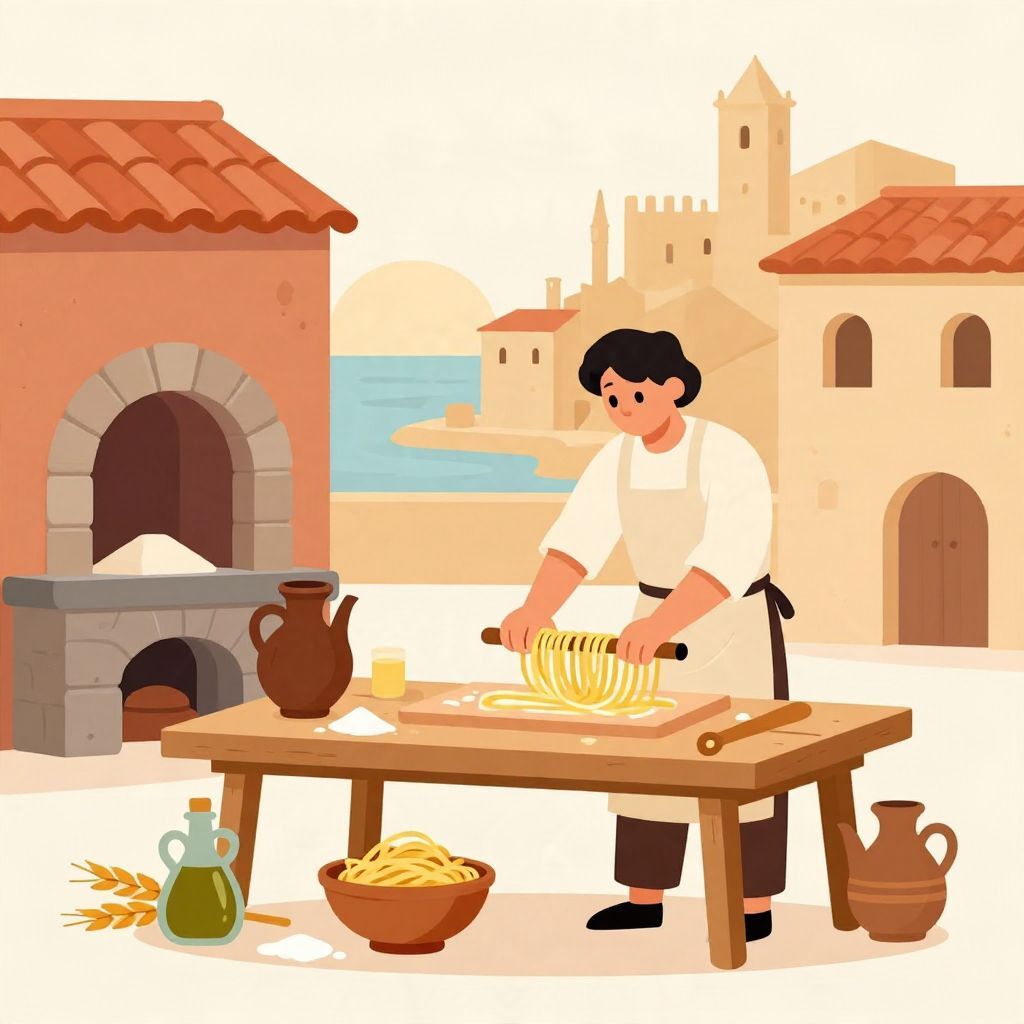
Where was spaghetti invented? The short answer is that spaghetti, as we know it, was developed in Italy, especially in the southern and central parts of the peninsula, where dried pasta traditions became deeply established. But the story is older and more complicated than a single invention in one place.
Spaghetti did not appear all at once from one inventor’s workshop. It emerged over centuries from broader Mediterranean noodle traditions, then became distinctly Italian through local ingredients, processing methods, and culinary culture.
Where Was Spaghetti Invented?
Spaghetti was invented in Italy, though not by one person or on one exact date. Its direct ancestors were long, dried pasta shapes made on the Italian peninsula, especially in the south. Over time, Italian cooks refined these noodles into the familiar slender strands now called spaghetti.
The Historical Background of Spaghetti
To understand spaghetti’s origin, it helps to separate three things: the idea of noodle-like dough, the development of dried pasta, and the specific shape called spaghetti. Noodle foods existed in several ancient cultures, but spaghetti belongs to the Italian tradition of pasta secca, or dried pasta, which was shaped by climate, trade, and preservation needs.
Ancient and medieval noodle traditions
Long before modern spaghetti, people in the Mediterranean and Asia prepared dough-based foods cut into strips, sheets, or ribbons. These were not necessarily spaghetti, but they show that the basic concept of noodle-like food was widespread. In the Roman world, there were pasta-like preparations, though not the same as modern dried spaghetti.
By the Middle Ages, Italian cooks were making forms of pasta that could be dried and stored. This mattered because drying made food portable, durable, and useful for travel and trade. Southern Italy, with its warm climate and strong maritime connections, became especially important in this development.
Why southern Italy mattered
Southern Italy was ideal for dried pasta production because sunlight and dry air helped preserve the noodles. Cities and coastal areas in regions such as Campania, Sicily, and Naples became centers of pasta making. Wheat, especially durum wheat, was also well suited to pasta production, giving the dough strength and texture.
As pasta became more common, different shapes developed for different cooking methods and sauces. Long strands were practical, easy to dry, and adaptable. Over time, one of those long shapes became known as spaghetti, from the Italian word spago, meaning “string” or “thin cord.”
Was Spaghetti Invented in Italy or Brought from Elsewhere?
This is where the history becomes more debated. Popular stories sometimes claim that pasta came to Italy from China, often through Marco Polo. Historians generally reject that as a simple explanation. Pasta-like foods existed in Italy before Marco Polo returned from Asia in the late 13th century, so he did not “introduce” spaghetti to Italy in any straightforward sense.
That does not mean Italy developed pasta in total isolation. Food traditions travel. Trade across the Mediterranean, contact with Arab culinary practices, and local innovation all influenced the growth of pasta culture. The best historical view is that spaghetti was Italian in form and identity, while part of a wider history of grain-based noodle foods.
The Marco Polo legend
The Marco Polo story is popular because it offers a neat origin tale, but it oversimplifies history. By the time Polo wrote about his travels, pasta was already known in Italy. The legend likely spread because people liked the idea of a dramatic import from the East. In reality, spaghetti’s history is more gradual and more local.
When Did Spaghetti Become Recognizably Modern?
Spaghetti became recognizably modern during the late medieval and early modern periods, especially in Italy. By the 17th and 18th centuries, Naples and other Italian cities were famous for pasta consumption. The shape and name were becoming standardized, and spaghetti was increasingly associated with Italian everyday food rather than a rare or elite dish.
In these centuries, pasta moved from a regional specialty to a broader national symbol. Cheap, filling, and easy to store, spaghetti suited urban workers as well as wealthier households. Tomato sauce, which later became strongly associated with spaghetti, was a much later addition and should not be confused with the pasta’s own origin.
Spaghetti before tomato sauce
Tomatoes arrived in Europe after the Columbian Exchange in the 16th century, but they were not immediately used in pasta dishes. For a long time, spaghetti was eaten with cheese, oil, butter, or simple seasonings. The iconic spaghetti-and-tomato combination developed later, especially as tomatoes became more accepted in Italian cooking.
What Does the Word “Spaghetti” Mean?
The name itself offers a clue to its origin. Spaghetti is the plural form of spaghetto, a diminutive of spago, meaning string or twine. The word reflects the pasta’s appearance: long, thin strands resembling cords. This linguistic evidence strongly ties the food to Italian language and culture.
Because the term is Italian, it is reasonable to say that spaghetti was invented in Italy in the cultural sense that matters most. Even if similar noodle foods existed elsewhere, the specific food identity, naming, and culinary tradition of spaghetti are Italian.
How Spaghetti Spread Beyond Italy
Spaghetti remained a regional and national food for centuries before becoming a global staple. Italian migration in the 19th and early 20th centuries helped spread pasta dishes around the world, especially to the Americas. Immigrant communities brought recipes, techniques, and tastes with them, and local cooks adapted them to new ingredients and markets.
By the 20th century, spaghetti had become one of the most recognizable Italian foods internationally. In many countries, it came to symbolize “Italian food” more broadly, even though Italy itself has a huge variety of pasta shapes and regional cuisines.
From regional food to global icon
- Medieval Italy: dried pasta traditions take shape.
- Late medieval to early modern Italy: long pasta becomes more common and more defined.
- 19th century: mass migration spreads Italian cooking abroad.
- 20th century: spaghetti becomes a global household food.
So, What Is the Best Historical Answer?
The best answer to “Where was spaghetti invented?” is Italy, especially southern Italy. But the history is not a single invention story. Spaghetti grew out of older noodle traditions, was shaped by Italian wheat, climate, and culinary practice, and became a distinct food over centuries rather than in one moment.
That distinction matters. History often resists neat origin myths. Spaghetti is not just “from Italy” in a casual sense; it is a product of Italian regional development, Mediterranean exchange, and long-term food culture. Its story is one of adaptation, not sudden invention.
Why the Origin of Spaghetti Still Matters
Food histories reveal how people lived, traded, and adapted to their environments. Spaghetti’s origin shows how a simple grain-based food can become part of national identity and then spread worldwide. It also shows why legends, like the Marco Polo story, are appealing but not always accurate.
When people ask where spaghetti was invented, they are usually asking where the familiar pasta dish came from. Historically, the answer is Italy. More precisely, spaghetti developed within Italian pasta-making traditions, especially in the south, and only later became the global dish most people know today. For related origin stories, you may also enjoy reading about where gin is from and where pineapples originated.