
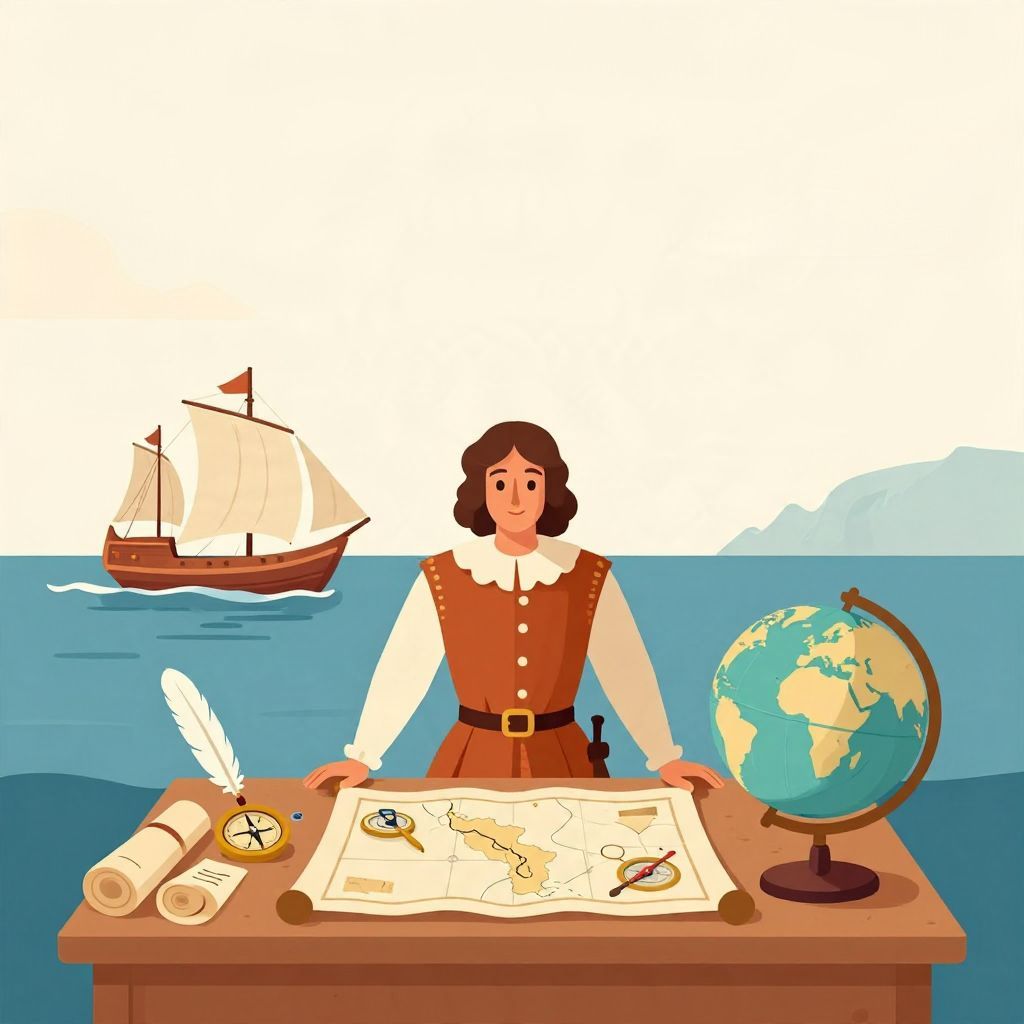
Where did the name America come from? The short answer is that it was derived from the name of the Italian explorer Amerigo Vespucci. In the early 1500s, European mapmakers began using a Latinized version of his first name, America, for the newly recognized lands across the Atlantic.
The story is more than a simple naming tale. It reflects the age of exploration, the way maps were made, and how Europeans slowly realized that the Americas were not Asia but a separate landmass.
Where Did the Name America Come From?
The name America most likely came from Amerigo Vespucci, an Italian navigator and explorer whose reports helped Europeans understand that the lands reached by Columbus were not part of Asia. In 1507, a German mapmaker, Martin Waldseemüller, used “America” on a world map for the southern part of the New World, and the name gradually spread to the whole continent.
Who Was Amerigo Vespucci?
Amerigo Vespucci was born in Florence in 1454 and worked as a merchant and navigator during the era when Europeans were expanding across the Atlantic. He participated in voyages to the western Atlantic coast and wrote accounts describing what he believed were new lands, not the eastern edges of Asia.
His importance lies less in “discovering” the continents and more in helping Europeans interpret them. Columbus had reached the Caribbean in 1492, but many educated Europeans still assumed those lands were near Asia. Vespucci’s writings, whether entirely his own or edited by others, argued that these regions were part of a new world.
Why Vespucci’s Name Mattered
Mapmakers in the early 16th century wanted names that matched their growing geographic knowledge. Because Vespucci’s accounts were influential, his first name was Latinized into America and attached to the newly mapped lands. This was not because he “owned” the continent or was universally credited as its discoverer, but because his name appeared useful for labeling a new geographic reality.
Why Did Martin Waldseemüller Use the Name?
Martin Waldseemüller was a German cartographer who published a world map in 1507. On that map, he and his colleagues used “America” for the southern portion of the New World. Their reasoning was simple: if Europe, Asia, and Africa had feminine Latin names, then the new land could be named after Amerigo in a similar form.
Waldseemüller’s map was influential because it circulated among scholars and mapmakers. Although he later seems to have had second thoughts about the naming, the word had already begun to spread. Once a place name enters maps, books, and official usage, it can become difficult to replace.
Latin and Naming Conventions
In Renaissance scholarship, Latin was the language of maps and learned writing. The name “America” fit the convention of giving regions feminine forms. Just as “Europa” and “Asia” were classical geographic names, “America” sounded appropriate to educated Europeans of the time.
Was America Named After Vespucci by Mistake?
Not exactly. The naming was not a random error, but it was based on a particular interpretation of Vespucci’s importance. Some historians have argued that the name may have been inspired by the explorer and mapmaker Richard Amerike of Bristol, but this theory is much less widely accepted than the Vespucci explanation. The strongest evidence still points to Amerigo Vespucci.
It is also important to note that the name did not emerge from the people who already lived in the Americas. Indigenous nations had their own names for their lands long before Europeans arrived. “America” is a European label imposed during the colonial period, not an original continental name.
Popular Legend vs. Historical Evidence
- Popular idea: America was named directly by Columbus.
- Historical evidence: Columbus never used the name America for the lands he reached.
- Popular idea: Vespucci “discovered America.”
- Historical evidence: Vespucci helped Europeans recognize a new continent, but he did not discover all of it, and many peoples already lived there.
How the Name Spread From a Map to a Continent
At first, “America” referred only to part of the southern New World on certain maps. Over time, however, the name expanded in usage. By the later 1500s and 1600s, Europeans increasingly used “America” to refer to the entire landmass or landmasses across the Atlantic.
This shift happened because mapmaking was cumulative. As more voyages filled in coastlines and more atlases repeated the term, “America” became standard. Eventually, the name applied to both North America and South America, even though the original map label was more limited.
Chronology of the Name
- 1492: Columbus reaches the Caribbean, believing he has found a route to Asia.
- Early 1500s: Vespucci’s accounts circulate among European readers.
- 1507: Waldseemüller’s map prints “America.”
- Later 1500s: The term spreads in European cartography and writing.
- By the 1600s: “America” is widely used for the New World in general.
Did Columbus Name America?
No. Christopher Columbus did not name America, and he did not think he had reached a separate continent. He believed he had arrived in parts of Asia or islands near Asia. That misunderstanding is central to why the naming took time.
Because Columbus died before Europeans fully recognized the scale of the lands across the Atlantic, his name became attached to the broader “Columbian” story of contact and conquest, but not to the continent’s name. The word America came into use only after later explorers and mapmakers revised the geographic picture.
What Did “America” Mean at First?
Originally, “America” was not the name of a single country. It was a geographic term for newly mapped lands in the Western Hemisphere. Only much later did the word become associated with the United States of America, founded in the 18th century.
That later political use can cause confusion today. In everyday speech, “America” may mean the United States, but historically the name first referred to the continents and the broader New World. The modern national meaning is an afterlife of the older geographic term.
Geographic vs. Political Meaning
- Geographic America: the continents of North America and South America.
- Political America: the United States of America, a nation formed in the late 1700s.
- Historical origin: a European map label from the early 1500s.
Why the Naming Matters Historically
The name America reflects a larger historical process: Europeans were not just exploring coastlines, but also creating new categories for understanding the world. Naming was part of power. Once Europeans labeled the lands, they also shaped how those lands were described, claimed, and imagined.
That process had lasting consequences. The word “America” became embedded in colonial administration, trade, literature, and eventually national identity. Yet the name also reminds us that European maps were only one way of seeing the continent. Indigenous peoples had their own political systems, languages, and place names long before the European label took hold.
So, Where Did the Name America Come From?
The name America came from the explorer Amerigo Vespucci, through a 1507 map by Martin Waldseemüller. It began as a scholarly map name for part of the New World and later expanded to cover the continents as Europeans came to understand that these lands were separate from Asia.
In other words, America was named not by the people who lived there, but by European mapmakers trying to make sense of a new geographic reality. For more context on the age of exploration and the European arrival in the Americas, see when Columbus sailed the ocean blue and one reason colonists came to America.