
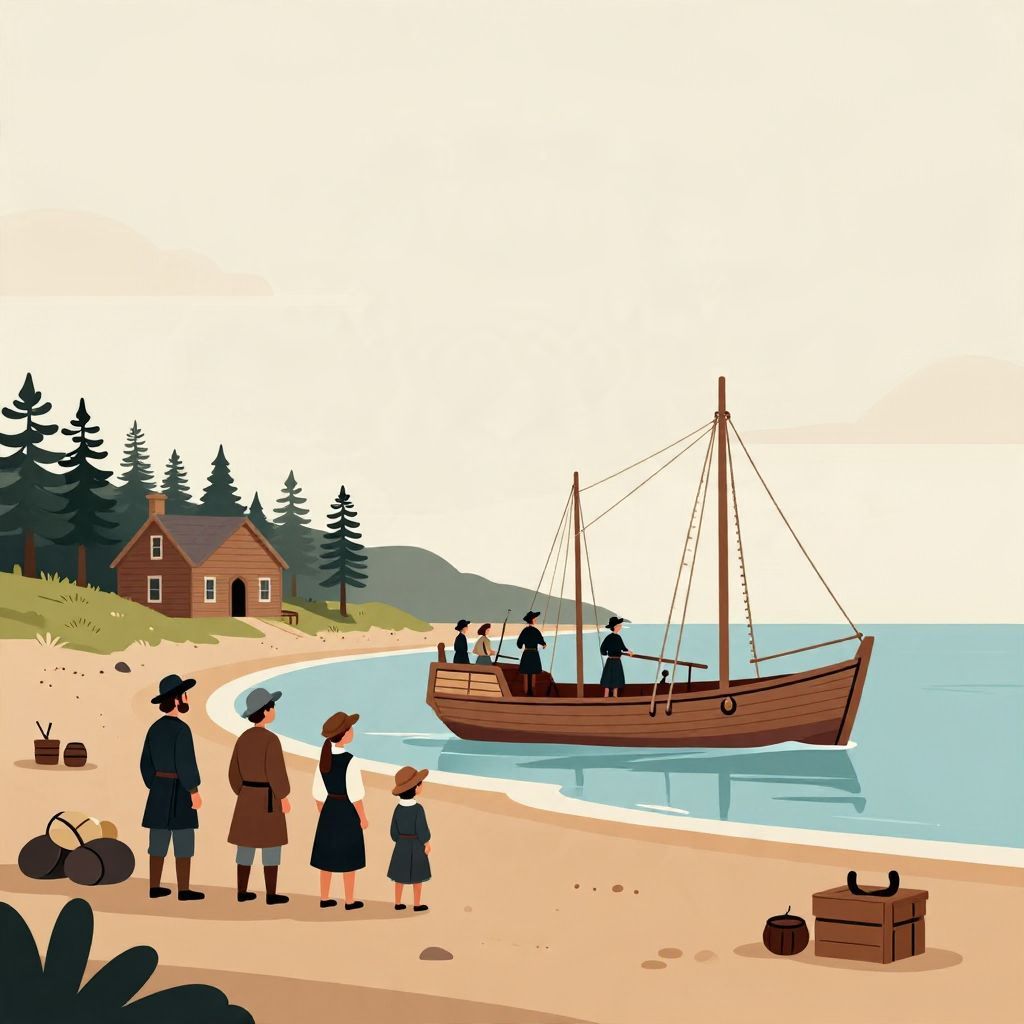
What is one reason colonists came to America? One of the clearest answers is that many came seeking religious freedom. In the 1600s and 1700s, people from England and other parts of Europe crossed the Atlantic hoping to worship as they wished, build new communities, and escape persecution or strict control at home.
That was not the only reason, though. Colonists also came for land, trade, profit, and political opportunity. The story of colonization is therefore not a single motive but a mix of faith, economics, and empire that changed over time.
What Is One Reason Colonists Came To America?
One major reason colonists came to America was to seek religious freedom. Groups such as the Pilgrims, Puritans, Quakers, and others hoped to escape persecution, practice their beliefs more openly, or create societies shaped by their own faith. For many settlers, religion was a powerful motive, though not the only one.
Why Religious Freedom Mattered So Much
In early modern Europe, religion and government were closely connected. In England, for example, the Church of England was the official church, and people who held different beliefs could face fines, harassment, imprisonment, or exclusion from public life. For dissenters, leaving for North America offered the chance to worship without the same level of interference.
Persecution and dissent in Europe
The Protestant Reformation of the 1500s had divided Europe into competing religious communities. In England, tensions remained high for generations. Some Protestants wanted to reform the Church of England from within; others believed it was too tied to old Catholic practices. These disagreements were not just theological. They could affect jobs, education, and a person’s legal standing.
For people who did not fit the religious mainstream, migration could seem like the safest option. America was not always a place of full tolerance, but it could offer more room to create separate communities than many people had at home.
Examples of religious settlers
The best-known example is the group often called the Pilgrims, who sailed on the Mayflower in 1620 and established Plymouth Colony. They were Separatists, meaning they wanted to break completely from the Church of England. A larger wave of Puritans followed in the 1630s and founded Massachusetts Bay Colony, hoping to build a godly society.
Other groups also came for religious reasons. Quakers settled in Pennsylvania under William Penn, where they hoped to live according to their beliefs and extend greater toleration to others. Catholics, Jews, and other minority groups also sought safer places to live, though their experiences varied widely from colony to colony.
Was Religion the Only Reason?
No. Religion was important, but colonists came to America for several overlapping reasons. Many settlers were motivated by the hope of land, work, wealth, or social advancement. Some were pushed by poverty, debt, or limited opportunity in Europe. Others came because empires, companies, and monarchs wanted to expand power across the Atlantic.
Economic opportunity
Land was a major attraction. In Europe, land ownership was limited and often concentrated among elites. In North America, at least from the perspective of many settlers, land seemed more available. Farmers, tenants, and younger sons who might inherit little or nothing could imagine a better future overseas.
Colonial leaders and investors also promoted America as a place of profit. Tobacco in Virginia, for example, became a valuable cash crop in the 1600s. Later, other colonies developed plantation agriculture, timber trade, shipping, and commercial networks that tied North America to the Atlantic economy.
Political and imperial goals
Colonization was not only a private choice; it was also a state project. England, France, Spain, and the Netherlands competed for territory, trade routes, and influence. Colonies helped these powers claim land, challenge rivals, and build wealth through commerce and extraction.
In English North America, charters and joint-stock companies encouraged settlement. Colonists were often expected to strengthen imperial claims while also pursuing their own interests. This created a tension that shaped colonial life from the beginning: settlers wanted autonomy, while empires wanted control.
How Colonization Began in North America
European colonization of North America developed over time rather than in a single moment. Spanish explorers and settlers arrived earlier in parts of the Americas, but English settlement in what became the northern colonies took off in the early 1600s. Jamestown, founded in 1607 in Virginia, was the first permanent English settlement in North America.
From there, migration accelerated unevenly. Some colonies grew because of religious communities, others because of trade, plantation agriculture, or strategic imperial planning. Each colony had its own mix of motives, laws, and social structures.
A simple timeline of motives and settlement
- Late 1500s to early 1600s: European powers expand overseas competition and exploration.
- 1607: Jamestown is founded as the first permanent English settlement.
- 1620: The Pilgrims arrive at Plymouth seeking religious self-determination.
- 1630s: Puritan migration to New England grows significantly.
- Late 1600s: More diverse colonies develop, including Pennsylvania with its broader toleration.
What Did “Freedom” Mean to Colonists?
When colonists spoke of freedom, they did not always mean the same thing modern readers might imagine. For some, freedom meant the right to worship according to conscience. For others, it meant economic independence, the chance to own land, or freedom from political restrictions. These meanings could overlap, but they were not identical.
It is also important to remember that colonial freedom was limited and unequal. Many colonies denied rights to women, Native peoples, enslaved Africans, and religious minorities. A colony founded for liberty could still enforce strict social control. In that sense, colonial America was both a place of opportunity and a place of exclusion.
Freedom for some, not for all
Some colonists who fled persecution later imposed their own rules on others. In New England, for example, Puritan leaders often expected conformity within their communities. Dissenters could be punished or forced to leave. So while America offered refuge to some people, it did not automatically create religious equality.
This contradiction is central to understanding colonial history. The colonies were shaped by ideals of liberty, but also by hierarchy, coercion, and empire.
Why Historians Emphasize Multiple Causes
Historians usually avoid giving just one reason colonists came to America because migration was rarely driven by a single cause. A person might leave Europe because of religious conflict, but also because of debt, family pressure, or the promise of land. A colony might be founded for religious reasons but sustained by trade or labor systems.
For that reason, the question “What is one reason colonists came to America?” has a straightforward answer—religious freedom—but the fuller historical answer is more complex. Colonization was shaped by belief, ambition, survival, and imperial rivalry all at once.
Other common reasons colonists came
- Economic opportunity: land, wages, trade, and profit.
- Religious freedom: escape from persecution or the chance to build faith-based communities.
- Political opportunity: greater local autonomy or a fresh start.
- Imperial expansion: European states seeking territory and influence.
- Personal survival: debt, poverty, or limited prospects at home.
The Lasting Significance of Colonial Migration
The reasons colonists came to America helped shape the future United States and Canada in lasting ways. Religious migration influenced ideas about conscience, community, and toleration. Economic migration encouraged settlement patterns, land expansion, and labor systems. Imperial competition laid the groundwork for later wars and border disputes.
At the same time, colonization had devastating consequences for Native peoples, whose lands were taken, whose communities were disrupted, and whose sovereignty was challenged by European settlement. Any honest account of colonial motives must include this broader context. The search for opportunity for some often meant dispossession for others.
Concise Takeaway
One reason colonists came to America was to seek religious freedom, especially in the face of persecution or strict control in Europe. But colonization was never driven by faith alone. Land, profit, politics, and empire all mattered too. To understand the colonies fully, it helps to see those motives together, not in isolation. For related background, see what year Columbus sailed the ocean blue and why we celebrate the 4th of July.