
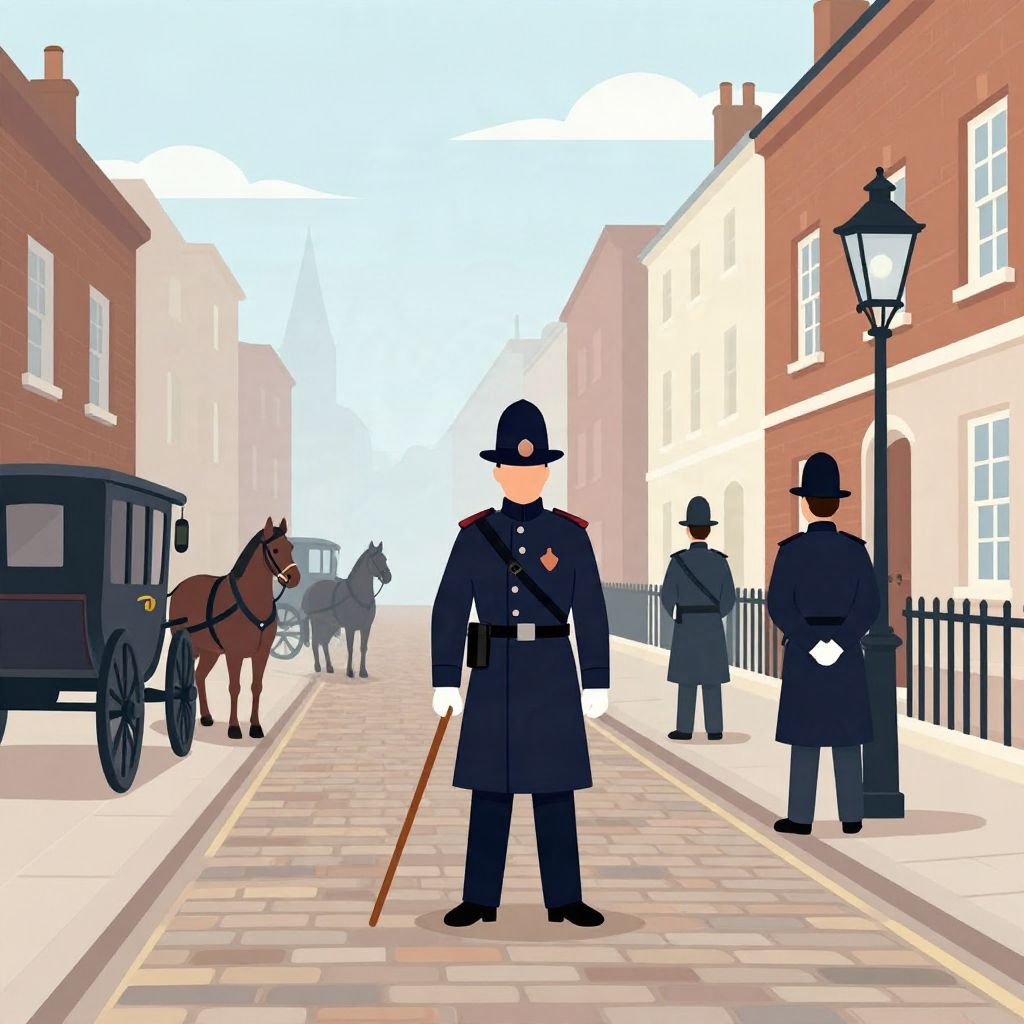
Why are police called cops? The short answer is that “cop” is an old slang term for a police officer, and its origin is tied to older English words meaning “to seize” or “to catch.” Over time, the word moved from general slang into everyday American English, where it became one of the most common informal names for police.
The story is a mix of language history and social history. The term did not begin as an official title, and it did not appear all at once. Instead, it developed through centuries of English usage, especially in Britain and the United States, alongside the growth of modern police forces in the 19th century.
Why are police called cops?
Police are called “cops” because the word likely comes from the verb to cop, meaning “to seize” or “to capture,” which itself is related to older English and possibly French roots. By the 19th century, “cop” was being used in English slang for someone who catches criminals, and then for the police officer who does that job.
The most likely origin of the word “cop”
The strongest historical explanation is linguistic: cop probably developed from a verb meaning “to take” or “to seize.” In this sense, a police officer is a person who “cops” offenders, or catches them. This explanation fits the way slang often turns actions into nouns for the people who perform them.
From “capture” to “cop”
English has long borrowed and reshaped words from other languages. One possible ancestor is the Latin capere, meaning “to seize” or “take,” which influenced many European words. Another common explanation links “cop” to older British slang where “to cop” meant to obtain, grab, or arrest. The exact path is not perfectly documented, but the core idea is consistent: the word is connected to catching or seizing.
That meaning made it a natural slang term for police. Once police became more visible in cities, people needed informal words for them, and “cop” fit neatly because it suggested the act of catching lawbreakers.
“Cop” as slang in the 19th century
By the 1800s, “cop” was established in English-speaking urban slang, especially in Britain and the United States. This was the era when modern police forces were expanding in cities such as London, New York, and Philadelphia. As police became a regular part of daily life, slang names multiplied: “bobby” in Britain, “cop” in America, and other local nicknames elsewhere.
The term was informal from the beginning. It was not a legal or official label, but a street-level word that spread through newspapers, popular speech, and city culture.
How police got their modern name
The word “police” itself is much older than “cop.” It comes through French from the Latin politia, meaning “civil administration” or “government.” In early modern Europe, “police” referred broadly to public order and governance, not just crime-fighting. The modern meaning of police as a uniformed force developed gradually in the 18th and 19th centuries.
The rise of organized policing
Before modern police departments, cities relied on watchmen, constables, parish officers, and other local authorities. These systems were often fragmented and inconsistent. As cities grew during industrialization, governments created more organized police forces to deal with theft, public disorder, traffic, and crowd control.
In Britain, the Metropolitan Police was founded in 1829 under Home Secretary Robert Peel. That force became a model for later policing systems, and British officers were often nicknamed “bobbies” or “peelers,” after Peel. In the United States, city police departments developed in the mid-19th century, and “cop” became one of the most common informal terms for officers.
So while “police” is the formal institutional word, “cop” is a slang label that emerged after policing became a recognizable occupation.
Popular theories about the word “cop”
There are several stories about where “cop” came from, but not all are equally reliable. Some are folklore, and others are plausible but not fully proven. Here are the main explanations historians and etymologists discuss.
1. “To cop” meaning to seize or catch
This is the most widely accepted explanation. A police officer “cops” criminals, meaning he arrests or captures them. Over time, the person became known as a “cop.” This is the simplest and most historically convincing account.
2. Connection to “copper”
Some people say “cop” comes from “copper,” a nickname sometimes used for police officers, especially in older British and American usage. “Copper” may have referred to a brass or copper badge, or to the idea of someone who “cops” people. However, this is usually treated as a secondary development rather than the original source of “cop.”
3. A folk story about “cop on the beat”
Another popular story claims that “cop” came from an acronym or secret phrase. This is almost certainly false. Acronym explanations for old words are usually modern inventions, because acronyms were not a common source of everyday slang in earlier centuries. Historians generally reject these stories.
Why slang names for police spread so widely
Police are highly visible public figures, so they quickly attract nicknames. In many societies, slang for police reflects both familiarity and tension. People use nicknames to show humor, criticism, respect, or distrust. “Cop” belongs to that tradition.
Nicknames and public attitudes
As police forces became more powerful in the 19th and 20th centuries, they also became more controversial. Some people saw them as protectors of public order; others saw them as enforcers of authority. Informal terms like “cop” can carry either neutral or negative meaning depending on tone and context.
In American English, “cop” is now so common that it is often neutral. But historically, it could sound rough, streetwise, or mildly disrespectful. That is typical of slang used for authority figures.
Language in immigrant and urban America
The United States was especially fertile ground for slang because of its crowded cities, immigrant communities, and rapidly changing social life. New words spread through neighborhoods, newspapers, vaudeville, crime reporting, and later film and television. “Cop” became part of this urban vocabulary and eventually entered mainstream speech.
By the early 20th century, Americans of many backgrounds understood the word, even if they did not use it themselves.
Is “cop” used everywhere?
Not exactly. “Cop” is most common in American English, though it is understood in many other English-speaking places. In Britain, “bobby” has historically been more characteristic, while other regions have their own local slang. The word “cop” is now global because of American media, but its strongest historical home is the United States.
Formal versus informal language
In formal writing, “police officer” is preferred. In conversation, “cop” is shorter and more casual. This difference matters because slang often survives precisely because it is compact and expressive. A single syllable can carry a lot of social meaning.
That is one reason the word has lasted so long: it is easy to say, easy to remember, and flexible in tone.
What the history of “cop” tells us about policing
The history of the word reflects the history of policing itself. As modern police forces emerged, people needed language to describe them. Slang terms like “cop” show how ordinary people experienced those institutions: not as abstract government agencies, but as officers who appeared on the street, made arrests, and enforced order.
From local watchmen to professional police
Before modern policing, law enforcement was often local and irregular. Once cities industrialized, governments built permanent police departments with uniforms, ranks, and patrol systems. The language changed with the institution. “Cop” became part of everyday speech because police had become part of everyday life.
The word also reminds us that public language rarely stays neutral. Words for authority often begin as slang, and slang often captures the social reality more vividly than official titles do.
Common myths about why police are called cops
Because the word is old and informal, it has attracted myths. A careful historical approach helps separate likely origins from popular storytelling.
- Myth: “Cop” stands for a secret acronym.
Reality: There is no credible historical evidence for this. - Myth: The word came from a single inventor or incident.
Reality: Slang usually develops gradually in speech, not from one event. - Myth: “Cop” is a modern invention.
Reality: It has roots in 19th-century slang and likely older verb forms.
In short, the word’s origin is linguistic rather than legendary.
The lasting meaning of “cop” today
Today, “cop” remains one of the most familiar informal words for a police officer in English. It appears in conversation, journalism, fiction, and film. Although it began as slang, it has become so widespread that many speakers no longer think about its history.
Its survival shows how language preserves social history. A word that began with the idea of “catching” or “seizing” still names the people whose job is to arrest suspects and maintain public order. The term is a small but revealing reminder of how modern policing, urban life, and everyday speech developed together.
So, why are police called cops? Because English speakers adopted an old slang term related to seizing or catching, then applied it to the people who arrest offenders. The word grew alongside modern police forces in the 19th century and became a lasting part of everyday language.