
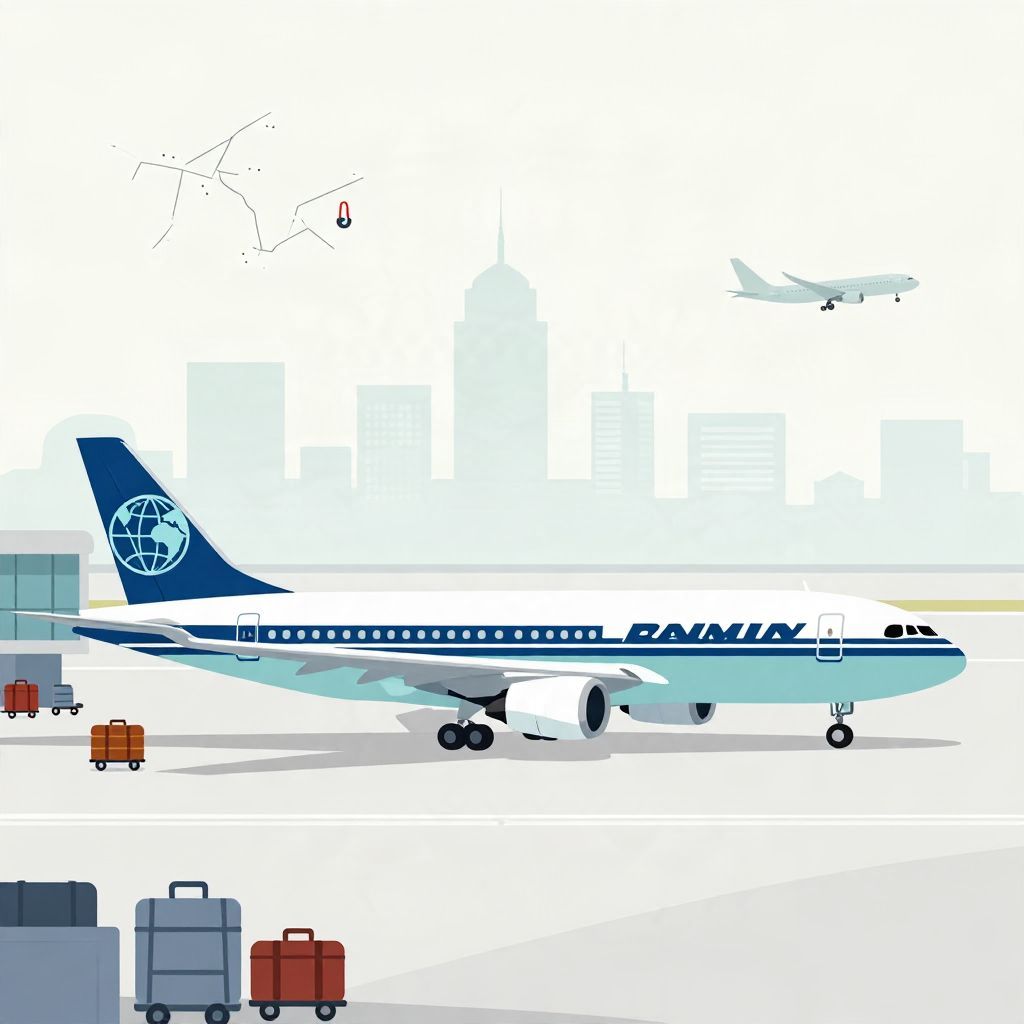
Pan American World Airways, better known as Pan Am, did not collapse because of one single mistake. It went out of business in 1991 after decades of mounting financial pressure, rising competition, costly expansion, and a series of shocks that weakened the airline’s core international network.
Its story reflects the broader transformation of commercial aviation in the late 20th century: deregulation, fuel crises, changing travel patterns, and the growing dominance of larger, more diversified carriers. Pan Am’s fall was dramatic, but it was also the result of long-term structural problems.
Why Did Pan Am Go Out of Business?
Pan Am went out of business because it was burdened by high operating costs, lost its domestic route base, suffered from poor strategic decisions, and was hit hard by external crises such as fuel-price spikes and the 1988 Lockerbie bombing. By 1991, it could no longer compete with lower-cost rivals or sustain its debts.
The Rise of Pan Am and the Origins of Its Problems
Founded in 1927, Pan Am became the most famous American international airline of the 20th century. For decades it was closely associated with long-distance air travel, global prestige, and the expansion of U.S. commercial aviation. But the very system that made Pan Am powerful also made it vulnerable: it depended heavily on international routes and on a regulatory environment that changed dramatically after the 1970s.
A prestige airline with expensive ambitions
Pan Am built its reputation by serving overseas markets and symbolizing modern air travel. It invested heavily in aircraft, airports, hotels, and global branding. That strategy worked well when international flying was still relatively exclusive and highly regulated. As air travel expanded, however, Pan Am’s costs remained high while competitors became leaner and more flexible.
Dependence on international routes
Unlike airlines with strong domestic networks, Pan Am had limited protection when the market shifted. International routes were important, but they were also more exposed to diplomatic restrictions, currency issues, and geopolitical instability. When Pan Am lost access to a secure domestic feeder system, it became harder to fill seats and maintain profitability.
How Deregulation Hurt Pan Am
The most important turning point came with airline deregulation in the United States. The Airline Deregulation Act of 1978 ended the long era in which the government tightly controlled routes and fares. This created intense competition, especially on domestic routes, and favored airlines that could quickly adapt their networks and pricing.
Why deregulation mattered
Before deregulation, Pan Am had been able to rely on a protected international identity and a favorable market structure. After deregulation, airlines competed more aggressively on price and route structure. Pan Am struggled to build a strong domestic system to feed its international flights, while rivals used domestic hubs to capture passengers more efficiently.
Pan Am’s failed domestic strategy
Pan Am tried to expand into domestic flying, but it never developed the kind of broad, profitable U.S. network that airlines such as Delta, American, and United used to support international service. Without a strong domestic base, Pan Am had trouble generating steady revenue. It was often forced to compete in markets where it lacked the scale or cost structure to win.
Financial Weakness and Costly Expansion
Pan Am’s decline was not just about competition. The airline also made expensive decisions that increased its financial strain. It bought assets, expanded into new markets, and pursued ambitious growth strategies at moments when it needed stability more than scale.
High costs and debt
Pan Am’s operating costs were consistently high. It had a large international bureaucracy, expensive labor commitments, and a fleet and infrastructure that required major capital spending. As profits weakened, debt became harder to manage. Once an airline is trapped in a cycle of borrowing to cover losses, even a few bad years can become dangerous.
Asset sales and short-term fixes
To survive, Pan Am sold off valuable pieces of its business, including parts of its route network and other assets. These moves provided temporary cash but reduced the airline’s long-term strength. In effect, Pan Am often sold future earning power to pay for present losses.
Competition from Leaner Airlines
By the 1980s, Pan Am faced rivals that were better positioned for the new airline economy. Many competitors had lower costs, stronger domestic networks, and more efficient hub-and-spoke systems. Pan Am’s brand was still famous, but fame did not guarantee profitability.
Rivals with better route systems
Airlines such as Delta and Northwest built networks that connected domestic and international travel more effectively. They could funnel passengers through major hubs and keep planes fuller. Pan Am, by contrast, had to piece together a network that was often less integrated and less profitable.
Labor and fleet pressures
Airlines are capital-intensive businesses, and Pan Am was especially exposed to the costs of aircraft acquisition, maintenance, and staffing. In a period of rising competition, these fixed costs became harder to absorb. When revenue slipped, Pan Am had less flexibility than newer or more focused carriers.
The Shock of Fuel Prices and Market Instability
External events also weakened Pan Am. The airline industry is highly sensitive to fuel prices, recessions, and global instability. Pan Am had to endure several such shocks during the 1970s and 1980s, each of which made recovery more difficult.
Oil crises and economic turbulence
The oil shocks of the 1970s raised operating costs across the airline industry. Because fuel is one of the largest expenses in aviation, sudden price increases can erase profit margins quickly. Pan Am, already burdened by structural weaknesses, was less able than some competitors to absorb these shocks.
International uncertainty
Pan Am’s identity as a global airline meant it was especially vulnerable to international instability. Changes in foreign exchange rates, diplomatic tensions, and shifts in travel demand could quickly affect performance. A company built on worldwide prestige was also exposed to worldwide risk.
The Lockerbie Bombing and the Final Blow
One of the most devastating events in Pan Am’s history was the 1988 bombing of Pan Am Flight 103 over Lockerbie, Scotland. The attack killed 270 people and became one of the deadliest terrorist incidents in aviation history. It did not by itself cause Pan Am’s failure, but it severely damaged the airline’s finances and reputation.
Why the bombing mattered so much
The disaster brought enormous legal, insurance, and public-relations costs. It also hurt consumer confidence. For an airline already under financial stress, the bombing was catastrophic. The event intensified Pan Am’s losses at a moment when it had little room to absorb another major setback.
A company already under strain
It is important to be precise here: Pan Am was not healthy before Lockerbie and then suddenly destroyed by a single tragedy. Rather, the bombing struck an airline that was already weakened by years of poor performance, debt, and competitive disadvantage. The attack accelerated a decline that was already well underway.
The Final Years: 1990 to 1991
By the early 1990s, Pan Am had become a company trying to survive through repeated restructuring. It sold major assets, cut routes, and searched for buyers or partners. These measures could not restore the airline’s underlying strength.
Why the end came in 1991
In 1991, during a difficult period for the airline industry and the broader economy, Pan Am finally ran out of options. It filed for bankruptcy and ceased operations later that year. Its remaining valuable routes and assets were sold off, and parts of the company were absorbed by other airlines. The Pan Am name survived as a cultural symbol, but the airline itself was gone.
What was left behind
Pan Am’s collapse was not the disappearance of a minor company. It marked the end of a brand that had once represented the glamour and reach of American aviation. Its failure became a warning example in business history: even a famous company can fail if it cannot adapt to structural change.
What Pan Am’s Collapse Reveals About Airline History
Pan Am’s failure helps explain how the airline industry changed in the late 20th century. The era of glamorous, globally famous carriers gave way to a more competitive, cost-driven system. Airlines that survived were usually those with efficient networks, diversified revenue, and the ability to adapt quickly to deregulation and market pressure.
Not just bad luck, but a changing industry
Pan Am’s story is often told as a tragic fall from grace, but that oversimplifies the history. The airline was not simply unlucky. It was caught between an old model of regulated prestige flying and a new model of competitive mass aviation. Its business structure was increasingly out of step with the industry around it.
A cautionary business case
Historians and business analysts often use Pan Am as an example of how legacy institutions can struggle when the rules of their market change. Brand strength matters, but it cannot compensate indefinitely for weak finances, poor route structure, and repeated shocks.
Conclusion
Pan Am went out of business because a once-dominant international airline could not survive the combined effects of deregulation, high costs, weak domestic support, fierce competition, and major crises such as the Lockerbie bombing. Its collapse in 1991 was the end of a long decline, not a single sudden failure. For readers interested in the wider history of aviation and global business change, this story connects naturally to the rise of commercial flight and the transformation of the modern airline industry.