
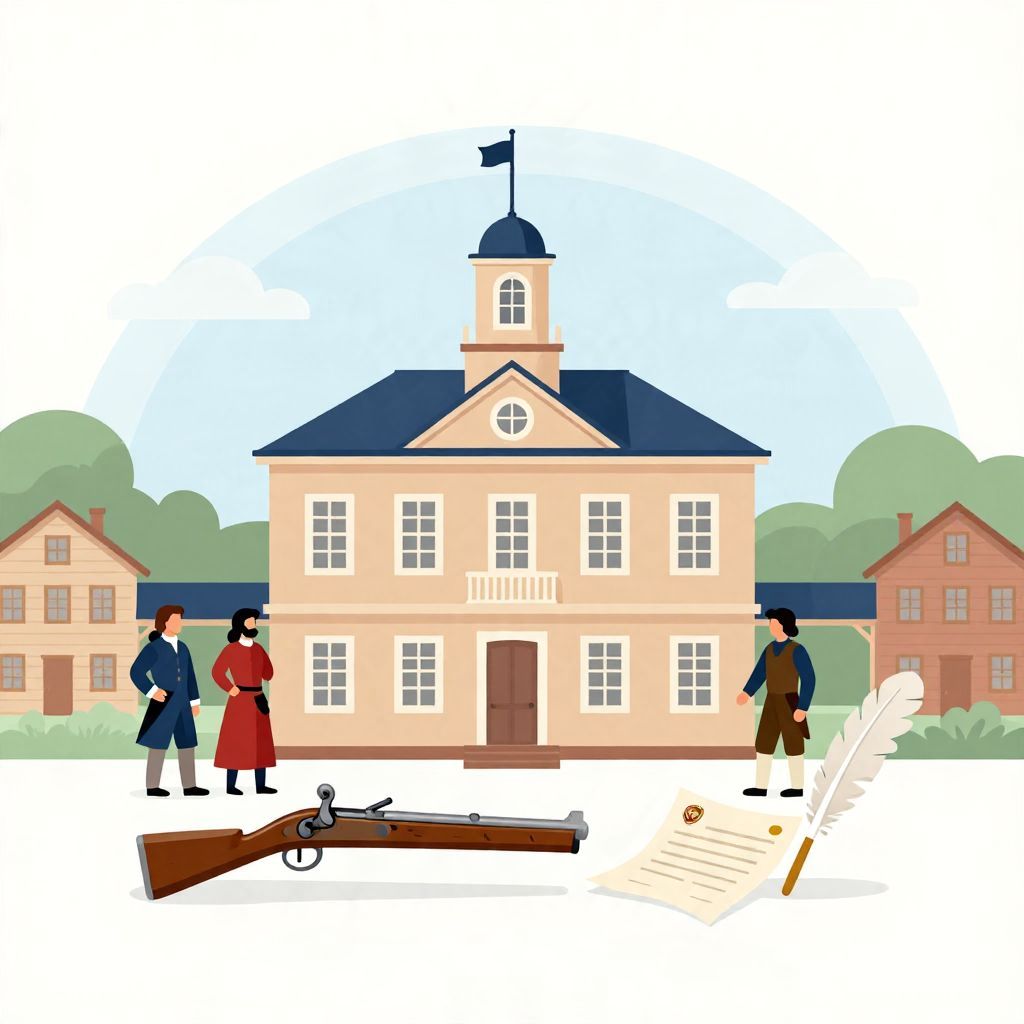
What is 2A? In historical writing and public debate, “2A” usually means the Second Amendment to the United States Constitution. It is one of the most discussed parts of the Bill of Rights because it addresses the right to keep and bear arms, a phrase that has been interpreted in different ways over time.
To understand 2A historically, it helps to look at the political fears, legal traditions, and revolutionary experience that shaped it in the late 18th century. The amendment was not created in a vacuum; it reflected English constitutional ideas, colonial militias, and American concerns about standing armies and federal power.
What Is 2A in historical terms?
The Second Amendment, ratified in 1791, states that “a well regulated Militia, being necessary to the security of a free State, the right of the people to keep and bear Arms, shall not be infringed.” Historically, it emerged from the founding era’s fear of tyranny, the importance of militias, and debates over how much power the new federal government should have over armed force.
The origins of 2A in the founding era
The roots of 2A lie in the political world of the American Revolution and the years immediately after independence. Americans had fought a war against a monarchy they believed could abuse military power, and many leaders wanted to prevent the new national government from becoming too strong. The amendment was part of the Bill of Rights, added to reassure skeptics that the Constitution would not erase individual liberties or state authority.
English and colonial background
American ideas about arms did not begin in 1787. English legal tradition included the 1689 English Bill of Rights, which recognized that Protestants could have arms “suitable to their conditions and as allowed by law.” In the colonies, armed citizen militias were common, and many white male colonists saw weapons as part of civic duty, household defense, and frontier life. These traditions influenced later American thinking, though they did not settle the meaning of the amendment.
Why the founders cared about militias
In the 18th century, a militia meant ordinary men who could be called to serve in defense of the community. Many Americans believed militias were preferable to permanent professional armies, which they associated with despotism. The Revolutionary War reinforced this suspicion: British troops were seen as instruments of imperial control, while local militias symbolized resistance and self-government. At the same time, experience also showed that militias were unevenly trained and sometimes unreliable, which made the issue more complicated than simple praise or rejection.
How the Second Amendment was written
The wording of 2A came out of congressional debate in 1789. James Madison drafted proposed amendments after the Constitution’s ratification, partly to answer Anti-Federalist critics who feared the new federal government might disarm the people or neglect state militias. Congress revised Madison’s draft before sending it to the states, and the final version was ratified in 1791 along with the rest of the Bill of Rights.
What the text says
The amendment contains two linked ideas: a prefatory clause about a “well regulated Militia” and an operative clause about “the right of the people to keep and bear Arms.” Historians and legal scholars have long debated how these parts relate. Some argue the militia clause limits the amendment’s meaning; others say it explains one reason the right was protected but does not exhaust its scope. The historical record shows that both collective and individual concerns mattered in the founding era.
Why the language is debated
Modern readers often assume the amendment must have one obvious meaning, but 18th-century political language was more flexible than modern legal language. “Bear arms” could refer to military service, but it could also be used more broadly. “Militia” could mean a legal institution, a body of armed citizens, or both. Because of this, historians usually approach 2A by asking how people at the time understood armed citizenship, state defense, and federal authority rather than assuming a single timeless definition.
2A and the early republic
In the early United States, the Second Amendment did not immediately become the center of national controversy that it is today. Instead, it existed within a broader system in which states regulated militias, firearms ownership, and public order in different ways. The federal government remained relatively small, and most day-to-day regulation of weapons was local or state based.
Militias, slavery, and control
It is important to note that armed force in the early republic was not evenly shared. In slaveholding states, militias also served to police enslaved people and suppress revolts. This means the history of 2A is tied not only to liberty but also to systems of racial control. Any historical account of the amendment should recognize that the right to arms operated within a society that denied many people full political rights.
State laws and practical limits
Even in the 18th and 19th centuries, there were limits on weapon use. Laws could regulate carrying arms in certain circumstances, punish misuse, and require militia service or storage of weapons. The historical reality was not a world without rules; rather, it was a world in which the meaning of armed citizenship varied by place, class, race, and circumstance.
How interpretations of 2A changed over time
For much of American history, the Second Amendment was not litigated in the same way it is today. Its modern prominence grew in the 20th century, especially as the federal government expanded and gun regulation became a major political issue. Over time, courts, lawmakers, and activists increasingly treated 2A as a central constitutional question rather than a relatively quiet part of the Bill of Rights.
From the 19th century to the 20th century
After the Civil War, constitutional debates about arms also intersected with Reconstruction and the struggle for civil rights. The Fourteenth Amendment raised questions about whether the Bill of Rights should limit state governments as well as the federal government. In practice, however, the Second Amendment was not broadly applied against the states for much of American history. That changed gradually in the modern era through legal interpretation and incorporation doctrine.
The modern legal debate
By the late 20th and early 21st centuries, the meaning of 2A had become a major constitutional issue. One side emphasized the amendment’s connection to militia service and collective security; another emphasized an individual right to possess firearms. The Supreme Court’s modern rulings, especially in the 2000s and 2010s, gave greater weight to the individual-right interpretation. Still, historical scholarship continues to examine how much those rulings reflect founding-era meaning versus later constitutional development.
Key facts about 2A
- What it is: The Second Amendment to the U.S. Constitution.
- Ratified: 1791, as part of the Bill of Rights.
- Main subject: The right to keep and bear arms, linked in the text to a well regulated militia.
- Historical context: Fear of standing armies, revolutionary experience, and debates over federal power.
- Why it matters: It has become one of the most contested constitutional provisions in American history.
Common misunderstandings about 2A
Because 2A is often discussed in modern political arguments, it is easy to oversimplify its history. A careful historical approach avoids treating the amendment as either a blank check for unlimited gun ownership or as a meaningless relic. The founding-era evidence points to a real concern with armed citizens and militia service, but it also reflects a society with different assumptions about law, violence, and political participation.
It was not written in a modern context
The framers did not know modern firearms, modern policing, or modern constitutional law. Their world included muskets, local militias, and a fragile new republic. That does not make the amendment irrelevant today, but it does mean that historical interpretation must be careful about projecting present-day assumptions backward onto the 18th century.
It was never separate from politics
2A has always been political because it touches on power: who may possess force, who may organize it, and who may regulate it. In the founding era, those questions were tied to republican government. In later periods, they became tied to federalism, civil rights, public safety, and constitutional interpretation. The amendment’s history is therefore also the history of American arguments about liberty and authority.
Why 2A still matters historically
The Second Amendment remains important because it reveals how the United States was founded: through a mixture of revolutionary suspicion, constitutional compromise, and competing ideas about freedom. Its long history shows that constitutional meaning is not fixed in a simple way. Instead, it is shaped by text, context, institutions, and changing national debates.
So, what is 2A? Historically, it is the Second Amendment, a 1791 constitutional guarantee rooted in the founding era’s concerns about militias, tyranny, and political power. Its meaning has been debated from the beginning and continues to evolve in American law and culture. For related context, see what two rights are in the Declaration of Independence and what the Fifteenth Amendment is.