
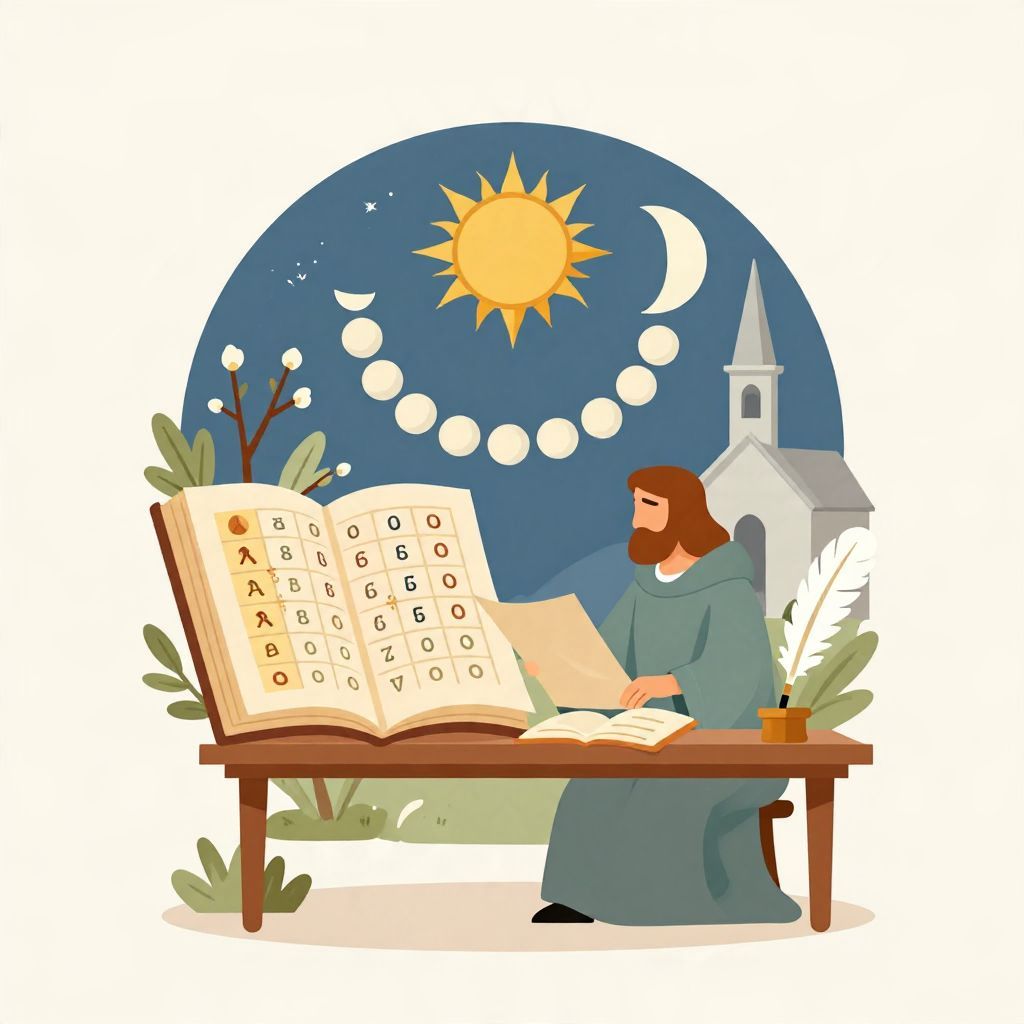
Why does Easter change every year? The short answer is that Easter is tied to the Moon and the spring equinox, not to a fixed calendar date. That makes it a “movable feast,” meaning its date shifts within a range each year.
The deeper reason is historical: Easter’s timing was shaped by early Christian efforts to connect the resurrection of Jesus with the Jewish Passover, while also creating a common date for churches spread across the Roman world and beyond.
Why does Easter change every year?
Easter changes because it is calculated using a lunisolar rule: it falls on the first Sunday after the first full moon on or after the spring equinox. In practice, that means Easter can land anywhere between March 22 and April 25 in Western Christianity.
The basic rule in plain language
The modern Western date for Easter is not set by a fixed day of the month. Instead, church calendar rules look to the spring equinox, then to the next full moon, and then to the following Sunday. This is why Easter can be early some years and late in others.
For example, if the first full moon after the equinox comes quickly, Easter arrives early. If the full moon comes later, Easter is pushed back. The result is a date that moves from year to year while still staying within a limited seasonal window.
Why Sunday matters
Sunday became central because Christians came to associate it with the day of Jesus’ resurrection. So even though the Moon helps determine the timing, the final celebration is always placed on a Sunday. That combination of lunar and weekly cycles is what makes Easter unusual among major holidays.
Where did this dating system come from?
The Easter date developed out of early Christian history in the first centuries after Jesus’ death. Christians did not all celebrate the resurrection in the same way at first. Some communities linked it closely to the Jewish Passover date, while others preferred Sunday, the day they believed Jesus rose from the dead.
Passover and the earliest Christian communities
Easter’s origins are tied to Passover because the New Testament places Jesus’ crucifixion and resurrection in relation to that Jewish festival. In the earliest Christian communities, there was no single universal calendar rule. Different regions used different practices, and this created disagreement.
Some Christians, especially in parts of Asia Minor, observed the feast on the 14th day of the Jewish month of Nisan, regardless of the weekday. Others insisted that the celebration should always be on Sunday. This dispute became one of the major calendar controversies of the early church.
The Council of Nicaea and the push for unity
In the early 4th century, Christian leaders sought a more unified practice. The First Council of Nicaea in 325 did not leave behind a simple surviving formula in the way later summaries sometimes imply, but it did help establish the principle that Easter should be celebrated on a common Sunday date rather than directly on the Jewish Passover calendar.
From that point on, churches increasingly used astronomical and ecclesiastical calculations to determine the date. The goal was both theological and practical: Christians wanted a shared feast day across a growing and geographically diverse religion.
Why the Moon is part of Easter’s date
The Moon matters because the calendar behind Easter reflects ancient timekeeping. The Jewish calendar is lunisolar, meaning it tracks both the Moon and the solar year. Early Christians inherited a world in which religious festivals were often linked to lunar cycles, and Easter’s calculation preserved that connection.
The spring equinox and seasonal symbolism
The spring equinox, when day and night are roughly equal, became an important reference point because it marks the seasonal turning toward spring in the northern hemisphere. In Christian symbolism, spring also fits themes of renewal, life, and resurrection.
However, the equinox used in church calculations is not always the exact astronomical equinox observed in nature. The Western church traditionally uses March 21 as the ecclesiastical equinox for determining Easter, even though the real astronomical equinox can vary slightly from year to year.
Full moon: astronomical and ecclesiastical
The “full moon” used for Easter is also not always the same as the exact full moon you might see in the sky. The church calendar uses tables and rules to estimate the Paschal full moon, which is the first full moon after the ecclesiastical equinox. This is one reason the date can differ slightly from what people expect if they are watching the sky.
How the calendar makes Easter move
The Gregorian calendar, introduced in 1582 under Pope Gregory XIII, is the system most Western churches now use to calculate Easter. It refined the older Julian calendar because the Julian system had drifted away from the solar year over time.
Julian calendar versus Gregorian calendar
Under the Julian calendar, the date of Easter gradually became less aligned with the seasons. The Gregorian reform corrected this by adjusting leap-year rules and improving the calendar’s fit with the solar year. That reform changed how Easter was calculated in the Western church.
Eastern Orthodox churches often still use the Julian calendar or related traditional methods for calculating Easter, which is why Orthodox Easter frequently falls on a different date from Western Easter. The difference is not because one side celebrates a different resurrection, but because they use different calendar systems.
Why Easter can fall on different dates in East and West
- Western Christianity generally uses the Gregorian calendar.
- Eastern Orthodox Christianity often uses the Julian calendar for Easter calculations.
- Both traditions seek the first Sunday after the Paschal full moon.
- The different calendars shift the result, sometimes by one week and sometimes by several weeks.
What Easter’s changing date meant historically
Easter’s moving date was more than a technical issue. In medieval and early modern Europe, it affected the rhythm of worship, fasting, travel, markets, and public life. Because Lent ends with Easter, the date also determined when a long season of fasting and preparation would conclude.
Impact on the Christian year
Once Easter was fixed as a movable feast, many other church observances became movable too. Ascension Day and Pentecost are counted from Easter, so their dates shift as well. This made the Christian liturgical year a dynamic cycle rather than a fixed set of anniversaries.
In practical terms, Easter shaped the timing of sermons, pilgrimages, baptisms, and local festivals. Its date mattered to rulers and ordinary people alike because the church calendar influenced social and economic life across much of Christendom.
Why standardization mattered
As Christianity spread, a common Easter date became a sign of unity. Disagreement over the feast could symbolize deeper tensions about authority, tradition, and identity. The calendar question was therefore partly theological, partly political, and partly administrative.
Common misunderstandings about Easter’s date
Many people assume Easter is simply “the first Sunday after the first full moon of spring,” but that is only a simplified version. The historical and ecclesiastical rules are more specific, and they do not always match the astronomical sky exactly.
It is not based on the Jewish Passover date alone
Although Easter is historically connected to Passover, it is not set by the Jewish calendar in a direct one-to-one way today. The Christian calculation became its own system over time, especially after the early church sought a unified observance across different regions.
It is not the same everywhere
Because of different calendar traditions, Easter does not always fall on the same Sunday for all Christians. This can surprise people who assume there is one universal date. In reality, Easter’s date reflects a long history of calendar reform, religious debate, and regional practice.
Why Easter still changes today
Easter still changes because the historical system behind it has never been replaced by a fixed civil date. Churches have kept the old method because it preserves the feast’s connection to the biblical story, the seasons, and the ancient rhythm of the lunar calendar.
That means Easter remains one of the clearest examples of how history survives in everyday life. A holiday many people experience as a spring celebration is also a living reminder of early Christian debates, Roman-era calendar traditions, and the long effort to organize time itself.
Conclusion
Easter changes because it was designed to follow a religious calendar rule based on the spring equinox, the full moon, and Sunday, rather than a fixed date. That rule grew out of early Christian history, was shaped by efforts to unify practice, and was later adjusted by calendar reform. If you want to explore more, see why Easter is different every year and the broader historical background in when Jesus’ birthday was.