
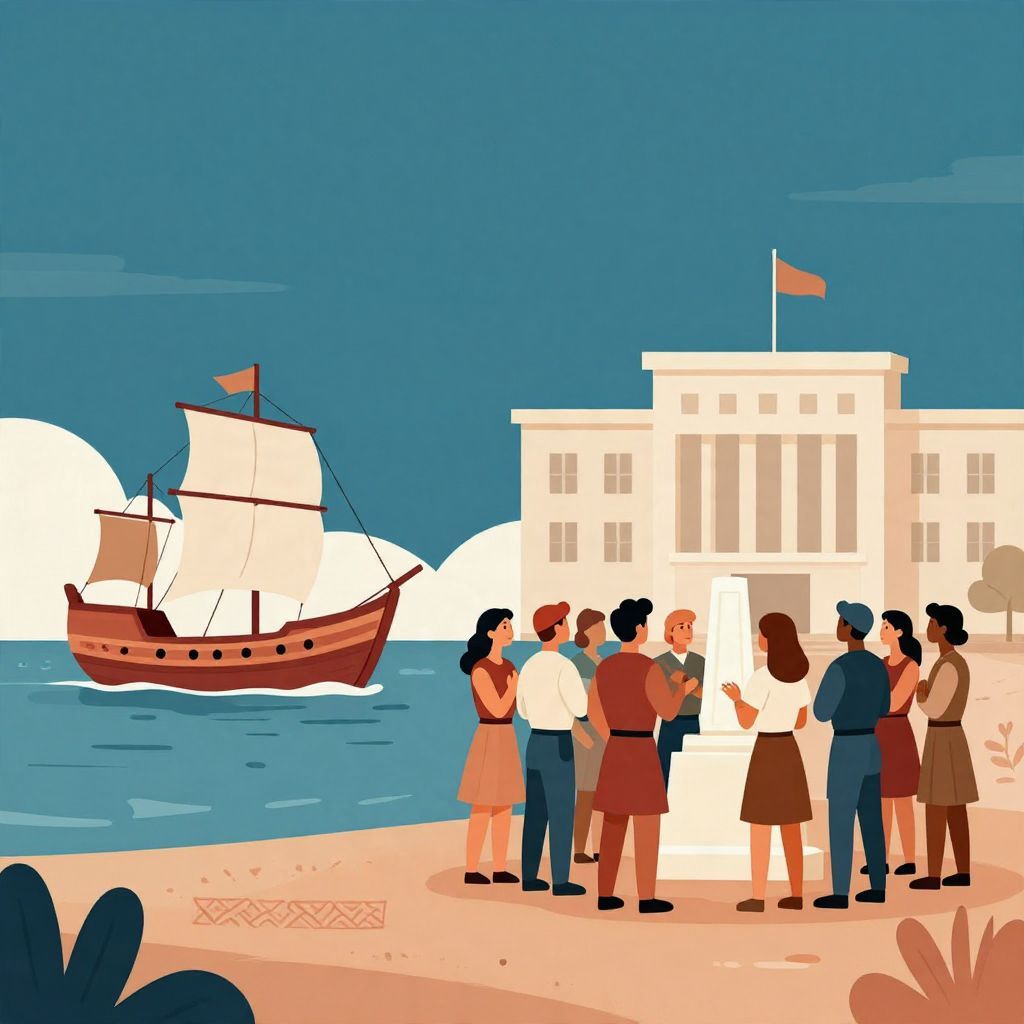
Why is Columbus Day no longer celebrated in many places? The short answer is that the holiday has become deeply controversial as more people have recognized the violence, dispossession, and disease that followed Christopher Columbus’s arrival in the Americas in 1492. For many communities, especially Indigenous peoples, the day no longer represents discovery or achievement.
Instead, it has come to symbolize the beginning of European colonization and the long history of suffering that followed. That shift in public memory has led some governments, schools, and cities to replace Columbus Day with Indigenous Peoples’ Day or to stop observing it altogether.
Why Is Columbus Day No Longer Celebrated?
Columbus Day is no longer celebrated in many places because its traditional meaning has been challenged by historical evidence and by changing views about colonialism. Christopher Columbus did not “discover” an empty world; he arrived in lands already inhabited by millions of Indigenous people. His voyages helped open the way to conquest, forced labor, and epidemic disease, so many people now see the holiday as inappropriate or offensive.
The Historical Background of Columbus Day
Columbus Day began as a commemoration of Columbus’s 1492 voyage across the Atlantic, which was sponsored by the Spanish monarchy. In the centuries after that voyage, Columbus became a symbol of European expansion. In the United States, the holiday grew in popularity during the 19th and early 20th centuries, especially among Italian American communities who saw Columbus as a figure of pride and inclusion in American public life.
That history matters because Columbus Day was never simply a neutral celebration of exploration. It was also shaped by politics, immigration, and national identity. In 1937, it became a federal holiday in the United States, reflecting a period when Columbus was widely portrayed as a heroic explorer rather than as part of a broader colonial system.
Why the holiday seemed important for so long
For many decades, schoolbooks and public ceremonies presented Columbus as a brave navigator who “opened” the Americas to Europe. That story fit older nationalist narratives that emphasized exploration, empire, and European achievement. It also helped some immigrant groups claim a place in American civic life by honoring a figure already accepted in mainstream culture.
What Changed in Public Memory?
The main change is that historians, activists, and Indigenous communities have pushed the public to look at the consequences of Columbus’s arrival, not just the voyage itself. Columbus’s expeditions were followed by conquest in the Caribbean, the seizure of land, the enslavement and exploitation of Indigenous people, and catastrophic population loss from war, forced labor, and disease. While Columbus was not solely responsible for everything that followed, his voyages were part of the beginning of that process.
As a result, many people now argue that celebrating Columbus without acknowledging these consequences distorts history. The holiday has become a debate about what should be honored in public memory: exploration, or the beginning of colonization and Indigenous suffering.
Indigenous resistance to the holiday
Indigenous activists have criticized Columbus Day for decades. For them, the holiday does not mark a proud national origin story but the start of invasion and dispossession. Their arguments gained wider attention in the late 20th century as Native rights movements, scholarship, and public education brought more attention to Indigenous perspectives.
This is why the issue is not just about one historical person. It is about whose history gets centered in national holidays and whose experience gets minimized or erased.
How Columbus Day Became Indigenous Peoples’ Day
One of the biggest reasons Columbus Day is no longer celebrated in some places is that many governments and institutions have replaced it with Indigenous Peoples’ Day. This alternative holiday recognizes Native communities, their histories, and their continuing presence rather than celebrating a European explorer.
Local and state governments in the United States began adopting Indigenous Peoples’ Day in the late 20th century, and the movement expanded over time. Some places observe both holidays, while others have officially replaced Columbus Day entirely. The shift reflects a broader historical reassessment of colonization and a desire to honor Indigenous resilience and survival.
Why replacement, not just addition?
Some advocates argue that simply adding Indigenous Peoples’ Day alongside Columbus Day does not fully address the problem. They believe Columbus should not be honored at all because the holiday’s original meaning is tied to conquest and colonial violence. Others prefer keeping Columbus Day while also recognizing Indigenous history. The debate continues because it involves competing interpretations of the past.
Was Columbus “Good” or “Bad”?
History is rarely that simple. Columbus was a skilled navigator and an important figure in the history of Atlantic exploration, but he was also involved in brutal colonial practices. He did not “discover” the Americas in the literal sense, since people had lived there for thousands of years. And the effects of his voyages cannot be separated from the violence that followed.
Modern historians usually avoid treating Columbus as either a pure hero or a pure villain. Instead, they place him in the context of 15th-century empire-building, European competition, and the expansion of global trade. That broader view helps explain why public celebration of Columbus has become so contested.
What historians emphasize today
- Columbus’s 1492 voyage connected Europe and the Americas more directly than before.
- His expeditions were part of Spanish imperial expansion, not a peaceful exchange.
- Indigenous peoples already lived in the Americas in diverse societies and nations.
- European colonization led to dramatic demographic and cultural upheaval.
Why Many Schools and Cities Stopped Observing It
Schools, cities, and states have increasingly changed how they mark the holiday because public education now includes more attention to Indigenous history and colonial violence. In many communities, educators and civic leaders concluded that Columbus Day no longer reflected the values they wanted to teach. Some institutions also wanted to avoid controversy by replacing the holiday with a broader observance.
There is also a practical reason: holidays are public statements. When a city or school district stops celebrating Columbus Day, it is often signaling that the older narrative no longer fits current historical understanding or community values.
Different responses across the United States
The holiday has not disappeared everywhere. In some states and localities, Columbus Day is still observed, while in others it has been renamed or replaced. That uneven pattern shows that the debate is ongoing rather than settled. The meaning of the day depends heavily on local history, politics, and demographics.
Why the Debate Is So Emotional
Columbus Day touches on identity, memory, and power. For many Italian Americans, the holiday once offered a way to claim respect in a society that had often discriminated against them. For many Indigenous people, however, the same holiday celebrates the beginning of centuries of oppression. Both histories are real, which is why the debate is difficult and persistent.
The controversy is also about how nations tell their origin stories. Public holidays do more than mark time; they teach people what to admire. When historical scholarship and public values change, holidays often come under pressure to change as well.
The Larger Historical Context
Columbus Day is no longer celebrated in many places because historical interpretation has shifted from a triumphal story of discovery to a more complex account of encounter, conquest, and colonization. That shift did not happen overnight. It developed through Indigenous activism, changing scholarship, and broader social movements that questioned older national myths.
In that sense, the decline of Columbus Day is part of a larger historical pattern: societies often revise their public commemorations when they reassess the people and events they once honored. The holiday’s decline does not erase Columbus from history, but it does show that historical memory is always changing.
For readers interested in the broader meaning of public memory and contested history, see No One Is Illegal on Stolen Land and Why Do We Celebrate?. The key takeaway is simple: Columbus Day is no longer celebrated in many places because more people now recognize that the holiday honors a colonial beginning, not an unproblematic discovery.