
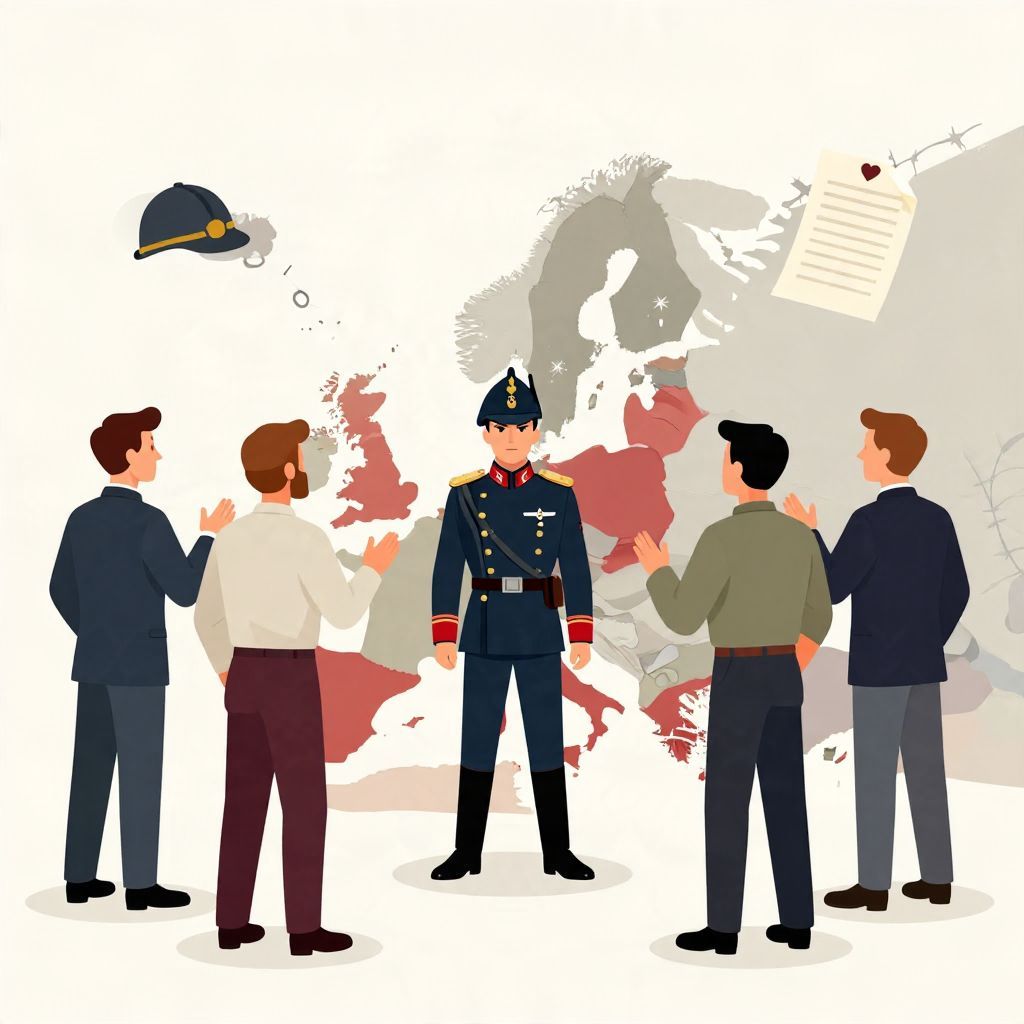
Why was Germany blamed for World War I? The short answer is that the defeated Allied powers, especially Britain and France, saw Germany as the most aggressive and destabilizing power in the crisis that led to war in 1914. Germany’s military planning, support for Austria-Hungary, and later conduct in the war made it appear central to the conflict’s outbreak.
That blame was also shaped by the peace settlement after the war. The Treaty of Versailles assigned responsibility to Germany and its allies, but historians today usually see World War I as the result of multiple causes, shared decisions, and a wider European crisis rather than a single nation’s actions alone.
Why Was Germany Blamed For WW1?
Germany was blamed for World War I because its leaders backed Austria-Hungary in the July Crisis, pursued an aggressive military and diplomatic strategy, and entered the war with a powerful army and invasion plans that widened the conflict. After 1918, the peace settlement formalized this view by placing legal responsibility largely on Germany.
The July Crisis: How Germany Helped Turn a Balkan Crisis Into a World War
The immediate chain of events began with the assassination of Archduke Franz Ferdinand in Sarajevo on 28 June 1914. Austria-Hungary wanted to punish Serbia, and Germany gave its ally what became known as the “blank cheque”: strong support even if war with Russia followed. That encouragement made Austria-Hungary more willing to act harshly.
The blank cheque and escalation
Germany did not start the crisis alone, but its leaders chose to back Austria-Hungary without restraint. They believed a firm show of force might preserve the alliance system and strengthen Germany’s position in Europe. Instead, the decision helped escalate a regional dispute into a wider war involving Russia, France, and then Britain.
Why this mattered to later blame
Because Germany was the strongest power supporting Austria-Hungary at the critical moment, many contemporaries and later observers saw it as the key enabler of war. This was especially important in 1919, when the victors needed a clear explanation for the devastation of the conflict and the huge human cost.
Germany’s Military Strategy Made It Look Like the Aggressor
Germany’s war plans also shaped perceptions of blame. The best known was the Schlieffen Plan, which assumed that Germany would fight France and Russia by quickly defeating France first through Belgium. When war came, Germany invaded neutral Belgium in August 1914, turning a continental crisis into a moral and legal outrage in the eyes of Britain and much of the world.
The invasion of Belgium
Belgium’s neutrality had been guaranteed by European powers, including Britain. Germany’s decision to violate that neutrality made it easier for Britain to enter the war and gave the Allies a powerful argument: Germany had not merely defended itself, but had launched an expansionist attack that ignored international commitments.
War planning and preemption
German leaders argued that they were acting defensively, fearing encirclement by France and Russia. That fear was real, but their military planning depended on rapid offensive action. To outside observers, and especially after the invasion of Belgium, German strategy looked less like reluctant defense and more like deliberate escalation.
German Power and the Fear of Militarism
Before 1914, Germany was widely viewed as Europe’s rising military and industrial giant. Its army was admired and feared, its navy was expanding, and its political culture often seemed dominated by military values. This fed the idea that Germany was uniquely responsible for turning diplomacy into force.
Militarism in imperial Germany
Militarism means the belief that military strength should play a central role in national policy and society. In the years before World War I, Germany invested heavily in its army and navy, and many foreign leaders interpreted that buildup as evidence of aggressive intent. This did not mean every German citizen wanted war, but it affected how the country was perceived abroad.
The naval race with Britain
Germany’s naval expansion under Kaiser Wilhelm II alarmed Britain and intensified competition between the two powers. The rivalry did not cause the war by itself, but it deepened distrust. When the crisis of 1914 arrived, Britain was less willing to trust German assurances because relations had already deteriorated.
German Diplomacy and the Alliance System
World War I emerged from a tense alliance system, and Germany played a major role in shaping it. In the late 19th and early 20th centuries, German policy often aimed to isolate France and secure Austria-Hungary as a dependable partner. That strategy helped create blocs that made a local conflict more likely to spread.
Encirclement and insecurity
German leaders feared encirclement by hostile powers, especially France and Russia. This fear was not imaginary: Russia was modernizing its army, and France had an alliance with Russia. But Germany’s response often increased tension rather than reducing it. By relying heavily on Austria-Hungary and preparing for a two-front war, Germany made Europe more brittle and crisis-prone.
Miscalculation, not simple master planning
It is important not to oversimplify. Many historians now stress that German leaders did not necessarily plan a world war in advance. Rather, they made a series of risky choices, believing war might be short, manageable, or even useful. Those calculations were disastrously wrong, but they help explain why Germany became the main target of blame.
The Treaty of Versailles Turned Blame Into Official Policy
After Germany’s defeat in 1918, the peace negotiations at Versailles gave legal form to the moral judgment already common among the victors. Article 231, often called the “war guilt clause,” stated that Germany and its allies were responsible for all the loss and damage caused by the war. This clause became one of the most controversial parts of the treaty.
Why the Allies wanted a blame clause
The Allies wanted Germany to accept responsibility because they believed it had launched the war and because they needed a legal basis for reparations. France, in particular, had suffered enormous destruction. Britain and other Allied governments also faced public pressure to ensure Germany was held accountable.
How Germans reacted
Many Germans saw the clause as humiliating and unfair. They argued that other powers, including Austria-Hungary, Russia, Serbia, France, and Britain, had also contributed to the crisis. This dispute became a major source of resentment in the Weimar Republic and later fed nationalist politics in Germany.
Was Germany Really Solely Responsible?
No. Modern historical scholarship generally rejects the idea that Germany alone caused World War I. The war grew out of several overlapping forces: imperial rivalry, nationalism, alliance commitments, arms races, imperial competition, and a diplomatic system that rewarded risk-taking. Germany mattered greatly, but it was part of a broader European breakdown.
Shared responsibility among the great powers
Austria-Hungary chose to confront Serbia. Russia mobilized to support Serbia and protect its influence in the Balkans. France backed Russia. Britain’s diplomacy was cautious and sometimes ambiguous. Serbia itself was not the cause of a world war, but the assassination in Sarajevo came from a volatile nationalist environment. In that sense, blame was distributed unevenly rather than concentrated in one place.
Why Germany still stands out
Even with shared responsibility, Germany stands out for several reasons: it gave Austria-Hungary decisive backing, it was prepared for rapid offensive war, it violated Belgian neutrality, and it was the strongest military power in the Central Powers. These actions made Germany the most visible and politically useful target for blame after 1918.
How Propaganda and Memory Shaped the Story
Public memory of the war also influenced blame. During the conflict, Allied propaganda portrayed Germany as brutal and militaristic, especially after reports of atrocities in Belgium. Some accounts were exaggerated or simplified, but they helped build a lasting image of Germany as the war’s chief aggressor.
Victors write the first draft of history
After a war, the winning side usually has greater influence over the official record, especially in diplomacy and public messaging. In the case of World War I, the victors had strong reasons to present Germany as responsible: to justify reparations, to explain the enormous losses, and to reassure their own publics that the sacrifice had meaning.
Later historians revisited the question
Later scholarship has shown that the road to war was more complex than the Versailles settlement suggested. Historians continue to debate the degree of German responsibility, but most agree that the war cannot be explained by a single nation’s guilt alone. Germany was central, but not alone.
The Lasting Significance of the Blame Question
The question of why Germany was blamed for World War I matters because it shaped the 20th century. The Versailles settlement influenced German politics, fueled resentment, and weakened faith in the postwar order. In that sense, the blame assigned in 1919 did not just describe the past; it helped shape the future.
At the same time, the debate reminds us that history is rarely simple. Germany was blamed because its leaders made crucial, dangerous choices in 1914 and because the victors of 1918 had the power to define responsibility. But the war itself was the product of a wider European system that collapsed under pressure. For related background, see what militarism means in history and why historical conflicts often grow from multiple causes.