
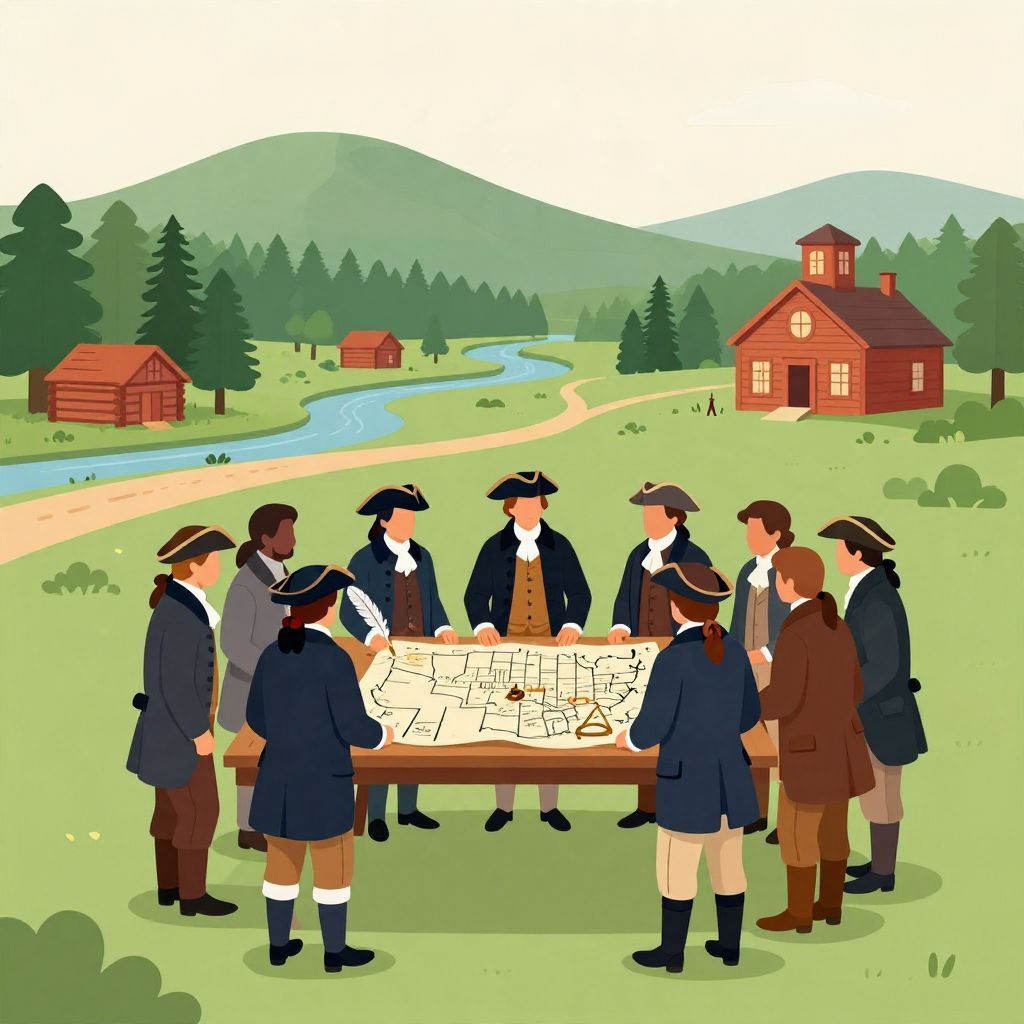
What is the Northwest Ordinance? It was a landmark law passed by the Confederation Congress in 1787 that created a framework for governing and admitting new states from the lands north of the Ohio River and east of the Mississippi River. It shaped how the United States expanded, how territories became states, and how slavery was handled in the region.
Because it combined territorial government, statehood rules, and a ban on slavery in the Northwest Territory, the ordinance became one of the most important early acts of the American republic. Its influence lasted well beyond the Confederation era and helped define federal expansion for generations.
What Is the Northwest Ordinance?
The Northwest Ordinance was a law enacted on July 13, 1787, by the Congress of the Confederation. It organized the Northwest Territory, set a path for creating new states, protected certain civil liberties, and prohibited slavery in the territory. In practical terms, it was the United States’ first major blueprint for western expansion.
Why Was the Northwest Ordinance Created?
The ordinance emerged from the problem of what to do with western lands after the American Revolution. Several states claimed territory west of the Appalachian Mountains, while the new national government needed a way to manage settlement, prevent conflict, and turn those lands into stable states rather than loosely controlled frontier zones.
These lands had been won from Britain by the Treaty of Paris in 1783, but ownership and governance remained unsettled. The Confederation Congress wanted an orderly system that would encourage migration, protect land claims, and avoid the political chaos that could come from competing state claims or unregulated settlement.
The Land in Question
The ordinance applied to the region commonly called the Northwest Territory, which included much of the area that later became Ohio, Indiana, Illinois, Michigan, Wisconsin, and part of Minnesota. At the time, this was a vast and contested borderland inhabited by many Native nations, including the Shawnee, Miami, Delaware, Ottawa, Potawatomi, and others.
It is important to note that the ordinance was written from the perspective of the United States government. It did not represent a negotiation with Native peoples, who were not treated as equal political partners in the process. In fact, the expansion it authorized intensified pressure on Native lands and sovereignty.
How Did the Northwest Ordinance Work?
The law established a three-stage system for governing the territory. First, Congress would appoint officials to administer the region. Second, once a territory reached a certain population, it could form a legislature. Third, when it reached a larger population threshold, it could apply for statehood on equal footing with the original states.
The Three-Stage Path to Statehood
- Initial territorial rule: Congress appointed a governor, secretary, and judges.
- Representative government: Once the territory had enough free adult male inhabitants, it could elect a legislature.
- Statehood: When population grew further, the territory could draft a constitution and seek admission to the Union.
This structure mattered because it made western expansion more predictable. Instead of treating new lands as permanent colonies, the United States promised that territories could eventually become equal states. That idea became one of the most enduring features of American federal expansion.
What Were the Key Provisions of the Ordinance?
The Northwest Ordinance was not just about government structure. It also included provisions on civil order, education, religion, property rights, and slavery. Some of these provisions were broad principles, while others reflected the political compromises of the 1780s.
Civil Liberties and Legal Protections
The ordinance included a bill-of-rights-style section that protected freedoms such as religious liberty, trial by jury, habeas corpus, and due process. It also prohibited cruel and unusual punishment and excessive fines. These protections helped establish the idea that territorial settlers should enjoy basic rights under federal authority.
Education and Public Order
One of the ordinance’s most famous ideas was support for education. It encouraged schools and learning because Congress believed that an informed citizenry was necessary for republican government. The ordinance also promoted orderly settlement by encouraging town planning and land division, which influenced the development of Midwestern communities.
Slavery in the Northwest Territory
The ordinance declared that slavery and involuntary servitude would not exist in the territory, except as punishment for crime. This was one of the most consequential parts of the law. It made the Northwest Territory the first large region of the United States to be closed to slavery by federal legislation.
That said, the anti-slavery clause did not end all forms of unfree labor or eliminate racial discrimination. Some enslavers attempted to evade the ban, and legal and social inequality persisted. Even so, the ordinance set a powerful precedent that federal authority could shape slavery’s geographic expansion.
Who Passed the Northwest Ordinance?
The ordinance was passed by the Confederation Congress, the governing body of the United States under the Articles of Confederation. Important figures in the debates included delegates such as Manasseh Cutler, who helped shape the final legislation, though the ordinance was the product of broader political bargaining rather than one person alone.
Cutler, a Massachusetts clergyman and land speculator, had a strong interest in opening the territory to settlement. His involvement reflected a common feature of the era: public policy, land speculation, and national expansion were closely intertwined.
What Happened Before and After 1787?
The ordinance was adopted in the same year as the Constitutional Convention in Philadelphia, but it was a separate measure under the Articles of Confederation. Its timing is significant because it shows that even before the Constitution was ratified, Americans were already building institutions for continental expansion.
Before the Ordinance
Before 1787, the western lands were politically unsettled. Several states—especially Virginia, New York, Massachusetts, and Connecticut—had conflicting claims. To resolve these disputes, some states ceded western claims to the national government. This made a federal territorial system possible.
After the Ordinance
The ordinance quickly became a model for later territorial organization. It influenced the admission of new states and helped normalize the idea that territories would pass through a governed transition before becoming states. Its framework was adapted repeatedly as the United States expanded westward in the 19th century.
The first state formed from the Northwest Territory was Ohio, admitted in 1803. Other states followed over time, including Indiana, Illinois, Michigan, Wisconsin, and part of Minnesota’s early territorial development. The ordinance thus had a direct role in shaping the political map of the modern Midwest.
Why Is the Northwest Ordinance Historically Important?
The Northwest Ordinance is important for three major reasons. First, it created a practical model for territorial expansion. Second, it linked statehood to republican government and civil rights. Third, it placed a major federal barrier against slavery in one large region, influencing the sectional politics that later divided the nation.
A Model for American Expansion
Unlike empires that held conquered lands indefinitely, the United States used the ordinance to define a pathway from territory to state. That approach helped turn expansion into a constitutional process rather than a purely military one, even though force and displacement were still part of the broader frontier story.
A Precedent in the Slavery Debate
The slavery ban in the Northwest Territory became a lasting reference point in later debates over whether slavery should expand into new lands. While the ordinance did not settle the slavery question nationally, it demonstrated that Congress could regulate slavery in federal territories. That precedent mattered deeply in the 19th century.
A Federal Vision of the West
The ordinance also expressed a vision of the West as part of the republic rather than a separate frontier society. It assumed that orderly settlement, education, religion, and law would create stable communities. In that sense, it was both a practical statute and a statement of American political ideals.
What Did the Ordinance Mean for Native Peoples?
For Native nations, the Northwest Ordinance represented the expansion of U.S. authority into lands they already inhabited and governed. The law did not recognize Native sovereignty in a meaningful way, and the settlement process it encouraged contributed to conflict, dispossession, and warfare in the region.
In historical terms, this is a crucial part of the story. The ordinance is often remembered as a progressive founding document because of its rights language and anti-slavery clause, but it also belonged to a larger settler-colonial expansion that had severe consequences for Indigenous peoples. Both realities must be understood together.
Key Facts About the Northwest Ordinance
- Date passed: July 13, 1787
- Passed by: the Confederation Congress
- Region governed: the Northwest Territory, north of the Ohio River and east of the Mississippi River
- Main purpose: to organize territorial government and create a path to statehood
- Notable provision: prohibition of slavery in the territory
- Historical significance: it became a model for U.S. territorial expansion and state formation
How Should We Understand Its Legacy Today?
The Northwest Ordinance should be understood as both foundational and limited. It was foundational because it helped define how the United States would expand and admit new states. It was limited because it reflected the priorities of white male political leaders, ignored Native sovereignty, and did not create equal freedom for all people in practice.
Even so, its influence was profound. It helped establish a federal system for expansion, linked territory to eventual statehood, and set an early precedent for restricting slavery in federal lands. For that reason, the Northwest Ordinance remains one of the most important laws in early American history—and a key to understanding how the United States grew beyond the original thirteen states.