
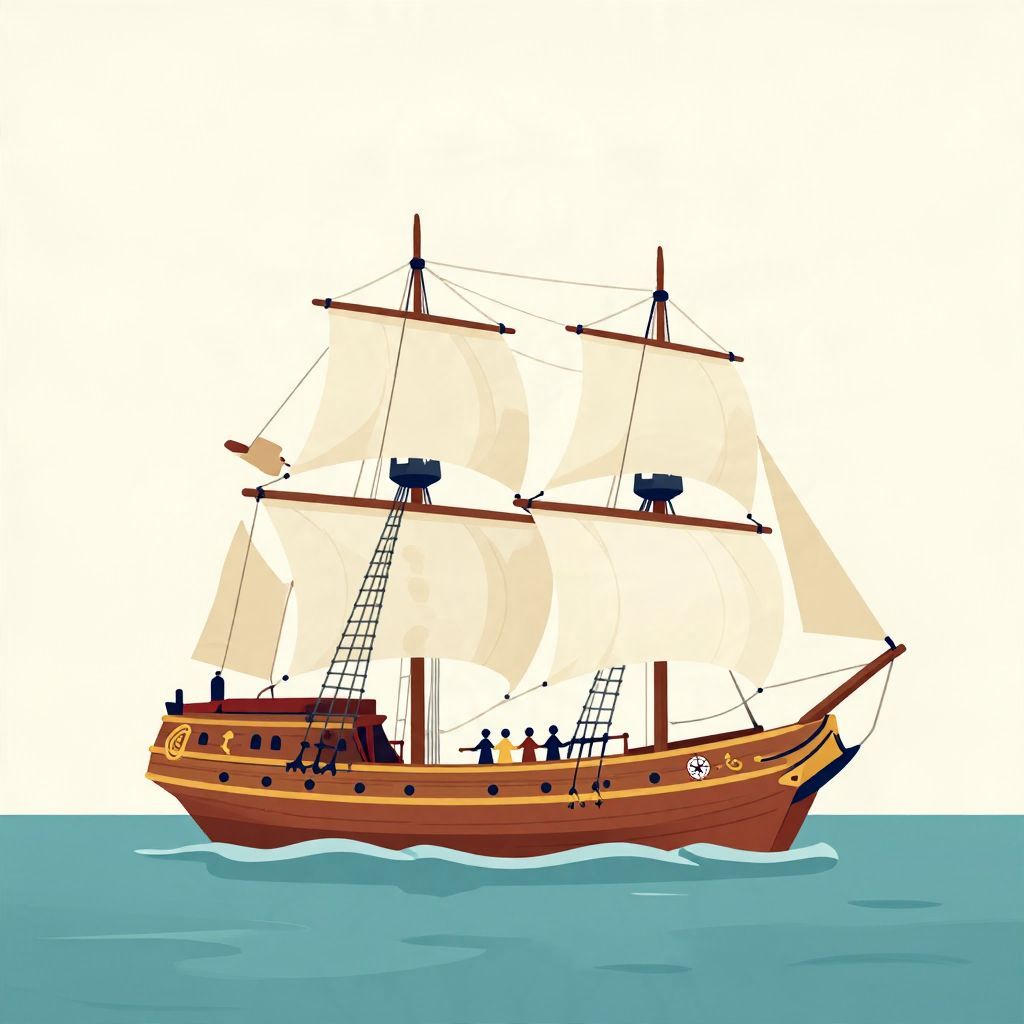
Why are ships called she? The short answer is that the habit grew out of centuries of maritime tradition, language, and symbolism rather than any single rule. In English, ships were often personified as female because sailors associated them with protection, care, and dependence, and because many cultures linked vessels to feminine imagery.
The custom is old, but it is not universal, and it has never been a grammatical law. Today, many mariners still use “she” out of tradition, while others prefer neutral language. The history of this usage reveals how seafaring language, gender symbolism, and national custom shaped one of the most familiar quirks in English.
Why are ships called she?
Ships are called she because English-speaking sailors historically personified vessels as female. The practice developed from long-standing traditions of naming ships after women, associating ships with maternal protection and beauty, and the older habit of treating important objects as living companions. It is a cultural convention, not a rule of grammar, and it varies by language and era.
The historical roots of calling ships “she”
The feminine ship is best understood as part of a broader tradition of personification. For centuries, people spoke of countries, virtues, cities, and ships as if they had human qualities. In maritime life, where a vessel could save lives or destroy them, sailors often gave ships emotional and almost personal identities.
Ships as companions, protectors, and possessions
Before modern engines and standardized fleets, a ship was not just equipment. It was a sailor’s home, workplace, and lifeline. Because crews depended on their vessels for survival, they often described them in intimate terms. Calling a ship “she” reflected affection, loyalty, and the idea that a vessel could shelter and carry its people much as a mother might.
This symbolism was reinforced by the way ships were named. Many were given women’s names, saints’ names, or names associated with grace, fortune, and protection. Over time, the pronoun followed the naming pattern, and the feminine reference became normal in nautical speech.
Language and personification in English
English does not assign grammatical gender to nouns in the way some other languages do. That means “she” for a ship was never required by grammar. Instead, it was a stylistic and cultural choice. English speakers also used feminine pronouns for some other valued objects, especially those that were seen as beloved, powerful, or difficult to control.
By the early modern period, the convention was well established in maritime writing and speech. Sailors, shipbuilders, and navigators used it naturally, and later writers preserved it in literature, newspapers, and official descriptions.
Was this always the case?
No single moment created the tradition. The feminine ship developed gradually over time, and its strength varied by region, class, and context. By the age of European exploration and imperial expansion, however, “she” had become common in English nautical usage. The convention was especially visible in the 18th and 19th centuries, when naval and merchant shipping dominated global trade and warfare.
Ancient and medieval precedents
Long before modern English, many cultures treated ships as animate or sacred objects. Ancient Mediterranean societies sometimes associated vessels with gods, goddesses, or protective spirits. Medieval sailors also relied on ritual, blessing, and symbolic naming to secure safe passage. These practices did not always use the exact English pronoun “she,” but they helped create the idea that ships were not ordinary objects.
In Europe, maritime traditions often blended Christian symbolism, folklore, and older seafaring customs. A ship might be imagined as a living entity with a spirit or destiny. That way of thinking made feminine personification feel natural in later English usage.
The age of sail and the rise of the convention
The convention became especially strong during the age of sail, roughly from the 16th through the 19th centuries. Ships were central to war, commerce, migration, and empire. Because they were expensive, vulnerable, and essential, they were often spoken of with a mix of respect and tenderness. Sailors regularly referred to their vessels as “good,” “faithful,” or “beautiful,” language that fit feminine personification in English culture.
At the same time, literature helped spread the habit beyond the sea. Poets, novelists, and journalists used the feminine ship as a vivid image, and that literary usage reinforced everyday speech. By the 19th century, the convention was so familiar that it often appeared without explanation.
Why feminine, not masculine?
The feminine pronoun for ships reflects symbolism more than logic. In many Western traditions, femininity was associated with nurture, shelter, beauty, and fertility. A ship could be imagined as a vessel that carried people through danger, protected them from the sea, and delivered them to safety. That made female imagery appealing to sailors and writers alike.
There was also a practical social element. Ships were often named after women, queens, goddesses, and virtues such as Victory, Hope, or Grace. Those names encouraged feminine references. In a world where seafaring was overwhelmingly male-dominated, the ship could also be imagined as a powerful but elusive female presence that required skill, discipline, and respect.
Myth, romance, and danger at sea
Ships inspired strong emotions because the sea itself was dangerous and unpredictable. Folklore often imagined the ocean as a female force too—beautiful, changeable, and potentially destructive. In that symbolic world, a ship became a companion navigating a feminine sea, and the pronoun “she” fit the emotional landscape of maritime life.
Still, this was not a universal belief. Some sailors and writers used the feminine pronoun simply because it was traditional, not because they held any deep symbolic theory. Over time, habit became custom, and custom became a linguistic norm.
Is “she” used for ships in all languages?
No. The English tradition is not universal. Different languages handle nouns and gender in different ways, and many do not use the same pronouns for ships. In some languages, the noun “ship” may be grammatically masculine, feminine, or neuter depending on the language system itself. The English custom is therefore cultural, not a worldwide maritime rule.
Grammatical gender versus cultural gender
It is important to separate grammatical gender from cultural personification. In languages such as French, Spanish, German, and Russian, nouns may have grammatical gender that does not necessarily reflect social ideas about masculinity or femininity. English, by contrast, generally lacks grammatical gender, so when English speakers say “she” for a ship, they are making a stylistic choice rather than following grammar.
That distinction explains why the convention feels natural in English but can seem unusual to speakers of other languages. The ship is not female in any biological sense; the pronoun is a traditional form of respect, affection, and personification.
Did sailors really believe ships were women?
Sometimes, but not literally. Most sailors understood perfectly well that a ship was an object. The feminine pronoun was a figure of speech, not a claim that the vessel had a female identity. Like many traditions, it mixed practical language with emotional meaning.
Respect, superstition, and ritual
Maritime life has always been rich in superstition. Sailors avoided certain words, observed rituals before voyages, and treated ships with care. Naming a ship with feminine language fit that world of custom and caution. A ship could be lucky or unlucky, “temperamental” or “faithful,” and such descriptions made sense in a culture that depended heavily on chance and weather.
The feminine pronoun also encouraged a sense of duty. If a ship was “she,” then she deserved protection, maintenance, and loyalty. This emotional framing helped sailors think of seamanship as a moral relationship, not just a technical task.
How the tradition changed in the modern era
The habit of calling ships “she” has declined in some contexts, especially in formal technical writing and modern commercial shipping. Today, many institutions prefer neutral language, and some speakers avoid gendered pronouns altogether. Even so, the old convention remains common in naval speech, literature, and popular culture.
Modern attitudes toward gender have also changed how people interpret the phrase. What once sounded natural can now seem old-fashioned or even inappropriate to some readers. Yet the phrase survives because it is deeply embedded in maritime tradition and historical memory.
Why the tradition still matters
The survival of “she” for ships is a reminder that language carries history. A small pronoun can preserve centuries of seafaring culture, from the age of sail to the era of steam and steel. It also shows how people use language to humanize the things they depend on most.
In that sense, the feminine ship is less about gender than about relationship. A ship was once a fragile but trusted partner in a dangerous world, and “she” expressed that bond.
Common misconceptions about ships and gender
It is easy to assume that calling a ship “she” comes from a single ancient rule or from a universal sailor’s belief. In reality, the tradition was shaped by many influences over time. It was never mandatory, never universal, and never based on biology.
- Myth: Ships are called “she” because all ships are feminine by nature.
- Fact: The pronoun is a cultural convention, not a literal description.
- Myth: The usage began in one exact year or with one famous ship.
- Fact: It developed gradually through maritime custom and language.
- Myth: Everyone in history used “she” for ships.
- Fact: The practice varied by time, place, and language.
The lasting meaning of the feminine ship
So why are ships called she? Because generations of sailors and writers used feminine personification to express dependence, affection, and respect for vessels that carried them through danger. The tradition grew from maritime culture, not grammar, and it became one of English’s most recognizable nautical habits.
Even now, the phrase survives as a historical echo of the age when ships were among the most important and vulnerable machines in the world. If you want to explore the cultural background of gendered language further, you may also enjoy the history of “frailty, thy name is woman” and what a merchant marine is.