
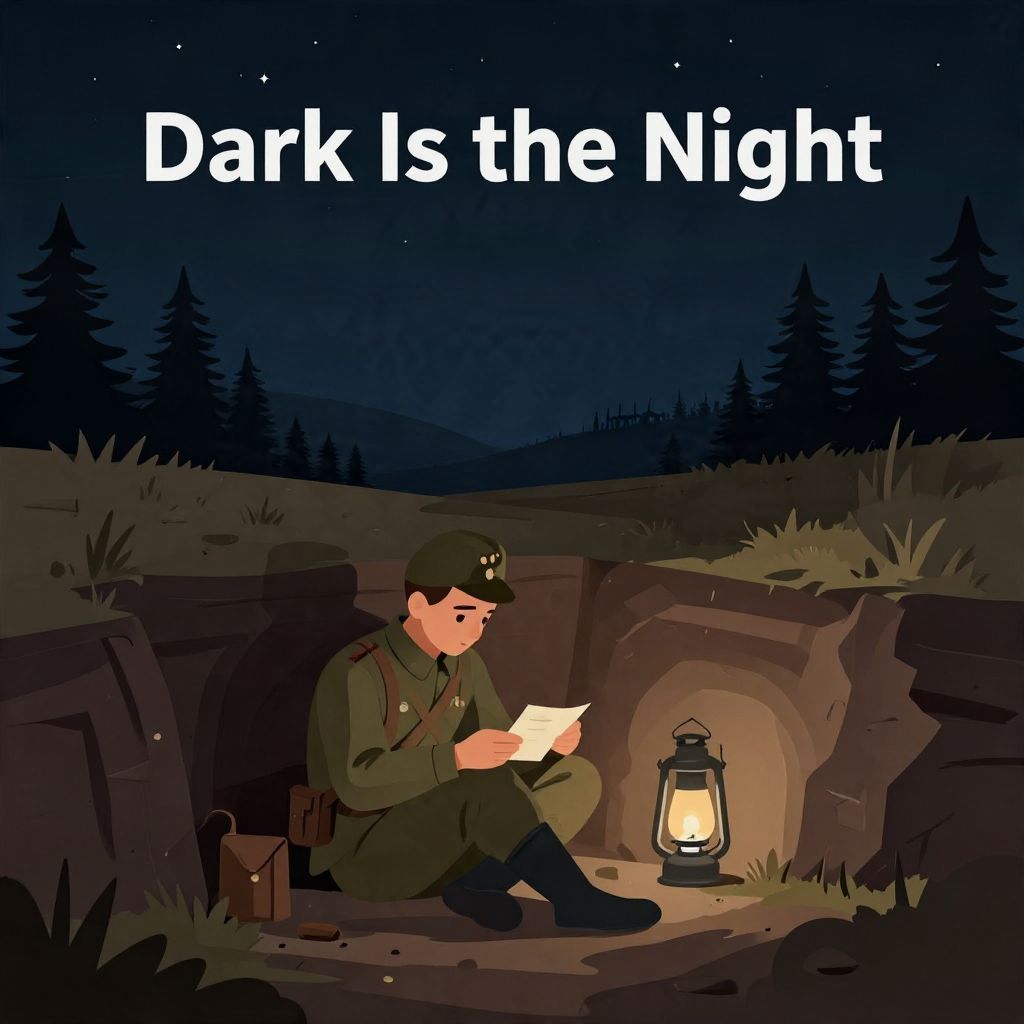
“Dark Is the Night” is best known as a haunting Soviet song from the 1940s, but its history is more than a single melody. It reflects wartime culture, Soviet cinema, and the emotional language of the Second World War era. The phrase also appears in later popular culture, which can make the title confusing.
This article explains what “Dark Is the Night” refers to, where the song came from, why it became famous, and how its meaning changed over time.
What is “Dark Is the Night” and why is it historically significant?
“Dark Is the Night” usually refers to the Soviet wartime song Tyomnaya noch (“Dark Night”), composed in 1943 for the film Two Soldiers. It became one of the most beloved songs of the Soviet World War II period because it expressed loneliness, hope, and devotion in a simple, memorable form.
The origin of “Dark Is the Night”
The song was created during the Second World War, when the Soviet Union was fighting Nazi Germany in what Russians call the Great Patriotic War. It was written for the 1943 film Two Soldiers (Dva boytsa), directed by Leonid Lukov. The music was composed by Nikita Bogoslovsky, and the lyrics were written by Vladimir Agatov.
A song born from wartime cinema
In the film, the song is performed by the character Arkady Dzyubin, played by Mark Bernes, while sitting alone and thinking about his family far away. The scene was designed to show the emotional life of ordinary soldiers, not just military heroism. That made the song stand out from more martial or propagandistic wartime music.
According to the best-known account, the song was composed quickly for the film, but its exact creative backstory has become part fact and part legend. What is clear is that it was tied directly to Soviet wartime culture and gained popularity almost immediately after the film’s release.
Why did the song become so famous?
Dark Night became famous because it spoke to the emotional reality of war. Its lyrics are intimate rather than triumphant. Instead of celebrating battle, they focus on separation, memory, and the hope that a loved one is still waiting at home. That combination made it deeply moving for soldiers and civilians alike.
The power of simplicity
The song’s language is plain, and its melody is gentle and memorable. In wartime, that simplicity mattered. Soviet audiences were surrounded by hardship, loss, and uncertainty, and the song offered a quiet emotional refuge. It did not deny suffering; it gave that suffering a voice.
Mark Bernes’s performance also helped define the song’s legacy. His style was restrained and deeply personal, which suited the mood of the piece. Over time, the song became associated not only with the film but with the broader memory of Soviet wartime endurance.
What does the song mean historically?
Historically, Dark Night is important because it shows how Soviet culture during World War II balanced ideology with emotion. The Soviet state promoted collective sacrifice and patriotic strength, but popular songs also had to speak to private feelings. This song did exactly that.
Wartime culture and everyday emotion
Many wartime songs were designed to inspire courage. Dark Night, by contrast, focused on the individual soldier’s inner world. That made it especially effective. It reflected the reality that many people fighting in the war were not abstract symbols of the state, but sons, husbands, fathers, and friends who missed home.
In that sense, the song is a historical source as well as a cultural artifact. It helps historians understand how war was experienced emotionally, not just politically or militarily. It also shows how film and music could shape public memory during and after the war.
Who wrote “Dark Is the Night”?
The credited creators are Nikita Bogoslovsky and Vladimir Agatov. Bogoslovsky was a prolific Soviet composer, and Agatov was a lyricist whose work became widely known through this song. Their collaboration produced one of the most enduring pieces of Soviet popular music.
Mark Bernes and the song’s lasting fame
Although he did not write the song, Mark Bernes was central to its success. His performance in Two Soldiers made the song inseparable from his image as a sensitive and sincere performer. Later generations often remembered the song through Bernes’s voice rather than through the film itself.
This is a common pattern in music history: a song may be written by one person, popularized by another, and remembered by later audiences as a cultural whole rather than as a single authored work.
How did the song spread beyond the film?
After the film’s release, the song spread through radio, recordings, concerts, and wartime circulation. It became part of the larger repertoire of Soviet songs associated with the 1940s. Its popularity was not limited to one moment; it continued to be performed long after the war ended.
From wartime hit to memory culture
In the decades after 1945, Dark Night remained a familiar song in the Soviet Union and later in Russia and other post-Soviet states. It was often performed at commemorations of the war, on television, and in nostalgic cultural settings. As a result, it came to symbolize not only wartime loneliness but also remembrance itself.
That long afterlife matters historically. Songs that survive beyond the events that created them often become tools of memory. They help later generations imagine the emotional world of the past, even when they did not experience it directly.
Is “Dark Is the Night” the same as “Dark Academia” or the “Dark Ages”?
No. The phrase “Dark Is the Night” is a song title, while dark academia is a modern cultural aesthetic and the Dark Ages is a historical term used for certain periods of early medieval Europe. The similarity is only in wording, which can cause confusion in searches and casual conversation.
Why the title can be confusing
People sometimes search for “Dark Is the Night” when they mean the song, a lyric, or a phrase in another context. Because the words are common, they can overlap with broader cultural or historical terms. But the historically important subject here is the Soviet wartime song and its place in twentieth-century memory.
What are the key facts about “Dark Is the Night”?
- Title: Tyomnaya noch (“Dark Night”)
- Year: 1943
- Film: Two Soldiers (Dva boytsa)
- Composer: Nikita Bogoslovsky
- Lyricist: Vladimir Agatov
- Best-known performer: Mark Bernes
- Historical context: Soviet Union during World War II
- Lasting significance: A major emotional and commemorative song of the wartime Soviet experience
Why does “Dark Is the Night” still matter today?
The song still matters because it captures a universal wartime feeling: the distance between the battlefield and home. That emotional truth has helped it outlast the specific political system that produced it. Even listeners who know little about Soviet history can recognize the loneliness and hope at its center.
At the same time, the song is a reminder that history is not only made by armies and governments. It is also carried by art, memory, and feeling. A song written for a wartime film can become a lasting record of how a society understood sacrifice, love, and survival.
In historical terms, “Dark Is the Night” is more than a famous melody: it is a window into Soviet wartime culture and the emotional life of the 1940s. If you want to explore related topics, you may also find what dark academia is and what the Dark Ages were useful for understanding how the word “dark” has been used in different historical contexts.