
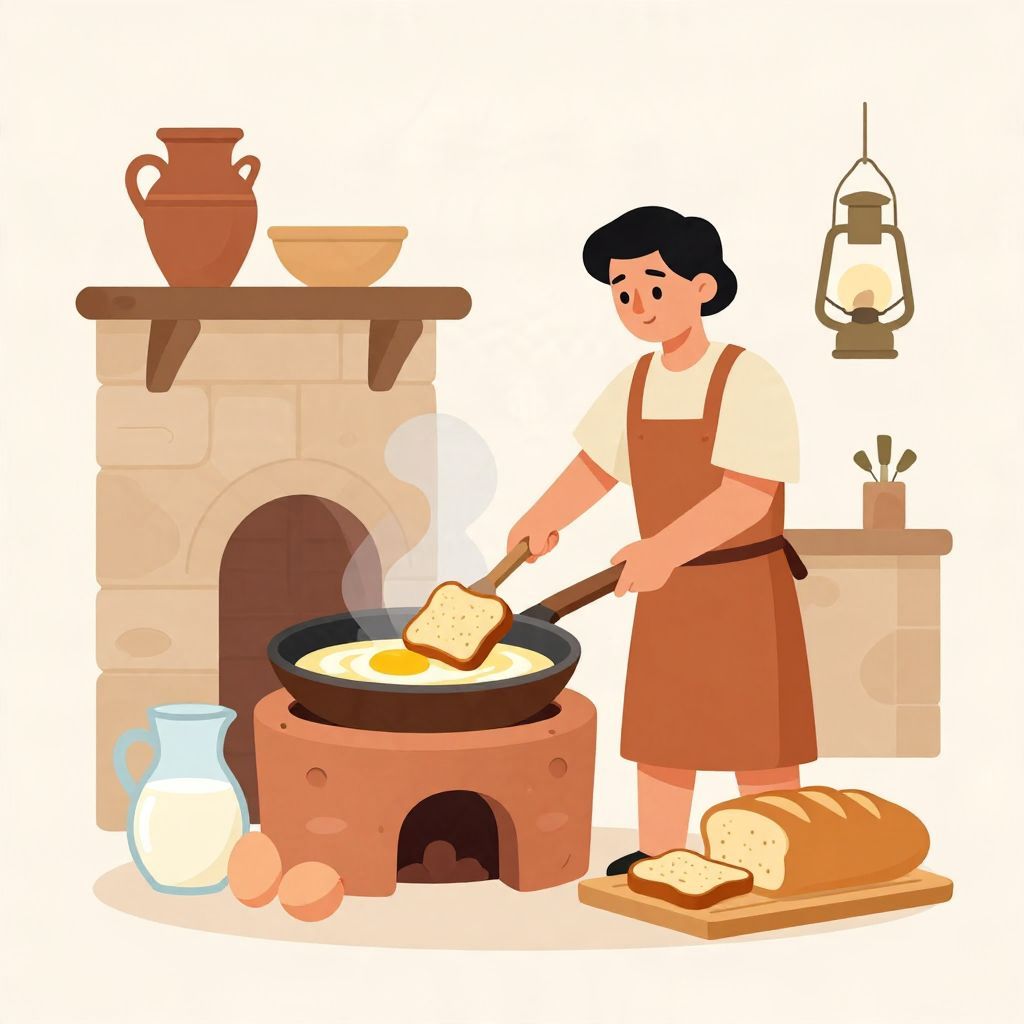
Where did French toast originate? The short answer is that no single country can claim a fully proven invention, but the dish is very old and appears in several ancient and medieval food traditions. What we call French toast today developed from practical cooks using stale bread, eggs, and milk to avoid waste.
The name “French toast” is modern and English-language, while the underlying dish is much older. Its history stretches across the Roman world, medieval Europe, and later French and English cookery, which makes its origin a story of culinary adaptation rather than one clear birthplace.
Where Did French Toast Originate?
French toast did not originate in one neatly documented place. The earliest clear ancestors appear in ancient Roman cooking, where bread was soaked in milk and eggs and fried. Later versions spread through medieval Europe, and the dish eventually became known in English as “French toast,” likely because of French culinary influence rather than a uniquely French invention.
The Ancient Roots of French Toast
Roman-era bread soaking
The oldest known precursor is often linked to the Roman Empire. Roman cookbooks and culinary practices included recipes in which bread was soaked in milk or beaten eggs and then cooked in fat. This was a sensible way to use stale bread, a common concern in societies where bread was a staple and food waste was expensive.
That matters because it shows the basic idea behind French toast is not modern at all. The combination of bread plus a liquid mixture, then frying or baking, was already familiar in antiquity. However, this was not yet “French toast” in the modern sense; it was one of several ways to revive bread and make it more palatable.
Why bread-and-egg dishes spread so widely
Simple bread-soaking dishes appeared in many places because they solved the same problem everywhere: stale bread. In households without modern refrigeration, bread went hard quickly. Eggs, milk, and fat were valuable but common ingredients, so the dish fit both poor and prosperous kitchens. Its spread was driven by practicality, not a single inventor.
Medieval Europe and the Development of the Dish
From survival food to household cooking
By the Middle Ages, versions of egg-soaked bread were known across Europe. Medieval cooks often used bread in thick slices, dipped it in milk or beaten eggs, and fried it in butter, lard, or other fat. Sometimes it was sweetened with sugar or honey, depending on wealth and availability. In this period, the dish became more recognizable as a breakfast or comfort food.
Medieval cookery was highly adaptive. Recipes changed by region, season, and social class. Some versions were savory, some sweet, and some were served as a side dish rather than a standalone meal. This flexibility makes it hard to point to one “original” French toast recipe, because the dish evolved gradually rather than appearing all at once.
Connections to European culinary traditions
Several European languages and food traditions preserve related dishes. In German-speaking areas, there are similar egg-bread preparations; in Spain and Portugal, bread-and-egg dishes also became familiar in domestic cooking; and in France, cooks prepared rich bread-based dishes that fit into a broader tradition of refined but economical kitchen practice. The common theme is the same: old bread transformed into something soft, rich, and filling.
Why Is It Called French Toast?
The name is English, not ancient
The term “French toast” is much later than the dish itself. English speakers began using the name to describe this style of cooked bread, but the exact reason is not fully settled. The label probably reflects the long-standing English tendency to associate certain refined cooking methods with France, especially methods involving sauces, eggs, butter, and careful preparation.
In other words, the name does not prove that the dish was invented in France. It more likely shows how French cuisine was viewed as fashionable or sophisticated in English-speaking food culture. The name may have been a way to distinguish this version of fried bread from other similar preparations.
Other names for the same idea
French toast has been known by many names over time. Different regions used local terms for bread soaked in egg or milk and fried. That variety is one reason the dish’s origin is difficult to pin down. When a food exists in many cultures under many names, historians usually treat it as part of a shared culinary family rather than a single national invention.
Did French Toast Come from France?
France’s role in the story
France is important to the history of French toast, but not necessarily as its sole birthplace. French cooks certainly made versions of egg-soaked bread, and French culinary prestige helped shape the English name. Still, there is no strong evidence that the dish began in France and then spread outward in a simple line. It is more accurate to say that France was one of several places where the dish was made and refined.
That distinction is important. Many foods become associated with a country because of language, trade, or prestige, even when their roots are broader. French toast is one of those dishes whose name suggests a national origin more clearly than the historical evidence does.
A common mistake about “French” foods
People sometimes assume that a food called “French” must have been invented in France. History is usually messier. Names can reflect fashion, marketing, class associations, or later popular usage. French toast is a good example of how a food can be internationally shared long before its modern label appears.
How French Toast Changed Over Time
From practical leftovers to breakfast staple
In earlier centuries, the dish was mainly a way to use stale bread efficiently. Over time, especially in Europe and later in North America, it became more associated with breakfast and brunch. Sweet toppings such as sugar, syrup, fruit, cinnamon, and powdered sugar helped turn it into a comfort food rather than just a thrifty household solution.
This shift reflects broader changes in eating habits. As sugar became more accessible and breakfast became a more distinct meal in some societies, French toast moved from necessity to pleasure. The basic structure stayed the same, but the cultural meaning changed.
Regional variations around the world
Many countries developed their own versions of the dish. Some use brioche, challah, or other enriched breads; others prefer plain sandwich bread. Some versions are savory, while others are heavily sweetened. These variations show that French toast is less a fixed recipe than a culinary idea: soften bread, enrich it, and cook it until golden.
- Ancient ancestor: Roman bread soaked in milk and eggs
- Medieval expansion: Similar dishes spread across Europe
- Modern name: “French toast” appears in English-language usage later
- Today: A global breakfast dish with many regional forms
What Historians Can Say with Confidence
What is established
Historians can say with confidence that French toast is very old, that its basic method predates modern national cuisines, and that it likely evolved from ancient and medieval bread-revival practices. The dish was not invented in one moment by one person. Instead, it emerged through long culinary tradition shaped by economy, necessity, and taste.
What remains uncertain
What cannot be proven is a single exact birthplace. No surviving evidence identifies one inventor or one first kitchen. The name “French toast” also does not settle the question, because names often lag behind the foods they describe. The safest answer is that French toast originated in the broader Mediterranean and European tradition of cooking stale bread with eggs and milk, later becoming associated with France in name and style.
Why the Origin Story Still Matters
French toast is a reminder that many famous dishes began as practical solutions to everyday problems. Its history shows how ordinary people turned leftovers into something nourishing and enjoyable. It also illustrates how food names can be misleading, preserving cultural prestige more than literal birthplace.
If you enjoy tracing the history of everyday foods, you may also like reading about where French fries originated and where the hamburger originated. French toast’s story, like theirs, shows how a familiar dish can have a surprisingly complex past.