
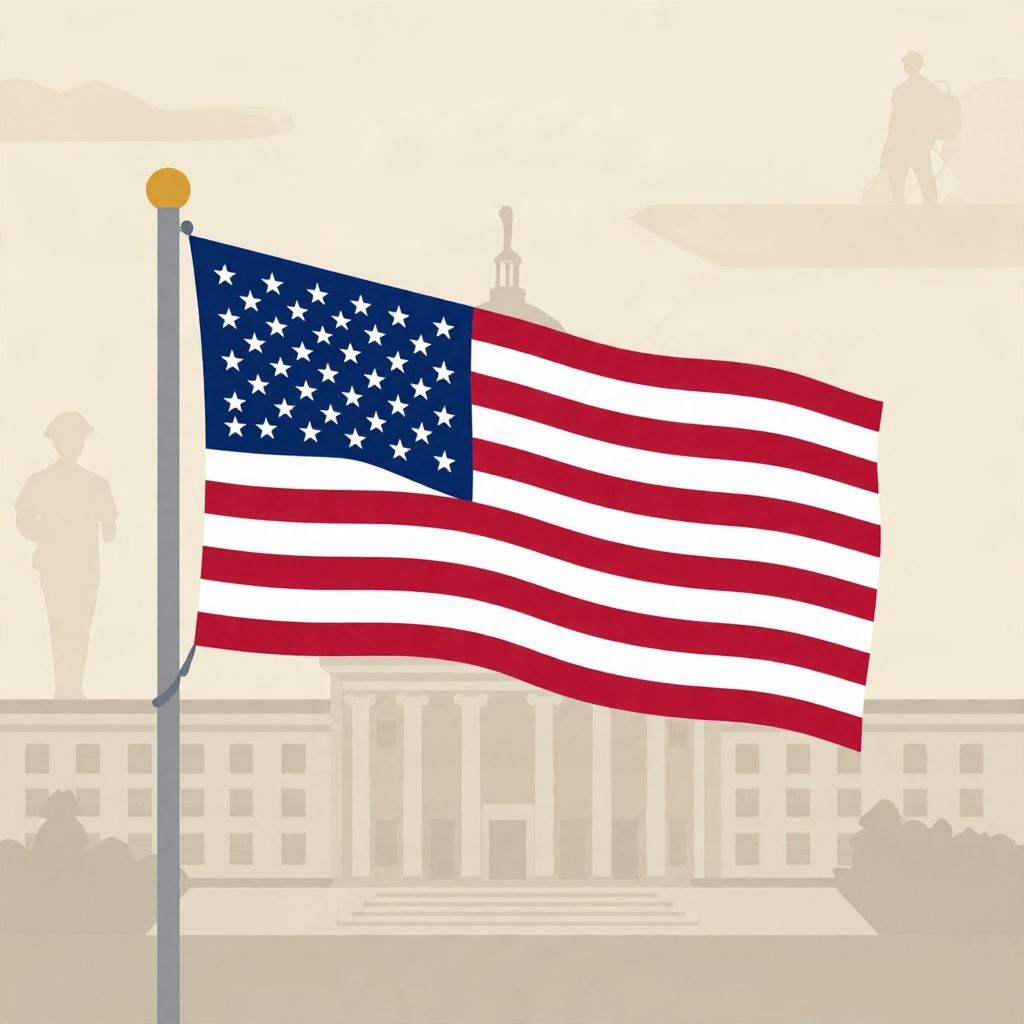
What does a backwards American flag mean? The short historical answer is that people usually mean an upside-down U.S. flag, not a reversed image. In American tradition, flying the flag upside down is a signal of extreme distress, and in modern politics it has also become a public protest symbol.
That meaning did not appear overnight. It developed from long-standing maritime customs, was later reflected in U.S. flag practice, and in the 20th and 21st centuries took on new political and cultural uses. Understanding the symbol requires separating established flag etiquette from the way people have used it in moments of crisis or controversy.
What Does a Backwards American Flag Mean?
An upside-down American flag traditionally means distress, not disrespect, when used as an emergency signal. In everyday life, however, many people display it as a protest sign or political statement. A truly “backwards” flag is usually a misdescription; the recognized symbolic act is turning the flag upside down.
The Historical Roots of the Distress Signal
Maritime signaling before it became political
The idea of using a flag upside down as a distress call comes from seafaring practice. On ships, flags were practical communication tools long before radio. A flag flown inverted could signal danger, capture, or urgent need for help. This was not uniquely American; it belonged to a broader nautical language of signals used by navies and merchant vessels.
Because the United States grew from a maritime world, those customs influenced American flag etiquette. The modern U.S. flag inherited the older idea that inversion could mean emergency. Over time, that practice became formalized in American flag code and public understanding.
How the U.S. flag code shaped the meaning
By the 20th century, American flag etiquette had become more standardized. The U.S. Flag Code states that the flag should be displayed upside down only as a signal of “dire distress in instances of extreme danger to life or property.” That wording matters: historically, the inverted flag was meant to communicate an emergency, not simply disagreement or anger.
This official meaning helped distinguish legitimate distress signaling from casual misuse. Yet public symbolism often moves beyond legal or ceremonial rules. As a result, the upside-down flag became associated with both emergency and protest, depending on context.
When Did the Upside-Down Flag Become a Protest Symbol?
From emergency signal to political expression
The upside-down flag gained wider public attention in the 20th century as Americans increasingly used national symbols in demonstrations. Protesters found that inverting the flag was visually striking and immediately recognizable. It could suggest that the nation itself was in trouble, that democratic norms were under threat, or that the government had failed in some profound way.
This shift did not erase the older distress meaning; instead, it repurposed it. Protesters borrowed the language of emergency to make a political argument. In that sense, the symbol’s power came from its established association with crisis.
Major moments in modern American history
Upside-down flags appeared in different protest environments over the decades, especially during periods of war, civil unrest, and political polarization. They were seen in antiwar demonstrations, during disputes over federal policy, and in campaigns criticizing election results or government leadership. The symbol became especially visible in the late 20th and early 21st centuries, when televised and online images could spread quickly.
Because the flag is emotionally charged, its inversion often provokes strong reactions. Supporters may call it a legitimate form of free expression, while critics see it as disrespectful to the nation or to military service. Both reactions are part of the symbol’s modern history.
Distress Signal or Disrespect?
Why context matters
The meaning of an upside-down American flag depends heavily on context. If a person is using it in a genuine emergency, the historical and legal meaning is distress. If it appears at a rally, on a porch, or in a social media image, it is more likely being used as protest. In either case, the inversion is intentional and meant to be noticed.
That said, many viewers interpret the symbol through their own political or moral lens. Some see it as an attack on the country; others see it as a warning that the country is in trouble. The same visual act can therefore carry different meanings for different audiences.
Why the symbol is so emotionally powerful
National flags are not ordinary decorations. They represent identity, authority, sacrifice, and collective memory. Turning a flag upside down disrupts that symbolism in a simple but dramatic way. It can suggest disorder, inversion of values, or a nation in crisis. That is why the image has remained potent across generations.
Its power also comes from ambiguity. A viewer may not know whether the display is a legal distress signal, a protest, or a mistake. That uncertainty makes the symbol especially attention-grabbing.
Legal and Cultural Boundaries
What the law says and does not say
In the United States, flag display rules are guided by the Flag Code, but the code is generally advisory rather than criminal in most everyday settings. That means people can often display the flag in ways that many others find offensive, though the practice may still violate etiquette or local rules in certain contexts. The law and social custom are not always the same thing.
For that reason, the upside-down flag sits in a gray area between protected expression and contested symbolism. It is historically tied to distress, but in modern public life it is also a form of political speech.
Why people sometimes say “backwards” when they mean upside down
In common speech, people sometimes call the flag “backwards” when they mean it is upside down. Strictly speaking, a reversed or mirrored flag is not the standard historical signal. The important symbolic act is inversion. That distinction matters because the meaning comes from the flag’s orientation, not from a simple left-to-right reversal.
Major Events That Shaped the Symbol’s Meaning
1. Maritime signaling traditions
- Long before modern American politics, ships used flags to communicate danger and urgency.
- An inverted flag became associated with distress at sea.
- This custom influenced later American flag practice.
2. Formalization in American flag etiquette
- As the U.S. flag became a national emblem, its proper display was increasingly codified.
- The Flag Code preserved the distress meaning for upside-down display.
- This gave the symbol an official basis in American civic culture.
3. 20th-century protest culture
- Political movements adopted the inverted flag as a sign of national crisis.
- Its meaning broadened from emergency signaling to public dissent.
- Media coverage helped spread and intensify its visibility.
4. Contemporary polarization
- In the 21st century, the symbol became tied to sharp political conflict.
- It has been used by people on different sides of ideological disputes.
- Its meaning now often depends on the viewer’s political perspective.
Lasting Effects on American Public Life
A symbol that still signals crisis
The upside-down American flag remains powerful because it compresses a complicated message into one image. It can mean rescue is needed, that the nation is in danger, or that the person displaying it believes something fundamental has gone wrong. Few symbols are as visually simple and historically loaded.
Its endurance also shows how national symbols evolve. What began as a practical maritime signal became a formal sign of distress and later a political statement. That layered history helps explain why the image can feel both old-fashioned and urgently current.
How it affects public debate
When people see an upside-down flag, they often debate not only the symbol but the state of the nation itself. The display can intensify arguments about patriotism, dissent, and civic responsibility. In that way, the flag does more than communicate a message; it helps shape the argument around the message.
At the same time, the symbol’s contested meaning is part of democratic culture. In the United States, public disagreement over national symbols has long been tied to broader debates about freedom of speech and loyalty to the republic.
So What Does It Mean Today?
Historically, an upside-down American flag means distress. In modern usage, it often also means protest, especially when displayed to criticize government actions or national conditions. The exact message depends on who is flying it, where, and why. What has stayed constant is the symbol’s connection to crisis and urgency.
That is why the image continues to draw attention: it is both an old signal and a modern political statement. For readers interested in related flag symbolism, see what an upside-down flag means and what the black-and-white American flag means.