
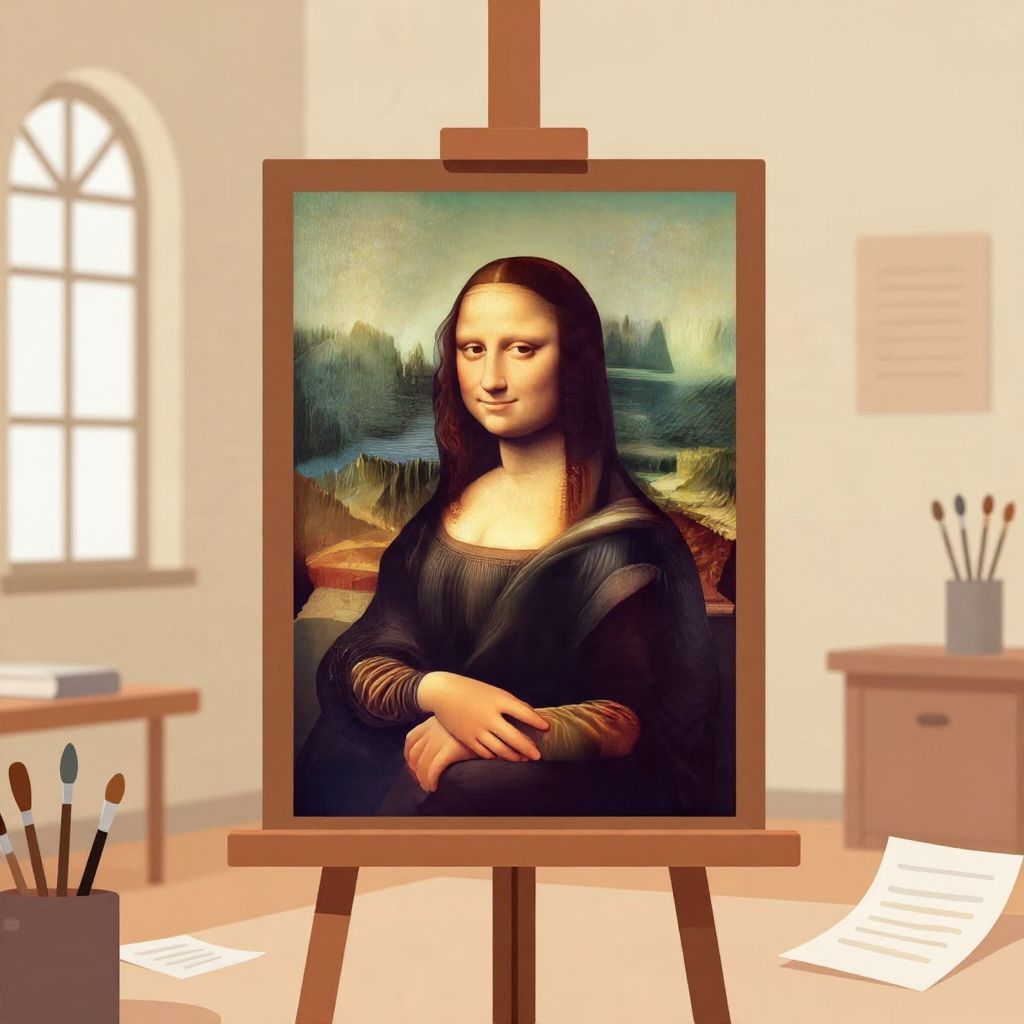
The Mona Lisa is famous because it combines artistic innovation, mystery, and centuries of cultural attention. Painted by Leonardo da Vinci in the early 1500s, it became one of the best-known images in the world not just because of its beauty, but because of the way it was made, interpreted, stolen, reproduced, and mythologized.
Its fame is the result of both Renaissance art history and modern mass culture. The painting’s subtle expression, technical mastery, and unusual life story helped turn it from a portrait into a global icon.
Why Is The Mona Lisa Famous?
The Mona Lisa is famous because Leonardo da Vinci painted it with extraordinary realism and psychological depth, and because later events—especially its theft in 1911 and constant reproduction in books, museums, and media—turned it into the world’s most recognizable painting. Its fame comes from art, history, and modern celebrity culture working together.
The Painting’s Origins in Renaissance Italy
The Mona Lisa was painted in Florence in the early 16th century, likely beginning around 1503 and continuing for several years. It belongs to the High Renaissance, a period when artists in Italy were studying anatomy, light, perspective, and human emotion with new intensity. Leonardo was already known as a painter, inventor, and thinker when he began the work.
Who was the sitter?
The most widely accepted identification is that the portrait shows Lisa Gherardini, the wife of a Florentine merchant named Francesco del Giocondo. That is why the painting is often called La Gioconda in Italian. Some alternative theories have been proposed over the centuries, but the Lisa Gherardini identification remains the standard scholarly view.
What makes this important is that the painting was not originally created as a grand royal image or a religious scene. It was a portrait of a private individual. Yet Leonardo treated it with such care and complexity that it came to represent something much larger than its original purpose.
The Artistic Qualities That Made It Stand Out
Leonardo’s technique is one of the main reasons the Mona Lisa became famous. He used soft transitions of light and shadow, a method often called sfumato, to avoid harsh outlines. This gives the face and hands a lifelike softness. The result is a portrait that seems to breathe and change as the viewer looks at it.
The smile and the gaze
The painting’s most discussed feature is the smile. It appears faint, shifting, and difficult to read. Depending on where a viewer stands, it can seem warm, serious, or even elusive. That ambiguity has inspired centuries of interpretation. Some viewers see calm confidence; others see secrecy or emotional complexity. The uncertainty is part of the painting’s power.
The eyes also contribute to the effect. They seem to follow the viewer, a visual impression that has helped make the portrait feel strangely alive. Whether one reads this as a technical achievement or an optical illusion, it adds to the painting’s lasting fascination.
Composition and atmosphere
Leonardo placed the sitter in a balanced, stable pose, with the body turned slightly and the hands folded in a composed way. Behind her is a dreamlike landscape, with winding roads, water, and distant mountains. The background does not simply decorate the portrait; it creates a sense of depth and mystery. The human figure and the natural world seem connected, but not fully explained.
This combination of realism and ambiguity was unusual and influential. Many portraits before the Renaissance were more formal and symbolic. Leonardo made the image feel intimate, psychological, and deeply observed. That artistic innovation is a major reason the painting became historically significant.
How the Mona Lisa Became World-Famous
For a long time, the Mona Lisa was admired by artists and connoisseurs, but it was not yet the universal icon it is today. Its rise to worldwide fame happened gradually, then accelerated dramatically in the modern era. Several events helped transform it from a respected Renaissance portrait into an international celebrity.
Leonardo’s reputation
Leonardo da Vinci’s own reputation mattered. He was already regarded as an exceptional master, and later generations came to see him as the ideal Renaissance genius: painter, scientist, engineer, and observer of nature. Because the Mona Lisa is associated with Leonardo’s name, it inherited some of that prestige.
It is also important that Leonardo kept refining the work and apparently carried it with him later in life. The painting was not simply a commissioned object completed and forgotten. Its long association with Leonardo added to its aura.
From royal collections to the Louvre
After Leonardo’s death in 1519, the painting eventually entered French royal collections. Over time it became part of the French national collection and later the Louvre Museum in Paris. Museum display gave the painting a public life far beyond the original Florentine setting. Visitors could now encounter it as a masterpiece of European art history.
That institutional setting mattered. A painting becomes famous not only because it is beautiful, but because it is repeatedly seen, discussed, and protected by powerful cultural institutions. The Louvre helped turn the Mona Lisa into a destination.
The 1911 theft
One of the biggest reasons the Mona Lisa became globally famous was its theft from the Louvre in 1911. The painting disappeared for more than two years, and newspapers around the world covered the mystery. The missing artwork became a sensation. People who had never cared about Renaissance painting suddenly knew its name.
The theft made the Mona Lisa seem like a cultural treasure worth chasing. When it was recovered in 1913, the story only deepened public interest. The incident also showed how modern media could turn an artwork into an international headline.
Reproduction in modern culture
In the 20th century, the Mona Lisa was endlessly reproduced in posters, textbooks, advertisements, postcards, and later digital media. Repetition made the image familiar even to people who had never visited the Louvre. Parodies and adaptations by artists such as Marcel Duchamp and countless others also kept it in the public eye.
This is a key point: the Mona Lisa is famous not only because people admire the original, but because its image has circulated everywhere. It became a symbol of art itself, often used to represent “the masterpiece” in general.
Why People Keep Talking About It
The Mona Lisa continues to attract attention because it invites questions without giving simple answers. Is she smiling or not? Is the landscape real or imaginary? Why does the portrait feel so modern? These questions keep the painting alive in public conversation. Its fame rests partly on the fact that it resists complete explanation.
Mystery and interpretation
Scholars have debated many aspects of the work: the sitter’s identity, the meaning of the landscape, the original colors, and even whether Leonardo considered it finished. Some uncertainty is normal for a painting from the early 1500s. But the lack of a single definitive reading has helped the image remain interesting across centuries.
In other words, the Mona Lisa is famous because it is both clear and elusive. We can see the face, the hands, and the setting, but we cannot reduce the painting to one simple meaning. That tension gives it lasting appeal.
Symbol of artistic genius
Over time, the painting became a shorthand for artistic excellence. When people say “the Mona Lisa,” they often mean not just one portrait, but the idea of a masterpiece. This symbolic role has made it one of the most important cultural images in the world.
Its fame is therefore partly historical and partly social. The painting is admired because it is excellent, but also because generations of viewers, museums, writers, and journalists have agreed to treat it as extraordinary.
What the Mona Lisa Tells Us About History
The story of the Mona Lisa shows how fame can grow over centuries. A portrait made for a private client in Renaissance Florence became a global icon through artistic brilliance, royal ownership, museum display, theft, and mass reproduction. Its history reflects changes in how people value art, how the media spreads stories, and how museums shape public memory.
It also reminds us that famous objects are rarely famous for just one reason. The Mona Lisa’s reputation comes from Leonardo’s technique, the painting’s subtle emotional effect, the mystery surrounding it, and the modern world’s appetite for icons. That combination is what made it endure.
So, why is the Mona Lisa famous? Because it is a masterpiece of Renaissance portraiture that became even more famous through later history. If you want to explore the painting’s visual effect further, see how da Vinci created mood in the Mona Lisa and how big the Mona Lisa is. Together, they help explain why this portrait still captivates the world.